A calm, ordered checklist beats guessing under pressure. Below is an ordered, South African gaming checklist for the symptom in the heading, written so each step is something you can verify yourself before booking a repair or buying a replacement.
Quick Answer
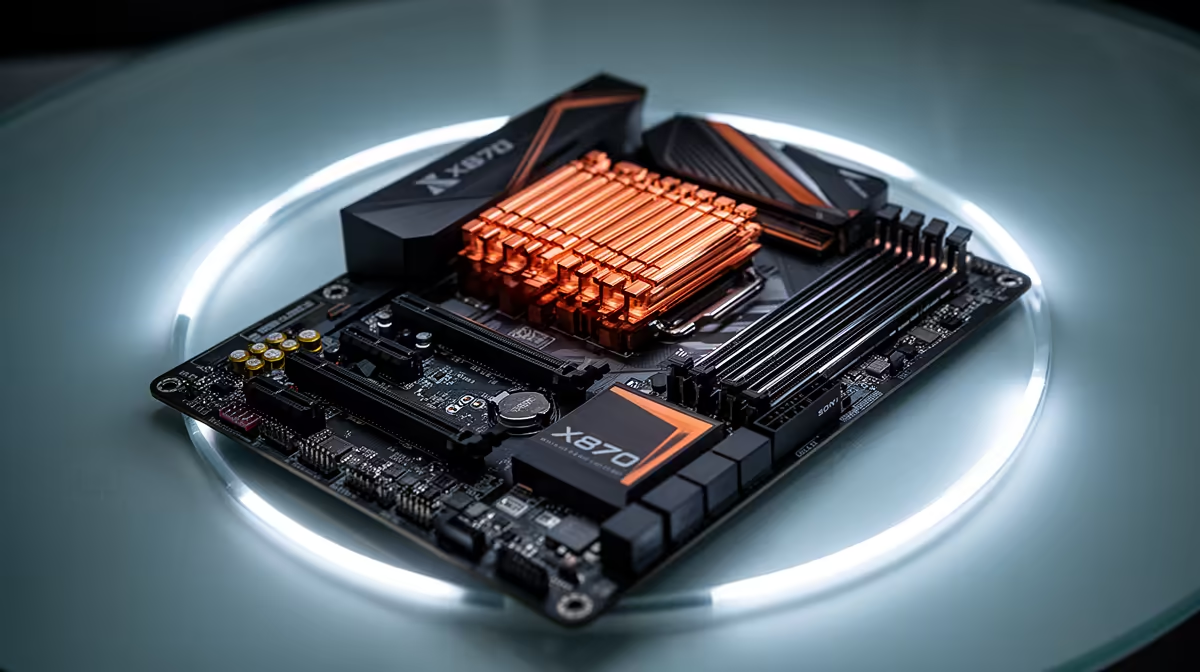
A calm, ordered checklist beats guessing under pressure. This usually comes down to drivers, a loose connector or background load rather than a faulty X870E motherboard. Run a fixed 20-minute test after each change and keep the one that holds at a steady frame rate or a stable temperature under 85C.
Driver and BIOS hygiene
Update the chipset package straight from the AMD or Intel site rather than trusting Windows Update to pick the right version. Update the chipset package straight from the AMD or Intel site rather than trusting Windows Update to pick the right version.
PSU and connector checks
Re-seat the 12V-2x6 and 8-pin EPS connectors fully; a half-clicked plug shows up as random shutdowns under load. Verify the PSU wattage matches the load; a high-end card wants real headroom, so a 1000W unit is a sensible floor for top builds.
Heat and airflow checks
Confirm the case has a clear front-to-back path and that no cable is resting against a 120mm or 140mm fan. Confirm the case has a clear front-to-back path and that no cable is resting against a 120mm or 140mm fan.
Storage and SSD checks
Check SMART data for a failing 1TB or 2TB SSD that is silently retrying reads. Move the boot drive off a shared lane if a second M.2 device steals bandwidth from the GPU slot.
FAQ
How long should each test run?
Use a fixed 20-minute load that reliably triggers the fault. A shorter burst can hide a thermal or memory problem that only appears once the system is fully warmed up at 80C or higher.
Is it safe to keep using the PC like this?
If it shuts down or blue-screens, stop heavy loads until you find the cause. Repeated hard crashes can corrupt the boot drive, so back up your data before deep testing.
Is the X870E motherboard actually the problem?
Not until the software, heat, power and cable checks all pass. The X870E motherboard is the platform under review, so rule out the cheaper causes first and only suspect the hardware once a clean reinstall and a default-BIOS test still fail.
Replace only what the evidence shows If the checks isolate the fault, compare current X870E motherboards on Evetech and upgrade the one part that proved unreliable.