Quick Answer
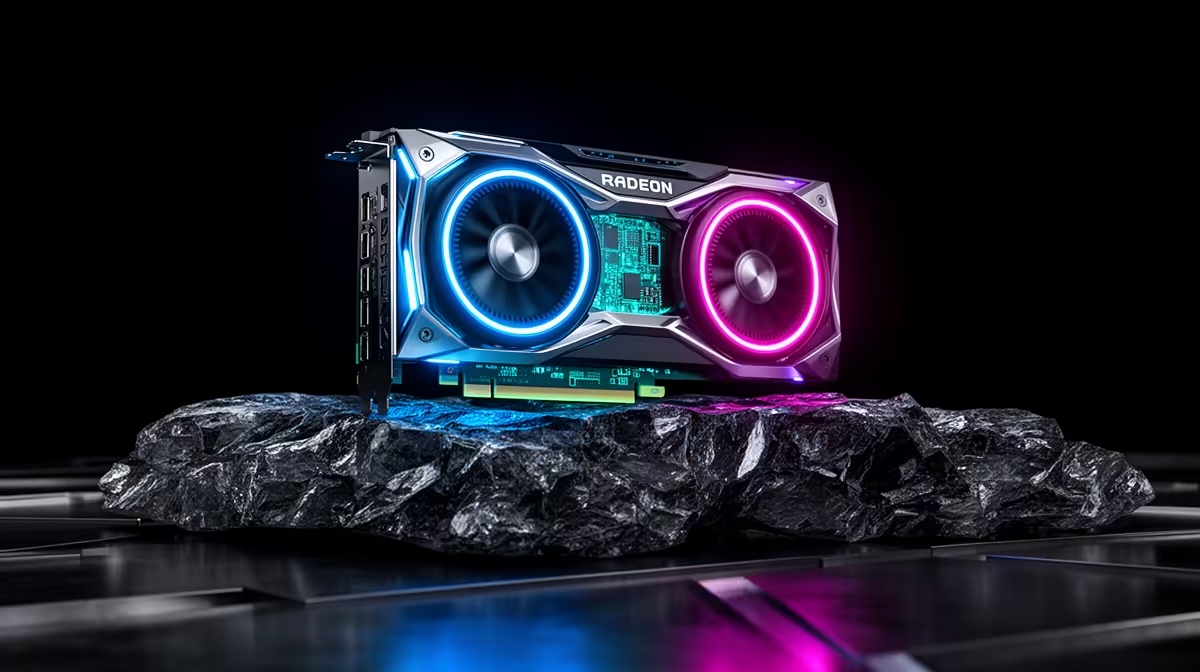
RX 9070 XT build BSOD crashes after a Windows 11 update is usually caused by the last changed driver, chipset package, power state, overlay, or firmware setting. Run a repeatable 10-minute test, check Event Viewer or frame-time spikes, and restore the last stable driver before replacing hardware. For SA buyers, that can avoid an unnecessary R1,500-R30,000 spend on parts that were not actually faulty.
Check The Last Changed Driver First
Start with the timeline: Windows build, GPU driver, chipset driver, BIOS change, game patch, or new peripheral. Test the same game, map, and resolution each time so the result is comparable. For AM5, B850, RTX 5070, RTX 5080, RTX 5090, and RX 9070 XT builds, chipset and display drivers are the first checks.
Separate Software Stutter From Hardware Failure
Stuttering needs frame-time evidence; BSOD needs the stop code and the driver name if Windows records one. Cap the game at 60 fps, 120 fps, or the monitor refresh target, then watch whether 1% lows collapse. If a clean boot fixes the problem, an overlay, RGB tool, audio utility, or updater is probably involved.
Decide When Replacement Makes Sense
Replacement becomes reasonable only after the fault survives default settings, clean drivers, another cable or port, and a second test workload. Keep the invoice and serial numbers ready, but use the test notes first so warranty support sees a clear fault pattern.
FAQ
Should I uninstall the Windows update first?
Only do that after recording the symptom and checking the driver that changed with it. A targeted driver rollback is usually cleaner than removing every update at once.
How do I know it is not broken hardware?
Hardware becomes likely when the same fault repeats in a clean test, on another port or cable, and outside one game or app. If the symptom vanishes after a driver or power change, the hardware is probably usable.
What should SA buyers check before buying replacements?
Check warranty status, invoice date, cable quality, PSU or charger capacity, and whether the part fails on a second device. That protects the budget before spending on a new component.