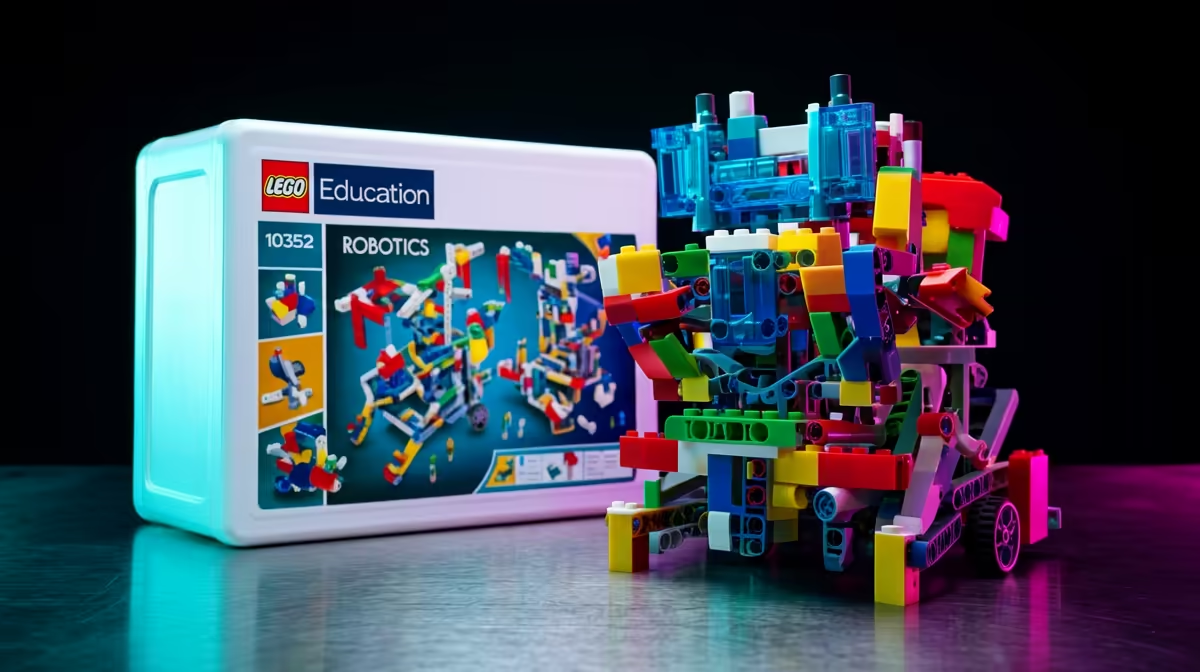
If your school or robotics club runs LEGO Education SPIKE Prime, the clock is ticking. Both the SPIKE Prime set and the LEGO Technic Distance Sensor retire on 30 June 2026, and once first-party stock of the hubs, motors and sensors runs down, replacements get hard to find. For an established robotics programme, that turns a planned purchase into an urgent one: secure your spares now, while they are still on the shelf.
Quick Answer
LEGO Education SPIKE Prime and the LEGO Technic Distance Sensor both retire on 30 June 2026. After that date, first-party hubs, motors and sensors become limited as existing stock sells through. SA schools and robotics clubs running SPIKE Prime should buy spare hubs, motors and sensors before the deadline to keep their kits and lesson plans running.
Why the Retirement Matters
A SPIKE Prime programme is not just a box of bricks. It is built around a specific hub, matched motors and sensors, and lesson material written for that exact hardware. When the line retires, the bricks remain compatible forever, but the electronic parts are the ones that wear out, get lost or break, and those are precisely what becomes scarce.
The most failure-prone items in daily classroom use are the hubs and the small sensors. Hubs take knocks and charge cycles. Distance and colour sensors get dropped and worn. A club with ten kits and no spares can find half of them out of action within a term once parts cannot be replaced. Stocking up now protects the investment already made in training and curriculum.
What to Stock Up On Before 30 June 2026
Spend on the parts that fail, not the parts that last. Bricks and structural pieces almost never need replacing, so do not over-buy those. Concentrate on the electronics and the consumable connectors.
Prioritise in this order: spare hubs first, since a dead hub takes an entire kit offline; then motors, which wear from constant use; then the sensors, including the Technic Distance Sensor that retires alongside the set. Add a handful of spare charging cables and connector leads, which go missing constantly in a busy classroom. Buying a sensible buffer per active kit, rather than one global spare, keeps every group working through the year.
How Much to Buy
Match the buffer to your programme size and how hard the kits are used. A rough working rule for a heavily used club is one spare hub for every three to four kits, one or two spare motors per kit over a full year, and at least one spare of each sensor type per few kits. Schools running competition teams should lean higher, because competition season is exactly when a failed part is most disruptive and least replaceable.
If budget is tight, the single most important spare is the hub. It is the heart of every model, and without a working hub the rest of the kit cannot run. You can see current robotics and smart-tech stock in the smart home and appliances range at Evetech when planning your order.
Planning Beyond the Deadline
Stocking spares buys time, not forever. Use the runway to plan your programme's next step: a future LEGO Education platform, or another robotics system, depending on your curriculum and budget. The spares you buy now keep the current SPIKE Prime kits teaching for several more years while you make that decision without pressure. Pair your order with the connector cables and consumables in the accessories best sellers so nothing small stalls a whole kit.
Frequently Asked Questions
When exactly does LEGO Education SPIKE Prime retire?
The SPIKE Prime set and the LEGO Technic Distance Sensor both retire on 30 June 2026. After that, first-party stock of hubs, motors and sensors becomes limited as remaining inventory sells through.
Will my existing SPIKE Prime kits stop working after retirement?
No. Retirement only affects new supply, not the kits you own. Your hardware keeps working. The risk is that broken or lost parts become hard to replace, which is why spares matter now.
What should schools buy before the deadline?
Focus on the parts that fail or go missing: spare hubs first, then motors, then sensors including the retiring Distance Sensor, plus charging cables and connector leads. Bricks rarely need replacing.
How many spare hubs does a robotics club need?
For a heavily used programme, roughly one spare hub for every three to four active kits is a sensible buffer. The hub is the most critical part, since a kit cannot run without a working one.
Is the Technic Distance Sensor retiring too?
Yes. The LEGO Technic Distance Sensor retires on the same date, 30 June 2026, as the SPIKE Prime set. Clubs that rely on it for navigation projects should secure spares before then.
Do not let the deadline catch your programme short. Stock spare hubs, motors and sensors from the smart home and appliances range at Evetech and keep your SPIKE Prime kits teaching well past 30 June 2026.