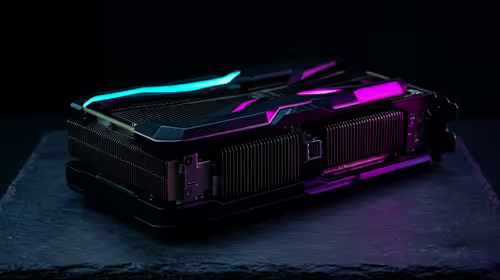
TP-Link has put a date on its first consumer Wi-Fi 8 hardware. Archer 8 Ultra preorders are planned to open in selected regions on 30 September 2026, while the Deco 8 Ultra mesh system is scheduled for the first quarter of 2027. That is a real launch milestone, but Wi-Fi 8 remains an emerging standard and neither South African pricing nor local availability has been confirmed.
Quick Answer
The Archer 8 Ultra is a tri-band BN19000 router with advertised combined wireless capacity up to 19Gbps, 18 internal antennas and 10Gbps wired connectivity. The Deco 8 Ultra carries a BN22000 rating and is designed as a mesh system. These figures combine multiple bands; they are not the speed one phone, laptop or internet connection will receive. The live Evetech router snapshot contained neither model and showed an in-stock Wi-Fi 7 router starting at R1,299.
What Wi-Fi 8 is trying to improve
Wi-Fi 8 is being developed under IEEE 802.11bn. Its practical emphasis is dependable performance: lower latency variation, stronger operation around interference, more stable connections at range and better handling of many devices. That direction matters in a busy home where video calls, game downloads, smart devices and streaming compete at the same time.
Peak numbers still dominate the labels. BN19000 and BN22000 describe aggregate theoretical capacity across several bands and streams. A client device normally uses one link under specific radio, channel and signal conditions. The fibre line, Ethernet port, router placement, walls, neighbouring networks and the client radio can each become the limiting factor.
Use the wireless networking range to map the whole requirement, including adapters and access points, before assuming a router alone will fix the network.
What the live catalogue shows
The read-only query found no Archer 8 Ultra or Deco 8 Ultra. It did return a TP-Link M7010 LTE travel router at R939 and a TP-Link ER605 wired VPN router at R999, but neither is a direct home Wi-Fi 8 alternative. The first wireless-generation comparator in the result was a CUDY WR3600E Wi-Fi 7 router at R1,299.
That R1,299 figure establishes an entry point for current-generation local wireless hardware. It does not predict a Wi-Fi 8 price. Early draft-generation flagships with 10GbE hardware and many antennas are likely to sit in a very different class, and any imported headline price would still omit local warranty, tax and channel differences.
Diagnose the network before upgrading
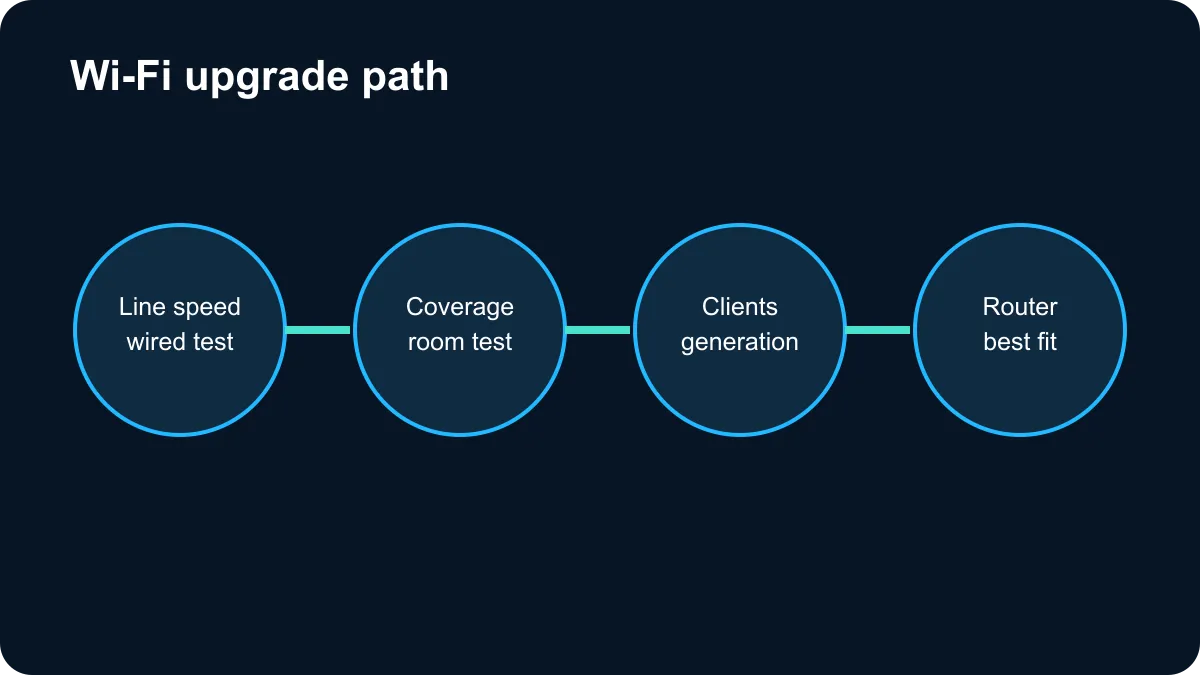
Start with the internet line. If a wired speed test already falls below the subscribed service, replacing the wireless router may not solve the upstream issue. Next, test coverage in the actual problem rooms and compare 2.4GHz, 5GHz and 6GHz performance. A better-positioned access point or mesh node can matter more than a newer badge.
Count the devices and identify their Wi-Fi generations. A Wi-Fi 6 phone does not become a Wi-Fi 8 client because the router changes. Newer routers remain backward compatible, but the largest new-generation benefits require suitable clients, clean spectrum and software that works correctly.
The current wireless-router category provides established alternatives today. For homes using an ONT or fibre modem, the fibre-router range can help separate ISP handoff needs from local Wi-Fi coverage.
Who should consider the first wave
An enthusiast with multi-gigabit internet, 10GbE storage, many modern clients and a measured congestion problem may benefit from early Wi-Fi 8 hardware. A home with ordinary fibre speed, Wi-Fi 5 or Wi-Fi 6 clients and a single coverage dead zone will usually gain more from placement, cabling or a mature mesh system.
Wait for exact local models, certification, firmware history and support commitments. The September date proves that products are moving towards retail; it does not remove the normal risks of buying the first wave of an unfinished standard.
Frequently Asked Questions
When do Archer 8 Ultra preorders open?
TP-Link says selected-region preorders begin on 30 September 2026. South African availability was not confirmed.
What does BN19000 mean?
It is an aggregate advertised wireless class of up to 19Gbps across multiple bands. It is not a promise for one device or internet connection.
When is Deco 8 Ultra planned?
The mesh system is planned for the first quarter of 2027. Regional dates and final configurations may differ.
Is Wi-Fi 8 final?
No. IEEE 802.11bn is still emerging, so certification, firmware and client support remain important purchase checks.
Will it make fibre faster?
It cannot exceed the internet service supplied to the home. It may improve local reliability or latency when the wireless network is the bottleneck.
Should Wi-Fi 7 owners upgrade?
Not without a measured problem that Wi-Fi 8 addresses. Mature Wi-Fi 7 hardware may offer better local value while the new generation develops.
Fixing a slow or patchy home network?
Measure line speed, coverage and client capability before choosing a current router generation.