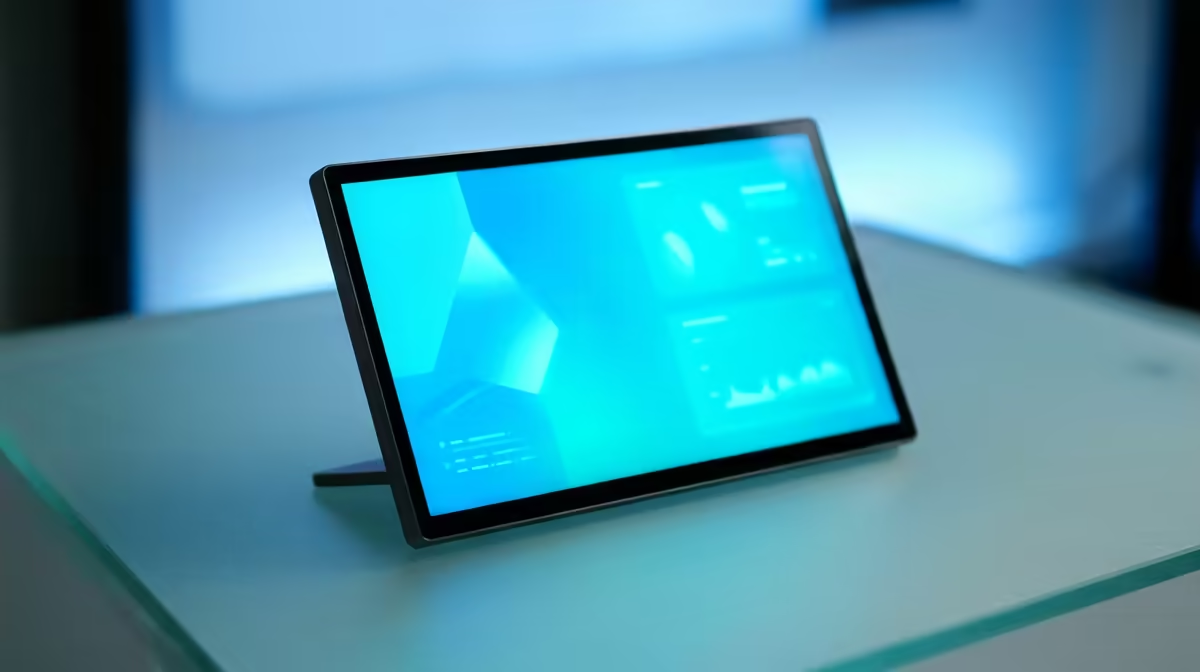
The big shift in portable monitor trends this year is simple to state and a long time coming: OLED has finally dropped to a price where it shows up on travel-sized panels instead of staying locked to expensive desktop screens. Sub-16-inch OLED travel monitors now exist, 4K models like the ViewSonic VX1655-4K-OLED have landed at price points that were LCD-only territory not long ago, and features that used to be premium are now mid-range defaults.
Quick Answer
The headline change is affordable OLED on small panels for the first time, including 4K OLED options around the 15.6 inch mark. Alongside that, USB-C power delivery passthrough and 144Hz refresh have moved from premium extras to standard mid-range features. A solid portable monitor now does more for less than it did a year ago.
OLED Reaches the Travel Class
For years, portable monitors meant LCD, because OLED panels at small sizes were either unavailable or priced beyond what a second screen could justify. That ceiling has cracked. Manufacturers are now putting OLED into sub-16-inch panels, and the result is the deep blacks, per-pixel contrast, and punchy colour that desktop OLED owners already enjoy, finally in something you can slide into a laptop bag.
The 4K OLED arrival is the clearest signal. A panel like the ViewSonic VX1655-4K-OLED packs both a sharp 4K resolution and OLED contrast into a travel form factor at a price that once bought only an LCD. That combination of detail and contrast on the move is what makes this the year the category genuinely changed rather than just iterated. To see what the current crop looks like in stock, the portable monitor selection at Evetech is the place to compare panel types side by side.
Features That Became Standard
USB-C Power Delivery Passthrough
Passthrough used to be a selling point reserved for higher-end models. Now it is expected in the mid-range. It matters because a single USB-C cable can carry the video signal to the monitor while the monitor feeds power back to your laptop, so you charge your machine and run a second screen without juggling two chargers. For anyone working off a laptop in a coffee shop or a hotel room, that one-cable convenience is the difference between a tidy setup and a tangle.
144Hz Refresh
High refresh rates have followed the same path. A 144Hz portable panel was a niche, pricey thing; it is now a common mid-range spec. The smoother motion helps gamers playing on a console or handheld plugged into the screen, and it makes everyday scrolling and cursor movement feel crisper. You no longer have to choose between portability and a fast panel.
What This Means for SA Buyers
The practical upshot is that your money stretches further. A buyer shopping now can reasonably expect OLED contrast, or at minimum a fast LCD with passthrough, at a price that bought a basic LCD with no extras last year. For students wanting a second screen in res, professionals running a portable office, or gamers pairing a handheld with a bigger display, the value proposition has shifted firmly in the buyer's favour. The smart move is to decide which feature you actually need, OLED contrast for media and design, high refresh for gaming, or passthrough for laptop work, and buy for that rather than chasing every spec at once. The best-selling monitors at Evetech give a useful read on which features SA buyers are actually prioritising right now.
Frequently Asked Questions
Is OLED really affordable on portable monitors now?
Yes. Sub-16-inch OLED panels have arrived at prices that were LCD-only territory a year ago, including 4K OLED models like the ViewSonic VX1655-4K-OLED. The contrast and colour that were once desktop-exclusive now fit in a travel screen.
What does USB-C power delivery passthrough do?
It lets a single USB-C cable carry video to the monitor while the monitor sends power back to charge your laptop. That removes the need for a separate charger and keeps a mobile setup to one cable.
Do I need a 144Hz portable monitor?
Only if you game or want the smoothest scrolling. 144Hz is now a common mid-range feature, so it costs little extra, but for document work and video a standard refresh is perfectly fine.
Is a 4K portable monitor worth it on a small panel?
For media, design, or detail-heavy work, the sharpness is genuinely noticeable even at 15.6 inches. For general productivity, a Full HD panel is easier on power and your wallet, so match the resolution to your use.
Which feature should I prioritise on a budget?
Pick the one that fits your main use: OLED for contrast and colour, high refresh for gaming, or passthrough for laptop charging. Buying for your actual need beats chasing every spec on one screen.