Before buying a USB-C car charger, a South African driver is really checking five things, and only one of them is the wattage printed on the box. Get the other four wrong and the wattage number stops mattering anyway.
Quick Answer
Check the protocol (Power Delivery, ideally with PPS), the socket it plugs into, the cable rating, how the charger handles cabin heat, and where a warranty claim would actually land. That last point matters locally: a R349 charger bought here is a counter visit if something goes wrong, while a private import means customs paperwork and courier fees on what was a small accessory to begin with.
🔍 Protocol first, wattage second
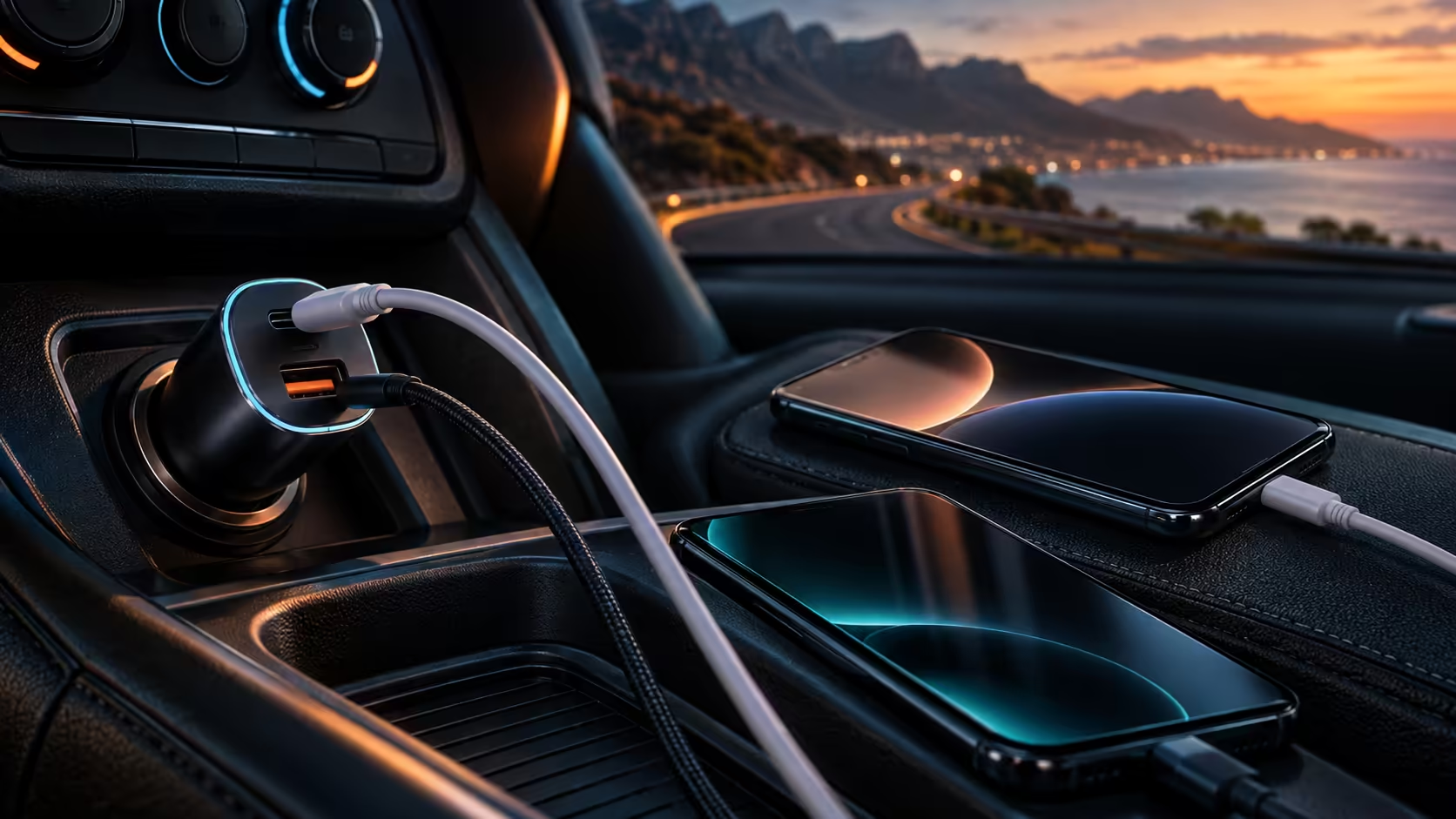
A wattage figure on its own says little without knowing whether the port actually negotiates Power Delivery or just hands out one unchanging voltage no matter what device shows up. A 30W PD port with PPS adjusts to what a phone actually requests; a fixed 5V port of similar wattage on paper behaves nothing like it in practice.
Check the listing states PD explicitly, not just a wattage number, since that word is doing the real work behind the figure. The car charger range lists the protocol against each model rather than leaving it to a wattage figure alone.
🚗 Socket type and cable rating
Almost every South African car built in the last couple of decades carries the same standardised 12V accessory socket, so socket compatibility is rarely the deciding factor. The cable is a more common gap: a 30W PD path is only as fast as the cable carrying it, and a thin or worn lead pulled from a drawer can quietly cap the real-world speed below what the port supports.
🌡️ Heat and warranty, the two locally specific checks
A charger left in a hot cabin, common in a Gauteng or coastal summer with the car parked in direct sun, needs proper thermal protection to avoid throttling or shutting down mid-charge. Check that the listing mentions temperature protection specifically, not just over-voltage and over-current.
Warranty is the check most easily skipped and most valuable when something does go wrong. A locally bought charger from a South African retailer means a fault is a returns process handled here; an item bought from an overseas marketplace usually means shipping the fault back at your own cost, if the seller accepts returns from South Africa at all. A cable bought alongside the charger carries the same local-warranty logic. Other everyday gaming accessories bought the same way benefit from the identical reasoning.
Frequently Asked Questions
Does every South African car have the same charging socket?
Yes, effectively. The 12V accessory socket follows a standard barrel size across nearly all vehicles sold here, so compatibility is rarely the issue.
Why does the cable matter as much as the charger?
A cable too thin or worn to carry the negotiated current caps the real charging speed regardless of what the charger's port supports on paper.
Is a local warranty really worth paying slightly more for?
For most buyers, yes, given that returning a faulty item bought overseas usually costs more in shipping than the original saving.
Does cabin heat actually affect a car charger?
Yes. Extended time in a hot, sun-baked cabin is a real stress test for a charger's thermal protection, more so than most indoor use ever presents.
Ready to buy a charger that will hold up locally? Browse the car charger range and pair it with a cable rated for the current it carries.