

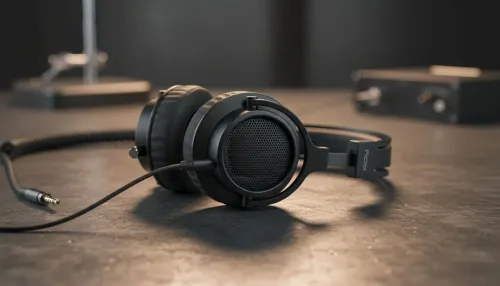
Maintain Wired Headset: Tips to Extend Lifespan
Maintain wired headset — Checklist: • inspect cables • clean earpads • store properly 🔧🎧 Practical steps to preserve sound quality and avoid premature replacements.
Read moreWondering what 26,000 DPI means on a gaming mouse? This guide breaks down tracking, sensitivity feel, and real-world needs—so you avoid pointless DPI chasing. 🎮⚙️
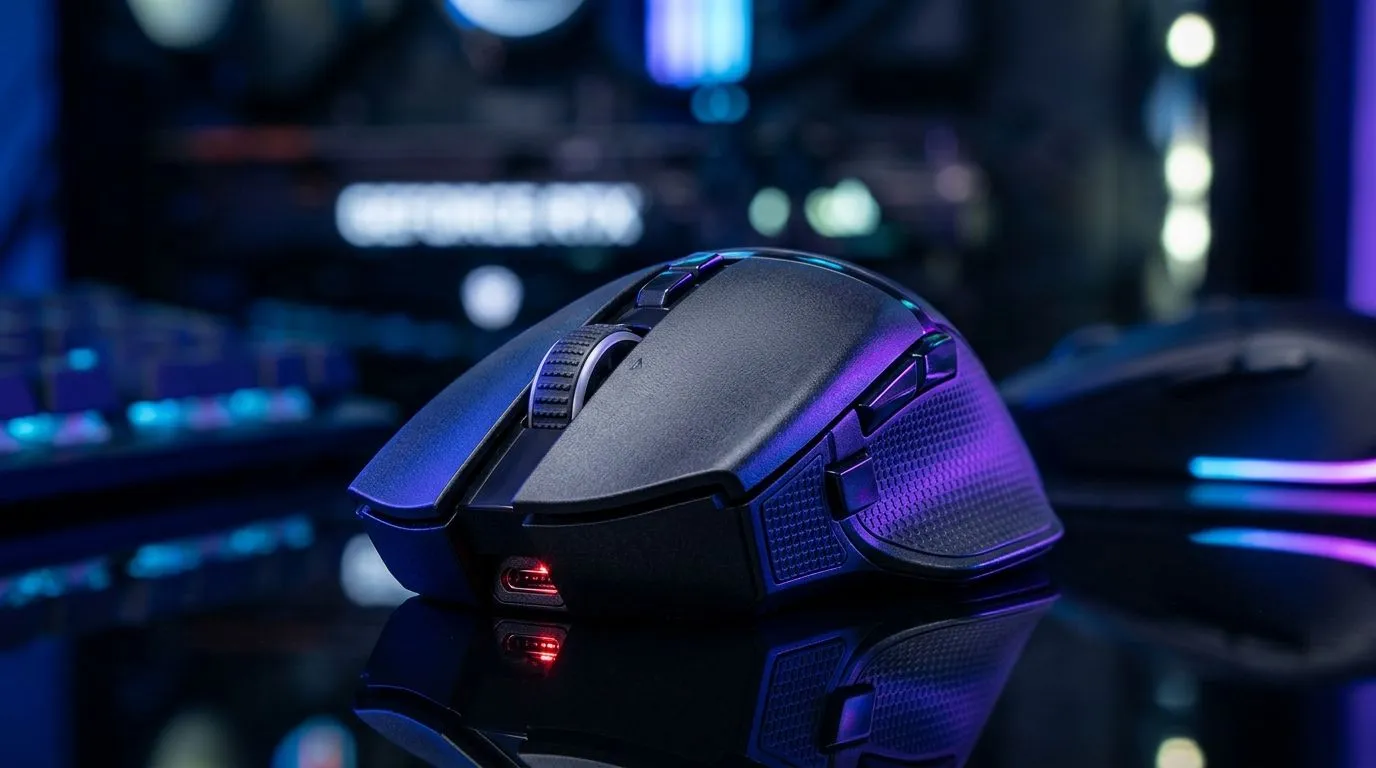
If you’ve been shopping for a new mouse in South Africa, you’ve probably seen massive DPI numbers shouting from the box. 26,000 DPI sounds elite. It sounds fast. It sounds like it belongs in a clutch moment on Dust 2 or during a hectic late-night Warzone session. But does a 26,000 DPI gaming mouse actually make you better? Not automatically. What matters is how you play, your desk space, and whether the mouse feels right in your hand.
DPI stands for dots per inch. In simple terms, it describes how far your cursor moves on screen when you move the mouse a small distance on your desk. Higher DPI means more cursor movement per physical movement.
That sounds impressive, but it is only one part of the picture. Most gamers do not need to run a mouse at maximum DPI all the time. Many prefer lower settings for better control, especially in FPS titles where small, precise movements matter more than raw speed.
The real question is not whether a 26,000 DPI gaming mouse exists. It’s whether your sensibility, grip style, and games benefit from that range.
Here’s the practical truth. DPI is not the same as skill.
A high DPI ceiling can help if you:
But if you mostly play competitive shooters, a lower DPI can feel more stable. It can make tracking targets easier. It can also reduce accidental overshoot when your aim matters most.
For buyers comparing options, it helps to start with the right category. Evetech’s mouse accessories selection is useful if you want pads and extras that affect glide and comfort just as much as sensor specs do. A good mouse pad can change the feel of a mouse more than a headline DPI figure ever will.
Before you spend your rand, think about the whole package. A mouse should match your grip, hand size, and cable preference.
A wired mouse still appeals to many gamers because it offers a direct connection and no charging anxiety. If that fits your style, browse Evetech’s wired mouse range.
A wireless mouse, though, can keep your setup cleaner and less cluttered. That matters if you’re working, studying, and gaming from the same desk. Check the wireless mouse collection if freedom of movement matters more to you than a cable.
A mouse can boast huge DPI, but if it cramps your hand after two hours, it’s the wrong mouse. Look at the shape. Look at the buttons. Look at how the scroll wheel feels.
If you want value, compare features against price. Evetech’s best gaming mouse deals can help you spot a smart buy in ZAR without paying extra for specs you may never use.
A higher DPI ceiling is useful, but comfort and sensor consistency matter more for most gamers. If possible, choose the shape first, then match the DPI range to your play style.
A mouse spec sheet can be noisy. These are the details worth checking:
A well-tuned sensor matters more than a huge maximum DPI label. If tracking feels erratic, the number on the box means very little.
Extra buttons help in MMOs, productivity, and some battle royale games. For other players, they just add clutter.
Light mice suit fast flicks. Heavier mice may feel steadier for some users. There’s no universal winner here.
This affects how often the mouse reports movement to the PC. It is often discussed alongside DPI, but it is a separate spec.
For a broader look at models and styles, Evetech’s gaming mouse category is a good place to compare shapes, sensors, and form factors side by side.
If you want future-proof flexibility, a 26,000 DPI gaming mouse can make sense. If you want smoother everyday use, the extra range won’t hurt. But if you’re buying purely because the number is high, pause for a second.
Ask yourself:
That’s the smarter way to shop. Especially in South Africa, where every rand counts and desk setups often need to do double duty.
A 26,000 DPI gaming mouse is not magic. It is simply a flexible tool with a very high sensitivity ceiling. For most gamers, the best choice still comes down to shape, sensor behaviour, and comfort. DPI matters, yes... but not nearly as much as many marketing pages suggest.
If you’re upgrading soon, think about how you really play. Then match the mouse to that habit... not the hype.
Ready to Find Your Perfect Match? The Mac vs Windows debate is complex, but for maximum power, choice, and value in South Africa, Windows is hard to beat. Explore our massive range of laptop specials and find the perfect machine to conquer your world.
26,000 DPI means the sensor can track about 26,000 counts per inch. The real impact depends on your in-game sensitivity and mouse sensor quality.
No. Many top players use far lower DPI. Performance comes from consistent settings like eDPI, good aim technique, and stable tracking.
Not necessarily. Higher DPI can feel faster, but accuracy also depends on sensor performance, lift-off distance, and whether your sensitivity is tuned.
DPI and in-game sensitivity multiply together. Use eDPI (DPI × in-game sensitivity) to compare settings across different DPI levels.
Polling rate affects input updates (responsiveness), while DPI affects tracking resolution. Both matter, but DPI alone rarely fixes aiming issues.
It can if your sensitivity becomes too high or inconsistent. Many players do best when their eDPI supports controlled movement.
Start with a practical DPI (often 400–1600) and adjust in-game sensitivity to reach a comfortable eDPI. Then test with aim training.
Usually not. Ensure good surface consistency, disable unwanted acceleration, and calibrate Windows and game settings for stable tracking.
Maintain wired headset — Checklist: • inspect cables • clean earpads • store properly 🔧🎧 Practical steps to preserve sound quality and avoid premature replacements.
Read more
Fix crackling headset fast: step-by-step checks for cables, connectors, drivers, and settings to remove static or distorted audio on wired headsets 🎧⚙️
Read more
Stereo vs mono headsets: learn which delivers clearer calls, better spatial music, or simpler mono voice performance — pick the right headset for meetings, music, or gaming 🎧💬
Read more
- Compare gaming headset vs studio headphones; - Assess comfort, mic and sound; - Recommend best daily picks. Gaming headset vs studio headphones: learn which suits work, music and casual gaming. 🎧⚖️
Read more
- Check pressure points - Compare earcup materials - Adjust clamp and fit Best gaming headsets for glasses: quick guide to reduce temple pressure, pick breathable memory foam earcups, and optimize fit for long sessions 🕹️👓
Read more
Gaming microphone noise reduction: Use beamforming mics, AI noise suppression, and hardware filters to cut background noise and boost in-game voice clarity. 🎧⚙️ Learn setups, settings, and top mic features.
Read more
Snapdragon X2 NPU Explained: How 80 TOPS Changes. Plain-English explanation of what it means, why it matters & how it affects your buying decisions in SA.

HBM? High Bandwidth Memory Used in GPUs and AI. Plain-English explanation of what it means, why it matters & how it affects your buying decisions in SA.
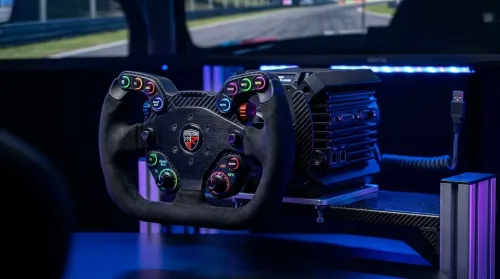
How much should you spend on sim racing accessories in South Africa for a realistic setup? We break down budgets by quality tiers, so you buy smart gear and avoid overspending 🎮💸

G-Sync and FreeSync? Variable Refresh Rate. Plain-English explanation of what it means, why it matters & how it affects your buying decisions in SA.

AMD Laptop: Value. SA-focused analysis with local pricing data, real-world insights & actionable buying advice.
How MacBook Neo Handles 30+ Chrome Tabs with Only. SA-focused analysis with local pricing data, real-world insights & actionable buying advice.

Why Apple Put 8GB RAM in MacBook Neo: The A18 Pro. SA-focused analysis with local pricing data, real-world insights & actionable buying advice.
Upgrade your work laptop with a New Motherboard. Step-by-step instructions with SA-specific tips, common pitfalls to avoid & expert recommendations.
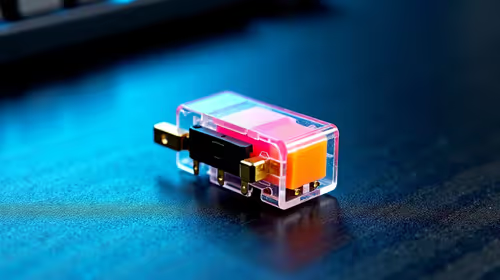
Glorious Keyboard Switches Explained: Which. Plain-English explanation of what it means, why it matters & how it affects your buying decisions in SA.
Winter Keyboard Buying Guide. Everything you need to know with SA pricing, step-by-step instructions & expert recommendations.
Keyboard Buying Guide. Everything you need to know with SA pricing, step-by-step instructions & expert recommendations.
LGBTQ+ Gamers Keyboard Guide: January Edition. Everything you need to know with SA pricing, step-by-step instructions & expert recommendations.