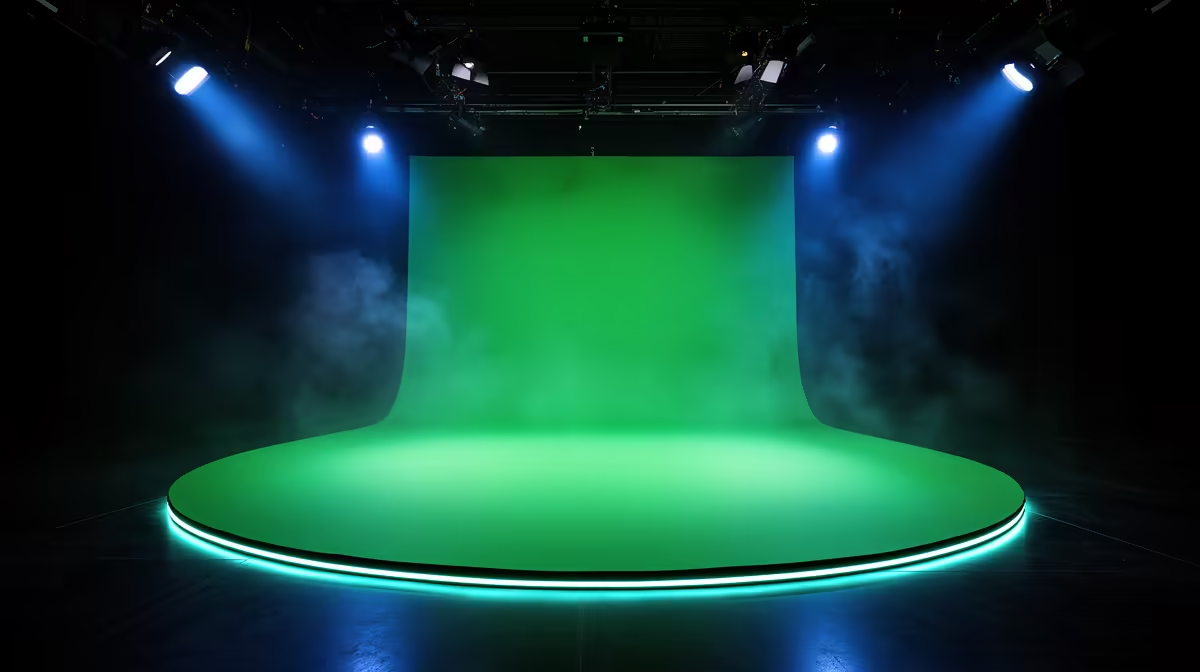
Full-body chroma keying is the one green screen application where getting the size wrong is immediately visible in the final frame. Cut the background out from a waist-up shot and the edges are forgiving. Try the same key with your entire body in frame on a screen too small, and you will see green spill on your shoes, colour fringing around moving arms, and an incomplete key where the fabric runs out before the edge of the shot. A 298x298cm green screen sits at the size threshold where full-body keying actually works, and understanding why that measurement was chosen tells you everything about what to look for when shopping.
Quick Answer
A 298x298cm screen provides roughly 3m of even backdrop for full-body keying. It covers your feet, clears arm movement on both sides, and leaves enough margin for normal stepping and gesturing. Smaller screens work for waist-up shots but force awkward cropping for full-body work.
📐 Why 3 Metres Is the Practical Floor for Full-Body Shots
A standing adult occupies roughly 50 to 70cm of horizontal space in a neutral pose with arms down. Add a full arm extension on each side and that figure climbs to 130 to 160cm. Add a step in either direction and you are approaching 180 to 200cm. That is your minimum usable green zone measured at shoulder width.
But a key that just clears the body is not a working key. The chroma keyer in your editing software needs a buffer of clean, consistent green between the subject and the edge of the frame. Spill corrections, motion blur on hands, and the natural slight spread of a softened key all consume that buffer. A 298cm wide screen leaves 60 to 80cm of clean green beyond a normal standing pose on each side, which is enough margin to key cleanly even with active movement.
The height of 298cm serves a different purpose. Most residential ceilings in South African homes sit between 240 and 260cm. A 298cm screen mounted from a crossbar at around 200 to 210cm drapes the remaining fabric onto the floor, where it curves forward from the wall and covers the ground the subject stands on. Without that floor coverage, your feet will key onto a hard colour transition where the backdrop meets the raw floor surface, which produces a ragged outline at the base of every shot.
Two People and a 298cm Screen
A pair of presenters standing side by side occupies 100 to 140cm in a tight pose. That sits comfortably within the 298cm width with room to gesture without breaking the frame. However, any dynamic blocking, walking toward each other, facing different directions, or stepping apart, quickly consumes the margin. For productions involving two people with freedom of movement, a 4m wide screen is a safer starting specification.
🔧 Stand and Mounting Considerations
A 298cm fabric at full hang requires a crossbar long enough to span the width without the fabric bunching at the ends. Standard green screen support kits include crossbars up to 300cm, which works, but the crossbar itself bends slightly under the fabric weight at full extension. A 299 or 300cm bar at its maximum span with no centre support will sag; a second upright in the middle, where the kit supports it, keeps the fabric taut.
Stand height matters separately from the crossbar. A 199cm stand works for this application because the full 298cm screen height is not hung vertically. You hang the top edge at roughly 200cm, the fabric falls, and the remaining length pools on the floor in front of the wall. The curved floor section is not waste. It is the part that covers your feet. Hang the screen too high and the floor section extends further forward, which can interfere with your shooting position. Hang it at 195 to 205cm and the floor coverage sits comfortably under a normal standing position.
✨ Fabric vs Paper at This Scale
Fabric muslin is the practical choice at the 298cm format. Muslin folds into a compact bag, survives repeated packing and transport, and can be steamed when wrinkles from storage need removing. Paper rolls at this width are heavy, prone to crease damage when transported, tear along any fold lines, and once a section is creased it does not flatten cleanly for keying. A muslin screen with careful storage outlasts a paper roll by a significant margin at comparable or lower cost.
The surface properties differ too. Muslin has a slight texture that can produce minor inconsistencies under very directional lighting. Keeping two light sources positioned symmetrically on the screen, rather than letting one lamp do all the work, provides even colour across the full 298cm surface and gives the keyer consistent input to work with.
Pro Tip ⚡
Light the green screen and the subject separately. Two lights aimed at the screen from a 45-degree angle on each side, positioned so they overlap in the middle, remove the hotspot a single direct lamp creates. A well-lit, evenly-coloured screen cuts keying time dramatically even on basic software.
🎯 Arm Reach, Motion, and Why Clearance Matters
Keying is not a static operation. Your editing software makes a boundary decision on every frame individually, and when a hand moves quickly the edge calculation smears slightly at the motion boundary. That smear needs clean green around it to resolve correctly. The 30 to 50cm clearance a 298cm screen provides on each side of a normal pose is not luxury footage, it is the working margin the algorithm requires to close that boundary cleanly on a moving subject.
Tighter screens force you to either widen the shot to expose non-screen background, or constrain the subject's movement to avoid breaking frame. Neither is a clean solution. Sizing the screen correctly from the start removes the constraint entirely.
Frequently Asked Questions
What is the minimum screen width for a single standing person shot at full body?
For a static, arms-down pose, a 2m screen can just work if the subject is precisely centred and holds still. Any movement, gesturing, or stepping breaks that margin almost immediately. For practical full-body keying with normal movement, 298cm is the realistic minimum. It gives the subject and the keying algorithm enough room to function without constant positional discipline.
Can a 298cm screen serve both one and two people?
For a pair of people in close standing positions, yes. For two people with freedom of movement across the frame, a 298cm screen is borderline. Two people stepping apart to face each other and gesture in conversation can exceed the usable margin. For those applications, budget toward 400cm of width to avoid the edges showing in wide-angle framing.
Does the excess fabric at the bottom have a keying purpose?
Yes. The section that curves onto the floor covers the ground your feet stand on. Without floor coverage, the key ends at the base of the backdrop where it meets a different coloured surface, producing a line across the shot at foot level. Let the fabric pool forward and your feet sit on the same colour as the rest of the screen, so the key runs continuously from head to floor.
Is a 199cm stand tall enough for a 298cm screen?
Yes, because you do not hang the full screen height vertically. Mount the top edge at roughly 200cm, let the rest fall straight down, and the bottom portion curves naturally onto the floor. The stand needs to reach the mounting height, not the total screen height. A 199cm stand at its maximum extension handles this setup correctly.
Why does even lighting matter more for keying than for regular video work?
A chroma keyer reads a specific colour value and removes it. If one section of the screen is brighter than another, the colour value shifts across the surface. The keyer either clips green where it is too bright or leaves a fringe where it is too dark. Consistent illumination gives the keyer one clean, narrow colour range to work with, producing a sharper edge on the subject.
Ready to set up a full-body green screen that actually keys cleanly?
Browse the green screen and studio backdrop range to find the 298cm muslin and support kit that fits your space and shooting setup.