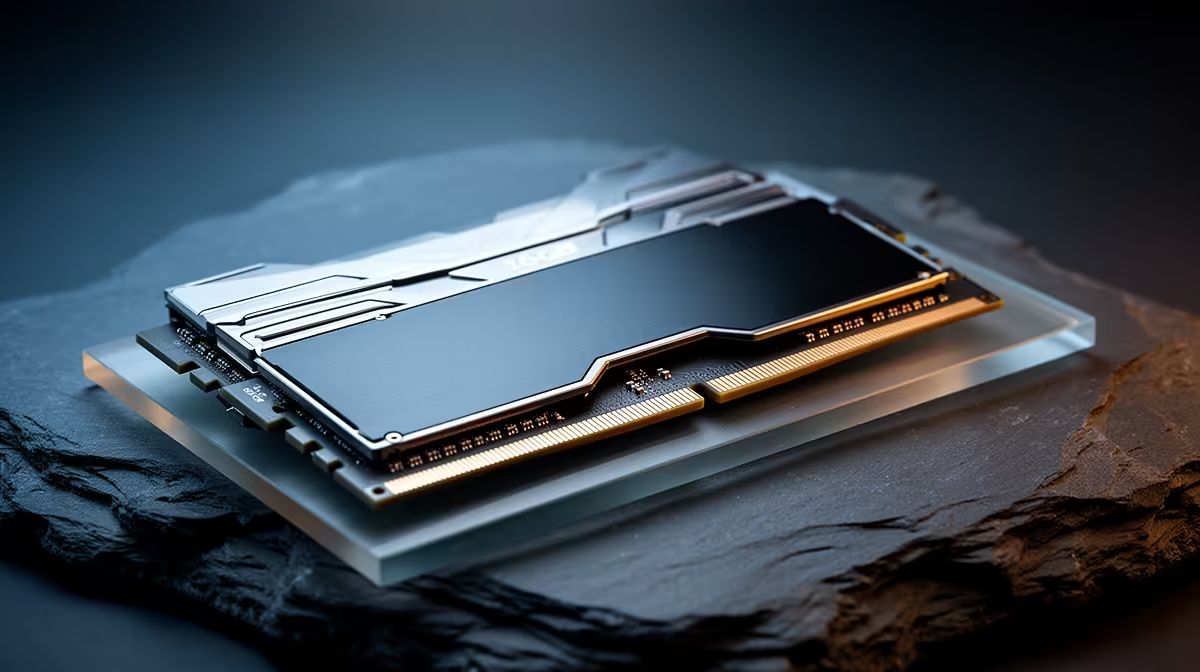
The shock in an R8,000 32GB DDR5 basket comes from comparing it with a market that no longer exists. Consumer memory supply has tightened while manufacturers direct investment towards higher-value AI and server demand. South African buyers then feel global cost, currency and replacement-stock timing in one local price.
Quick Answer
A 32GB DDR5 kit can cross R8,000 when tighter consumer DRAM supply meets strong data-centre demand and a South African restock lands at a less favourable cost. The increase is not created by capacity alone. Chip selection, speed, timings, RGB and the exchange rate can widen the final number. Compare exact kits and buy for stability and workload before paying for a premium bin.
Memory production cannot change direction overnight
DRAM manufacturing is planned far ahead. Producers decide which products and customers receive wafer capacity, engineering attention and packaging resources. When AI infrastructure offers stronger returns, consumer desktop memory can lose priority.
Reducing consumer output does not mean factories stop making RAM. It means supply grows more slowly than demand or contracts in certain categories. Distributors then compete for fewer kits, and replacement stock can arrive above the cost attached to older units.
New fabrication capacity takes years to build and qualify. Announcements do not place affordable modules on a South African shelf next month. This delay is why buyers should expect uneven relief rather than a clean turning date.
Compare capacities in the DDR5 kit selection, with memory products buyers favour for context. The July 2026 snapshot put KLEVV's named Bolt X DDR4-3200 desktop module, with 16GB capacity, at R2,899. Do not double that DDR4 figure into a 32GB DDR5 quote.
South African pricing adds another layer
Memory is bought through an international supply chain. Currency at the time of ordering, freight, distributor cost and the age of stock can produce different prices for similar kits. A unit bought into the channel months ago may sit beside a fresh shipment with a new cost base.
This is why two 32GB kits can move by different amounts. One model may have older stock. Another may use a tighter memory bin or carry a new supplier price. Compare the complete model number and specification before treating the difference as a retailer mistake.
Tax and normal operating costs remain part of the local shelf price, but they do not explain a sudden global memory cycle on their own. The useful comparison is the same kit over time, or two current kits with matching capacity, speed and module count.
Avoid converting an overseas sticker price and calling it a local equivalent. Delivery, taxes, support route and currency settlement belong in the landed cost. A local price includes a different purchase path.
The 32GB label hides several price tiers
A 32GB kit can mean two 16GB modules or one 32GB module. For desktop gaming, a matched pair often gives the cleanest dual-channel setup. A single module can preserve an upgrade slot, but may reduce memory bandwidth until a second is added.
Speed and timings affect the bin. A plain supported kit can cost less than a high-speed low-latency model. The faster specification may show small gains in some games and larger gains in specific memory-sensitive workloads. Pay for it when tests on your platform show value.
RGB, white heat spreaders and tall designs can also add cost. They may complete the build you want, but they do not create capacity. When price pressure is high, a low-profile non-RGB kit can deliver the same usable 32GB.
Platform compatibility matters. AM5 uses DDR5, while AM4 uses DDR4. Intel motherboard support varies by generation and model. A cheap kit in the wrong memory generation has no value.
Protect value with a model-level comparison
Save three exact 32GB kits. Record capacity layout, speed, timings, profile support, height, warranty and price. Check the motherboard's memory support and cooler clearance.
Then decide which features are fixed. Capacity and compatibility should be fixed. RGB, heat-spreader colour and an extreme speed may be flexible. This lets you move to a less expensive kit without weakening the machine.
If 32GB breaks the budget, measure whether 16GB can carry the workload for a while. A matched 16GB kit can start a basic gaming system, though adding another kit later is not guaranteed to run at the same profile. Check the cost and stability trade before planning a staged purchase.
Do not build every other part and wait months for memory. Without RAM, the new PC cannot be tested. A complete balanced machine at today's price can be more valuable than a box of ageing components waiting for a forecast to arrive.
Know when 32GB is the wrong target
A light office PC may never need 32GB. If 16GB has a comfortable buffer during the heaviest day, paying the crisis premium adds capacity with no visible job. Keep the money for storage, backup or a better screen.
At the other end, a professional project may need 64GB. Buying an expensive 32GB kit as a temporary step can create a second purchase and leave modules with no role. Measure the largest scene, virtual-machine set or data task before settling on capacity.
Laptop memory needs its own route. SO-DIMMs differ from desktop DIMMs, and soldered RAM cannot be upgraded through a normal kit. Do not transfer desktop pricing or layout advice to a notebook.
Keep the memory box and photograph both module labels before installation. The exact code matters if one stick fails or you need to verify that a returned kit matches the purchase.
Frequently Asked Questions
Why has 32GB DDR5 become so expensive?
Tighter consumer supply, data-centre demand, product binning and South African replacement costs can all contribute.
Does every 32GB kit cost the same?
No. Module count, speed, timings, styling, memory chips and stock age can create wide differences.
Should I buy a slower kit?
A supported mainstream kit can be the better value when premium speed produces little gain in your workload.
Can I start with 16GB?
Yes, if the workload fits. Plan the later upgrade carefully because adding a second kit can affect stability.
Will new factories lower prices soon?
New capacity takes time to build and qualify. Treat future relief as uncertain and gradual.
Compare exact 32GB DDR5 kits by compatibility, module layout and useful speed before paying for features your build will not use.