Quick Answer
For SA streaming, 1,000Hz mouse polling is already enough; 8,000Hz is useful mainly for high-refresh competitive gaming where the PC, game, and monitor can expose the difference. If your display is 60Hz, 144Hz, or the workload is timeline editing, spend first on shape, sensor quality, and wireless reliability.
What polling rate actually changes
A 1,000Hz mouse reports every 1ms, while 8,000Hz can report up to eight times more often. That can make motion feel slightly cleaner on 240Hz or 360Hz esports setups, but it also uses more CPU time and battery on some mice. For editing a 4K timeline, the pointer needs accuracy and comfort more than ultra-high polling.
Buying checks for SA creators
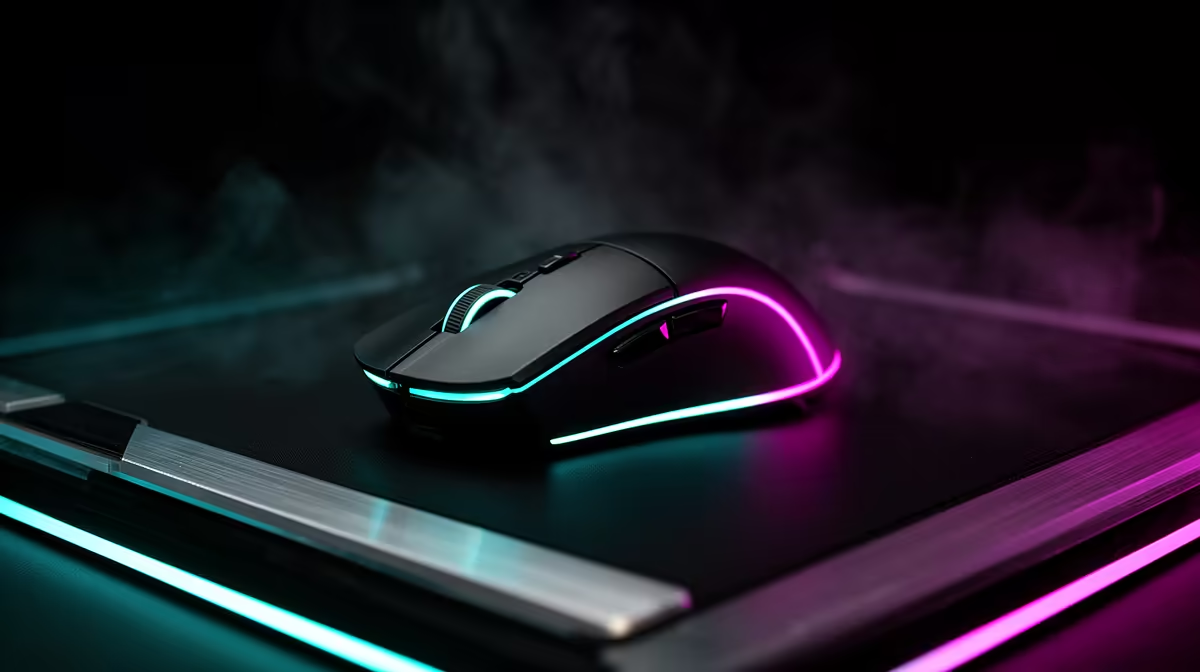
Compare models such as Logitech G Pro X Superlight, Razer Viper V3, Corsair M75 Air, and similar gaming mice by weight, grip shape, dongle support, and software stability. Budget roughly R900-R3,500 depending on sensor, switches, battery, and brand tier. If the mouse is used for eight-hour workdays, comfort beats a number printed on the box.
When 8,000Hz is worth it
Choose 8,000Hz if the same PC also plays CS2, Valorant, Apex, or Fortnite on a 240Hz-plus monitor and can hold very high FPS. Keep 1,000Hz if the priority is OBS control, editing shortcuts, battery life, and predictable tracking. SA buyers should also check USB port placement because a poor dongle position can hurt wireless feel.
FAQ
Can 8,000Hz improve video editing?
Not in a meaningful way for most editors. A comfortable mouse with accurate tracking and good buttons is more useful in Premiere Pro, DaVinci Resolve, or general desktop work.
Does 8,000Hz reduce battery life?
It can. Higher polling rates ask the mouse and receiver to work harder, so many users step down to 1,000Hz for daily work.
What polling rate should I use for streaming?
Use 1,000Hz for reliable streaming controls and general gaming. Move higher only if your game, FPS, and monitor refresh make the benefit visible.