


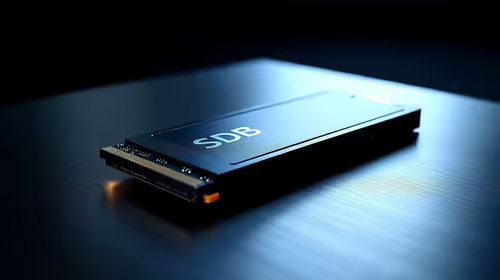
PCIe 5.0 vs PCIe 4.0 for Video editing in 4k in SA
PCIe 5.0 vs PCIe 4.0 for video editing in 4k is mainly about fit, features, compatibility, cost, and upgrade path, not one automatic winner. SA buyers should match the choice to the setup.
Read moreMonitor choice for Addressing high workstation power costs starts with panel quality. For addressing high workstation, compare GPU load, desk lighting and ports before choosing the panel.
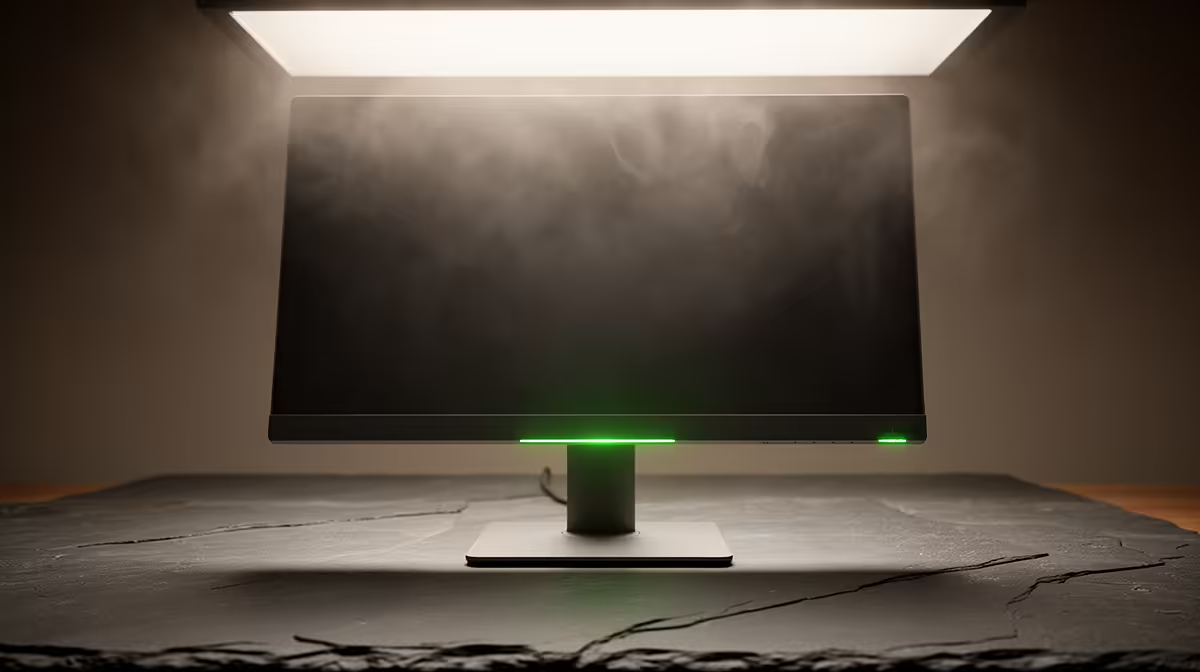
Addressing high workstation tech accessory should not need a complicated routine to feel good. The practical question is whether 10 mm fit check, USB-C compatibility and daily build check support mixed work and play.
The practical answer for high workstation power costs with monitors that automatically dim when you is to match 10 mm fit check, USB-C compatibility and daily build check to your main device or workspace first. If poor fit is the concern, check daily build check on addressing high workstation tech accessory in the day-one pass.
Use one normal session as the test case for high workstation power costs with monitors that automatically dim when you. For addressing high workstation tech accessory, confirm 10 mm fit check in the timing pass. A practical shortlist for addressing high workstation tech accessory should reduce poor fit before the durability pass ends. Use USB-C compatibility as the storage pass tie-breaker for addressing high workstation tech accessory.
Build quality for high workstation power costs with monitors that automatically dim when you is the way the details hold up under ordinary use. Use USB-C compatibility as the upgrade pass tie-breaker for addressing high workstation tech accessory. Test addressing high workstation tech accessory in mixed work and play during the signal pass. For high workstation power costs with monitors that automatically dim when you, a cleaner routine is stronger evidence than louder wording.
The final check for high workstation power costs with monitors that automatically dim when you is whether you can explain the benefit in one real situation. For addressing high workstation tech accessory, confirm 10 mm fit check in the desk-fit pass. Use USB-C compatibility as the day-one pass tie-breaker for addressing high workstation tech accessory. Use USB-C compatibility as the compatibility pass tie-breaker for addressing high workstation tech accessory.
workstation power costs with monitors that automatically dim when you still feels confusing, remove any Addressing High Workstation option that does not explain 10 mm fit check or USB-C compatibility plainly.
Use USB-C compatibility as the thermal pass tie-breaker for addressing high workstation tech accessory. That gives high workstation power costs with monitors that automatically dim when you a practical test before style.
Use USB-C compatibility as the surface pass tie-breaker for addressing high workstation tech accessory. The useful sign for addressing high workstation tech accessory is repeatable simpler setup after the comfort pass.
Use USB-C compatibility as the layout pass tie-breaker for addressing high workstation tech accessory. High workstation power costs with monitors that automatically dim when you should fit travel bags as well as the main use case.
A 27-inch monitor drawing 35W that blanks within 60 seconds of absence saves approximately 70-100Wh per day, cutting daily screen electricity cost by roughly R0.25 at.
Yes. Ambient light dimming adjusts brightness to room lighting continuously; presence dimming blanks the screen entirely when no human is detected, delivering larger.
Presence sensors on modern monitors trigger a wake signal within 1-2 seconds of detecting return, and IPS panels restore full brightness from blank in under 2 seconds.
Monitors with EPA Energy Star 8.0 certification include presence-based power management as a qualifying feature; combining this with auto-dim helps corporate procurers.
Reducing from 250 nits to 120 nits cuts backlight draw by roughly 20-25%; presence-sensor blanking saves 70-80% during absence, making the two features complementary.
The screen dims or blanks the image only; the operating system and any running processes are unaffected.
PCIe 5.0 vs PCIe 4.0 for video editing in 4k is mainly about fit, features, compatibility, cost, and upgrade path, not one automatic winner. SA buyers should match the choice to the setup.
Read more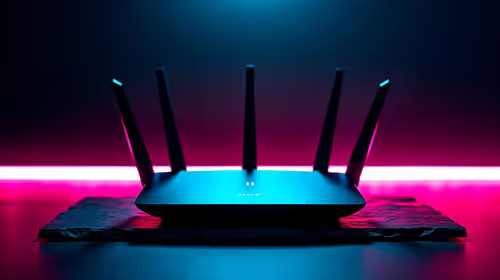
Wi-Fi 7 vs Wi-Fi 6e for competitive esports comes down to router support, latency goals, device compatibility, and coverage. SA buyers should match the choice to the real network setup.
Read more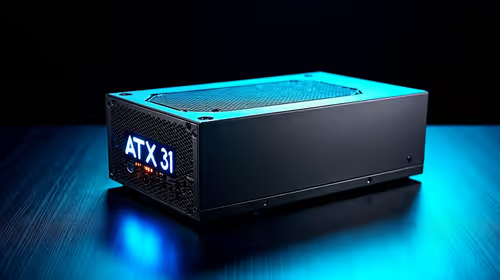
ATX 3.1 vs ATX 3.0 for mMO and live-service games buyers - what changes is mostly about compatibility, budget, upgrade path, and setup fit. SA buyers should check device support and real needs before expecting a clear win from either option.
Read more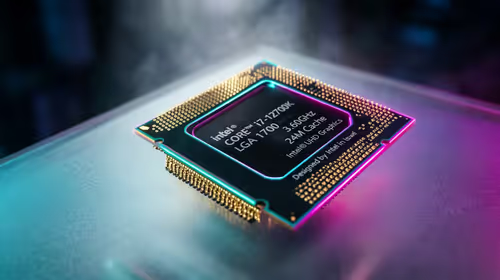
LGA 1851 vs LGA 1700 can affect Twitch and YouTube streaming when gaming and encoding share CPU resources. For SA creators, the real-world difference depends on encoder choice, memory support, motherboard cost, thermals, and upgrade plans.
Read more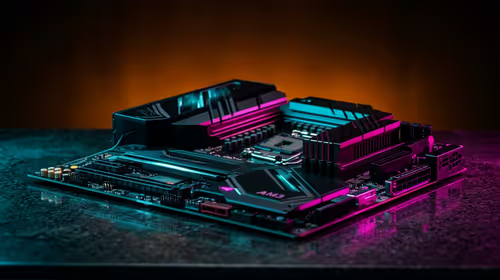
X870E vs X670E for aaa single-player gaming is mainly about fit, features, compatibility, cost, and upgrade path, not one automatic winner. SA buyers should match the choice to the setup.
Read more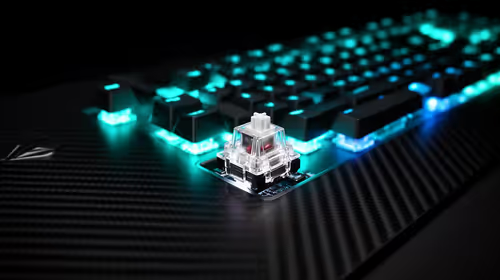
Hall Effect switches vs Mechanical switches for mMO and live-service games is mostly about compatibility, budget, upgrade path, and setup fit. SA buyers should check device support and real needs before expecting a clear win from either option.
Read more
A fake 113GB GTA VI ISO reportedly used empty padding around a small malware payload. SA gamers should delete unofficial builds, keep Windows security active and wait for official channels.
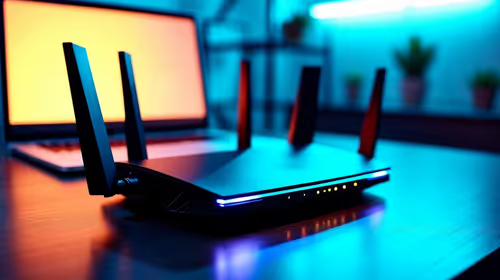
Wi-Fi 6E vs Wi-Fi 6 matters for 4K video editing when files move across a network. The real-world difference between Wi-Fi 6E and Wi-Fi 6 for video editing in 4K depends on NAS access, cloud uploads, router range, and SA creator workflows.

The difference between PCIe 5.0 and PCIe 4.0 for SA gamers is mostly bandwidth headroom. Compare GPU slot needs, NVMe speed, motherboard support, and upgrade timing before paying extra for a newer platform.

Gaming PC stuck pixel checks in South Africa should confirm the monitor fault first. Use colour tests, screenshot comparison, cable swaps, display menu checks, and clear photos before deciding on support.

Shokz OpenFit Air 2 earbuds weigh 7.2g each and use a redesigned dual-driver open-ear layout. SA buyers should choose them for comfort and awareness, not maximum isolation.

AMD's current driver now lists a Radeon RX 9050 4GB, while product coverage details a narrowed memory system. SA buyers should weigh the low VRAM ceiling against current local Radeon options.

Samsung Display has demonstrated a 16-inch 2.5K OLED laptop panel running at 300Hz. SA buyers should wait for a named notebook, full panel specifications and a local price before planning an upgrade.

Microsoft says some Windows 11 game crashes after recent updates are linked to RGB-related drivers. Affected SA gamers should confirm the update and driver before using the published registry workaround.
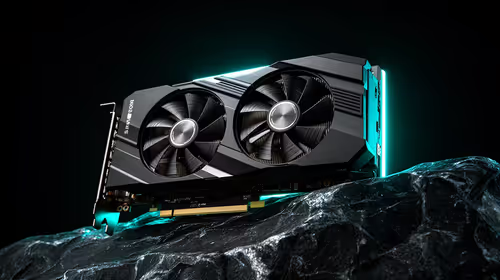
RTX 5090 on a 650W PSU is a tight pairing with very limited headroom. For SA gaming PCs, focus on total system draw, PSU quality, connector support, CPU choice, and avoid OC plans unless the full build is carefully power-limited.
PCIe 5.0 vs PCIe 4.0 for video editing in 4k is mainly about fit, features, compatibility, cost, and upgrade path, not one automatic winner. SA buyers should match the choice to the setup.
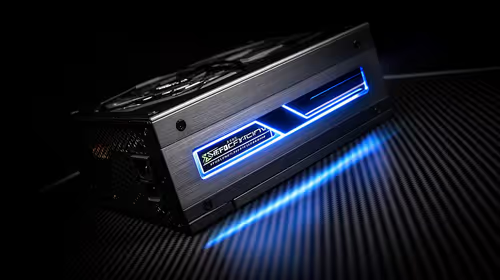
850W PSU safety for RTX 5090 is plausible with a quality unit and balanced parts. In SA, confirm connector support, CPU power draw, case airflow, PSU age, and spare capacity before building around 850W.
Wi-Fi 7 vs Wi-Fi 6e for competitive esports comes down to router support, latency goals, device compatibility, and coverage. SA buyers should match the choice to the real network setup.