An AI upscaling rig can handle home media-server duties when its operating system, storage, network and playback software are suitable, but the GPU built for enhancement may be unnecessary for ordinary serving. Reliability, quiet operation and low idle complexity can matter more than peak compute.
Separate processing from household playback
Upscale one representative file and note output bitrate, size and codec. Serve both original and enhanced versions to the normal television or client devices while measuring buffering, CPU use and network traffic. Check whether upscaling happens occasionally or must run while several people watch.
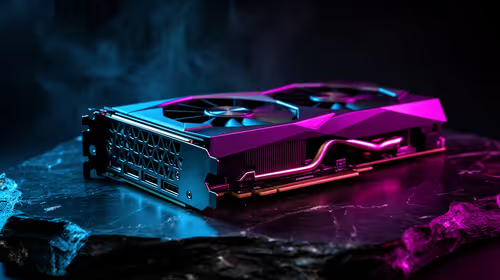
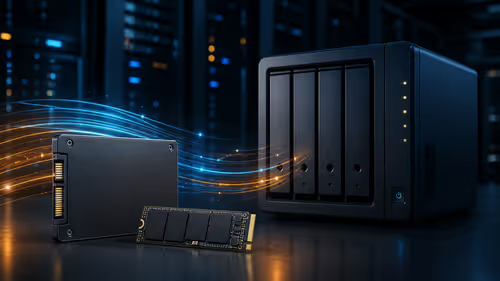
The Minisforum UM750L at R4,600 is a verified compact-PC reference, not a media-server or AI guarantee. The Palit RTX 5060 8GB at R4,800 is a confirmed GPU component, while the Seagate Expansion 4TB at R2,057 is a separate external-drive option. The Cudy WR3600E router at R766 is another network reference. Verify current codec support, storage, Ethernet, software and warranties.
Use named accounts, expose no unnecessary services and keep the server updated. Preserve media metadata and irreplaceable originals in versioned backups separate from the streaming library. Test recovery after a restart and ensure sustained processing does not overheat a quiet enclosure.
Use one combined rig when the concurrency test passes. Otherwise, a simple efficient server plus scheduled enhancement workstation may be easier to maintain.
Planning a home media workflow? > Compare Evetech mini PCs, GPUs and storage after concurrent testing.