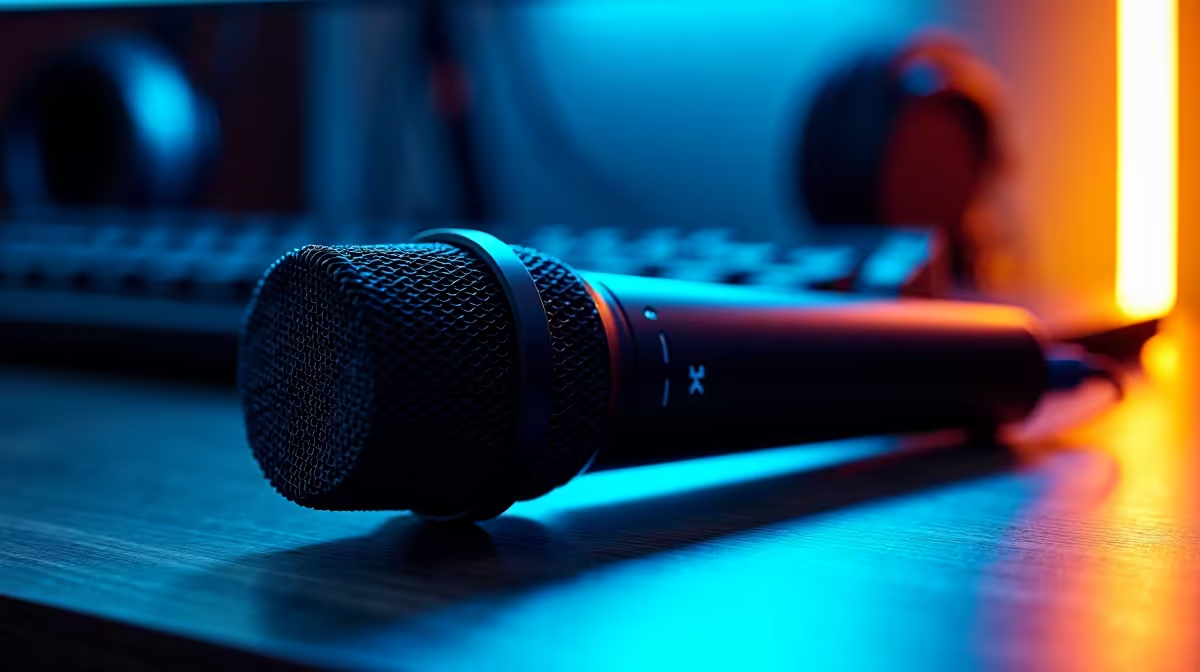
Buying a streaming microphone in South Africa involves the same decision every audio buyer eventually faces: how much of the budget goes on the mic itself, and how much should be left for the supporting hardware. Getting that split wrong costs you. Overspending the entire ZAR budget for a streaming microphone on the capsule with nothing left for a proper mount means your expensive mic captures every desk vibration and keyboard thud. Underspending on the capsule while over-investing in accessories gives you a great arm holding a mediocre mic.
Quick Answer
Put approximately 70 percent of the budget on the microphone capsule and set aside around R600 to R900 to cover mounting and filtering hardware. A capable USB condenser starts near R1,500, making a solid solo streaming chain achievable from around R2,200 to R2,500 total. XLR setups with an interface start from approximately R4,000.
💰 Where the Money Does the Most Work
The capsule is the part that determines whether your voice sounds professional or amateurish, and no amount of accessory spending changes that. A R3,000 boom arm under a R500 mic produces clean, stable mounting for a mediocre signal. The same arm under a R1,500 to R2,000 mic produces clean, stable mounting for a genuinely good signal. The arm's contribution is equal in both cases. The mic's contribution is not.
This is why the 70 percent rule exists. If your total budget is R2,500, roughly R1,750 should go toward the microphone and R750 toward mounting and filtering hardware combined. If the budget stretches to R3,500, roughly R2,450 goes toward the mic. The ratio stays consistent because the capsule is always the rate-limiting component.
Within the capsule budget, the figures that most directly affect quality are capsule diameter (aim for 20mm or above), bit depth (24-bit), signal-to-noise ratio (70dB or higher), and polar pattern (cardioid). Two mics at the same price with different capsule sizes will almost always sound meaningfully different. The larger capsule wins on warmth and low-end body in the vast majority of voice recording comparisons.
🔧 Allocating the Accessory Budget
Once the capsule allocation is set, the remaining budget splits between two components: the boom arm and the pop filter.
The boom arm deserves the larger portion of what remains. A quality metal arm in the R600 to R900 range isolates the mic from desk vibrations, positions the capsule at the correct height for natural speaking, and preserves the desk surface for keyboard and mouse rather than having a stand base compete for the same space.
A pop filter typically costs R150 to R250 for a standalone mesh model and solves a specific problem: plosive air bursts from hard consonants that register as low thumps in the recording. Some condensers include an integrated filter. If the mic you choose has a well-built integrated mesh, redirect that portion toward the arm.
What does not belong in a first-time streaming budget: audio interfaces (until you are ready for XLR), shock mounts if the arm already has a built-in cable channel, and premium USB cables. The cable the mic ships with is adequate for the vast majority of setups.
Avoiding the RGB and Brand-Name Premium
Some microphones carry a significant premium for LED lighting, famous brand endorsements, or elaborate desktop software. These are real costs that do not translate to audio quality. A mic with exceptional capsule specifications and no RGB ring will outperform a heavily marketed competitor at the same price with a smaller capsule every time. If the lighting matters for stream aesthetics, treat it as a tiebreaker between two mics that are otherwise equal on audio specs.
⚡ Budget Tiers and What Each Gets You
South African pricing shifts with the rand and stock availability, but broad bands hold consistent shape.
At a total budget of around R2,200 to R2,500, a USB condenser near R1,500 paired with a steel boom arm around R700 and a basic pop filter around R200 gives you a clean, professional solo streaming chain. This tier suits a dedicated solo streamer, a student podcaster, or someone building a home office recording setup.
At R3,000 to R3,500, the mic budget increases to around R2,000 to R2,200, which opens access to larger capsule diaphragms, better SNR ratings, hardware AI noise canceling, and higher build quality. The arm and filter budget stays roughly the same, since an R800 arm is already excellent and gains above that are marginal.
The XLR transition changes the equation. A capable XLR condenser near R1,500 to R2,000 needs an audio interface starting around R1,500 to R2,000 to connect to a PC. That puts a two-component minimum outlay at R3,000 to R4,000 before the arm. XLR is worth the complexity when a second presenter is joining the show, when the source needs hardware preamp control, or when the existing computer lacks a USB port to spare. For a solo streamer, a well-specified USB condenser at R1,500 to R2,000 matches an XLR setup in the same price band once the interface cost is included.
Pro Tip ⚡
Bundle the mic and arm where possible. Several South African gaming peripheral stores sell mic-plus-arm kits that shave R200 to R400 off the combined retail price compared to buying both separately. Check whether the arm in the bundle is metal-bodied before committing. A plastic arm included to hit a lower bundle price defeats the stability benefit the arm is supposed to provide.
🎯 Sequencing the Build If the Budget Is Split Across Time
Not everyone has the full setup budget available at once. If the build happens in stages, the sequencing matters.
Start with the microphone and pop filter. The mic is the rate-limiting component, and a decent pop filter costs under R250. Recording with the mic on a temporary stand while saving for the arm is workable. Recording with a good arm but an underpowered mic is not a viable reversal of that logic.
Add the boom arm second. Once the mic is delivering the quality you need, the arm removes vibration noise and the ergonomic compromise that come with a desk stand. It also frees the desk surface.
Hold off on accessories like shock mounts, additional filters, and audio interfaces until the core chain is performing well. Build the chain one component at a time, evaluate each addition, and move forward from a stable baseline.
Frequently Asked Questions
How much should I spend on the mic itself?
Put roughly 70 percent of the total budget on the capsule. A capable USB condenser for streaming and podcasting starts around R1,500 in South Africa. As the budget increases, a larger capsule diameter, better signal-to-noise ratio, and hardware features like onboard noise canceling or a hardware mute button become available.
What should I set aside for accessories?
Reserve approximately R600 to R900 for mounting and filtering hardware. The boom arm takes the larger share of that sum, with quality steel models starting around R600 to R800. A basic pop filter adds R150 to R250. If the mic includes an integrated pop filter, redirect that portion toward a slightly sturdier arm.
Is an XLR setup worth the extra cost?
Only when the total budget reaches approximately R4,000 or above. At that point a capable XLR condenser paired with a quality audio interface delivers noticeably cleaner preamps and more headroom than a USB mic at the same total price. Below R4,000, the interface cost pulls too much budget away from the capsule.
Can I build a solid streaming setup under R2,500?
Yes. A USB condenser around R1,500, a metal boom arm around R700, and a pop filter around R200 comes to approximately R2,400 and produces a clean, professional streaming chain. The key is spending the bulk on the capsule and choosing a metal arm rather than a budget plastic one.
Where do most beginners overspend?
On branding and RGB. A well-known gaming peripheral brand can add R500 or more to a mic price without a corresponding improvement in capsule quality or noise floor. Check the signal-to-noise ratio and capsule diameter before the badge on the front.
Should I buy the mic and arm together as a bundle?
Yes, when a genuine bundle is available from a reputable supplier. Bundled mic-and-arm kits typically save R200 to R400 compared to buying separately. Verify the arm is metal rather than plastic before committing, since some budget bundles include a light plastic arm to hit a lower retail price.
Ready to build your streaming setup within a real ZAR budget?
Browse the full streaming microphone and boom arm range at Evetech and put your budget where it does the most work for your voice and your desk.