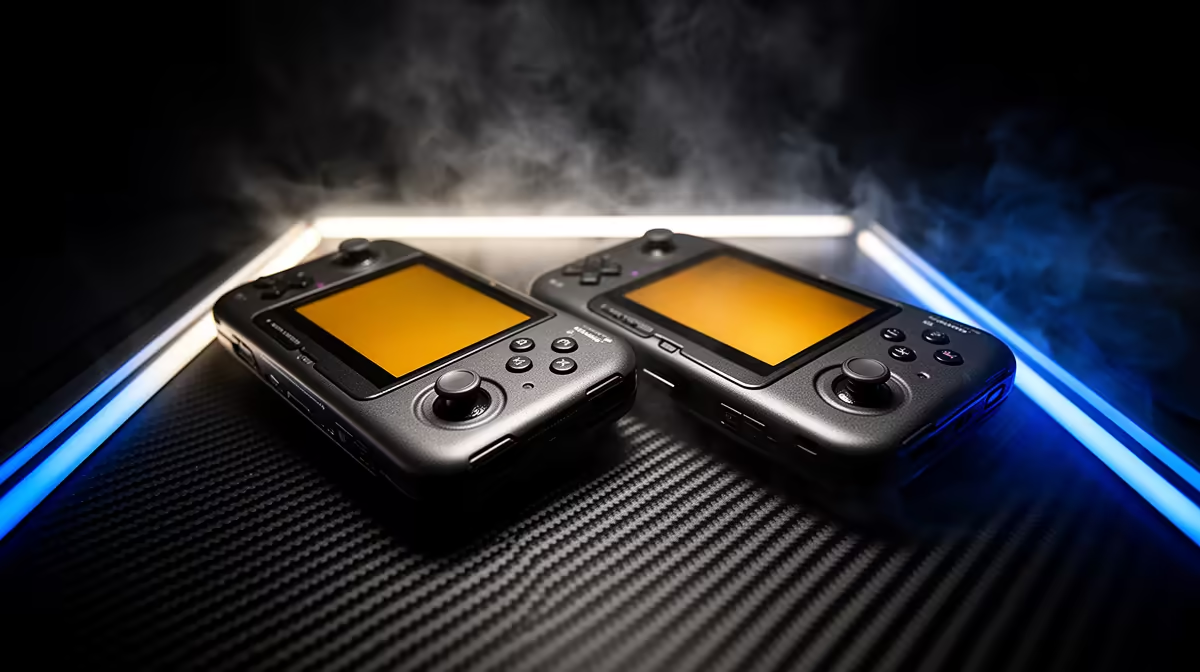
Pick the wrong retro handheld brand and you either overpay for power you never use or buy something that stutters on the games you actually want. The choice almost always comes down to two names: Anbernic, which rules the affordable Linux end, and Retroid, which pushes Snapdragon-powered Android machines that reach far newer systems. They solve different problems, and knowing which problem is yours saves real money.
Quick Answer
Choose Anbernic if you want a cheap, pocketable device for classics up to roughly PlayStation, PSP and Dreamcast on a simple Linux interface. Choose Retroid if you want Android, app-store access and the muscle for Saturn, GameCube and Switch-era emulation. Both reach SA as imports, so factor shipping and the lack of local warranty into the price.
Anbernic: budget Linux that just plays
Anbernic built its reputation on doing one thing cheaply and well: small Linux handhelds that boot fast and play retro libraries without fuss. The RG35XX and RG40XX lines are the heart of it, affordable, light and genuinely pocketable, with the kind of battery life that comes from not running a full Android stack.
The trade-off is ceiling. A typical Anbernic Linux unit comfortably handles 8-bit and 16-bit eras, PlayStation, PSP and often Dreamcast, but it is not built to push GameCube or Switch titles. The interface is purpose-made for emulation rather than a general app platform, which is a feature if you want to switch on and play, and a limit if you want streaming apps or a browser on the same device.
Retroid: Android power for the harder systems
Retroid goes the other way. Its Pocket and Flip lines run Android on Snapdragon chips, which unlocks two things Anbernic does not: far more emulation headroom and the full Android app ecosystem. The Pocket 5 and the clamshell Flip 2 sit at the powerful end, reaching into Saturn, GameCube, and with the right setup, Switch-era games that lighter Linux units cannot touch.
Why Android changes the maths
Because it is Android, a Retroid is not only an emulator. You can stream from a console or cloud service, run a game launcher, and update emulators straight from app stores. That flexibility is the draw, and the cost is a steeper price, a busier setup, and battery life that depends on how hard you push the chip.
Where the clamshell fits
The Flip 2 form factor matters for SA commuters and students who want something that closes shut and survives a backpack. A clamshell protects the sticks and screen between sessions in a way a slab handheld does not, which is worth weighing if the device lives in transit.
How to choose by target systems
The cleanest way to choose between these brands is to list the hardest systems you actually want to play, then pick the device that clears them with margin.
If your wishlist tops out at SNES, GBA, PS1, and the occasional PS1 RPG, an Anbernic RG35XX or RG40XX handles all of it and costs a fraction of a Retroid. If PSP and Dreamcast are on the list, both brands can manage it with the right model, but Retroid's Snapdragon hardware does it with less effort and better battery headroom. If N64, Saturn, GameCube, or PS2 matter to you, Retroid is the only answer; entry Anbernic units reach those systems inconsistently at best.
The Retroid 6 has since launched with a Snapdragon 8 Gen 2 and a larger 6,000mAh battery, offering 6 to 8 hours of sustained GameCube and PS2 emulation at 70 percent brightness. It also gains a 120Hz AMOLED panel over the Pocket 5's 60Hz screen, which makes fast-scrolling games visibly smoother. The trade-off is a price roughly R500 higher than the Pocket 5 and a slightly heavier body that is a little less pocketable.
The honest brand verdict
The split is clean. Anbernic wins on price, simplicity and pure pick-up-and-play for older libraries. Retroid wins on raw capability and the freedom of Android, at a higher cost and with more to configure. There is no single best brand, only the right one for your target systems and budget. If your wishlist tops out at PSP and PS1, paying Retroid money is wasted. If you are set on GameCube or Switch, an entry Anbernic will frustrate you.
Both arrive in SA as grey imports, so there is no local warranty path and you carry the shipping and duty cost. If you would rather buy a gaming handheld with local support and a normal returns process, the handheld gaming console range at Evetech is the safer route, and the PC best sellers list gives a sense of what portable-PC buyers here are choosing.
Frequently Asked Questions
What is the core difference between Anbernic and Retroid?
Anbernic mostly makes affordable Linux handhelds tuned for classic systems, while Retroid makes more powerful Android handhelds that reach newer consoles. One prioritises value and simplicity, the other power and flexibility.
Which brand handles GameCube or Switch games?
Retroid, on its higher-end Snapdragon models like the Pocket 5 and Flip 2. Standard Anbernic Linux units are built for older eras and generally top out well before GameCube and Switch.
Are these brands sold with a local SA warranty?
Generally no. Both are imported, so you are buying grey stock without a local warranty channel, and you absorb shipping and duties. A locally stocked handheld is the option if after-sales support matters to you.
Is Android worth the extra cost over Linux?
If you want app-store updates, streaming and a device that does more than emulate, yes. If you only want to switch on and play retro games with long battery life, the simpler Linux route saves money.
Which is better for a student on a tight budget?
An entry Anbernic RG35XX or RG40XX gives the most playable games per Rand for classic libraries. The RG35XX line sits well under R1,000 imported and handles 8-bit and 16-bit systems, PlayStation and PSP without fuss. Step up to Retroid only if your must-play list includes the harder, newer systems. For a first retro handheld on a student budget, an Anbernic running OnionOS or a similar polished firmware gives thousands of playable games with minimal configuration, strong community support, and the kind of battery life that suits a full day away from a charger.
What about the Retroid Pocket Classic?
Retroid also makes a budget-tier Pocket Classic that sits closer to Anbernic pricing. It runs Android on a weaker chip than the Pocket 5, handling the same classic systems an Anbernic covers but adding the Android app ecosystem. It is worth considering if you want Android flexibility but cannot stretch to Pocket 5 or Pocket 6 pricing, though at that price point Anbernic's simpler Linux firmware often wins on battery life and immediate playability.