Quick Answer
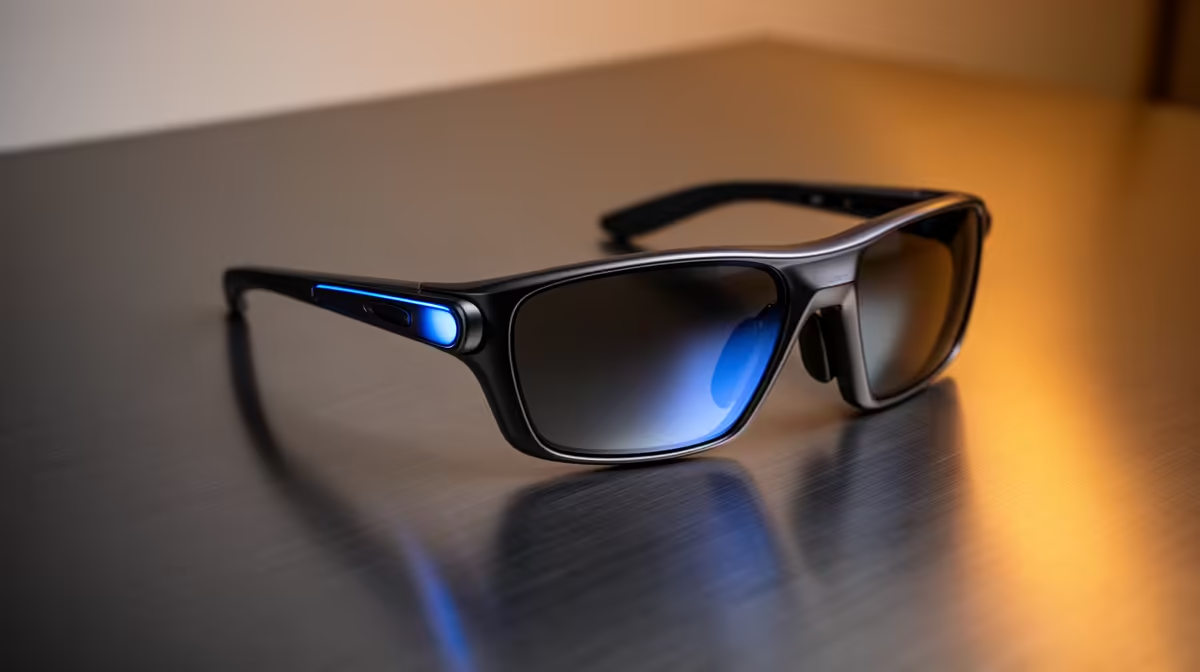
For quiet PC builds, AR glasses are a clean, silent display add-on, so compare on panel quality and connection, not noise. Look for 1080p per eye, 400+ nits, low latency, and DisplayPort over USB-C from your build. Budget roughly R7,000-R11,000, and confirm your motherboard or GPU exposes a USB-C DisplayPort output before buying.
AR Glasses Fit A Silent Build Perfectly
AR glasses draw power and signal over USB-C and make no noise, so they suit a quiet build that you tuned to 22-25 dBA. They give a private big screen without adding a second monitor's footprint or fans. The things to compare are per-eye resolution near 1080p, brightness of 400 nits or more, and low display latency, none of which affect your build's acoustics. This is a display decision, not a cooling one.
The Connection Check On A Desktop
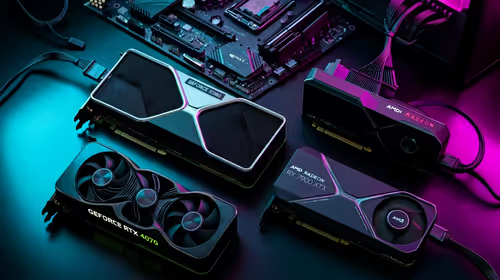
Desktops are trickier than laptops here, because AR glasses need DisplayPort over USB-C, and many desktop GPUs only output HDMI and DisplayPort on standard connectors, not USB-C. Check whether your graphics card or motherboard has a USB-C port that carries video; some modern GPUs do, many do not. If yours does not, you need a DisplayPort-to-USB-C video adapter, which adds R800-R1,500. Confirm this first, since it is the most common reason a desktop owner cannot just plug the glasses in.
What To Compare Beyond The Panel
Once the connection is sorted, compare comfort and software. A sub-80g pair with adjustable focus suits long quiet-build sessions, and a prescription-insert option saves squeezing your glasses behind the optics. Check whether the glasses need a resident companion app, because a quiet-build owner usually keeps startup processes lean; a driverless display mode keeps idle CPU and fan behaviour unchanged.
FAQ
How much do AR glasses cost in South Africa?
Display-only AR glasses land roughly R6,500-R12,000 depending on resolution and brightness. Models with built-in compute or wider field of view run higher, so set your budget before chasing features you will not use.
Do AR glasses connect to a desktop PC?
Only if your GPU or motherboard has a USB-C port that carries DisplayPort video. Many desktop GPUs do not, so you may need a DisplayPort-to-USB-C adapter adding R800-R1,500.
Are AR glasses silent enough for a quiet build?
Yes, they make no noise and add no fans, so they suit a quiet build perfectly. Compare them on panel quality and connection rather than acoustics.
your desktop GPU has a USB-C port that carries DisplayPort video before buying AR glasses, because most desktop cards need a video adapter the glasses do not include.