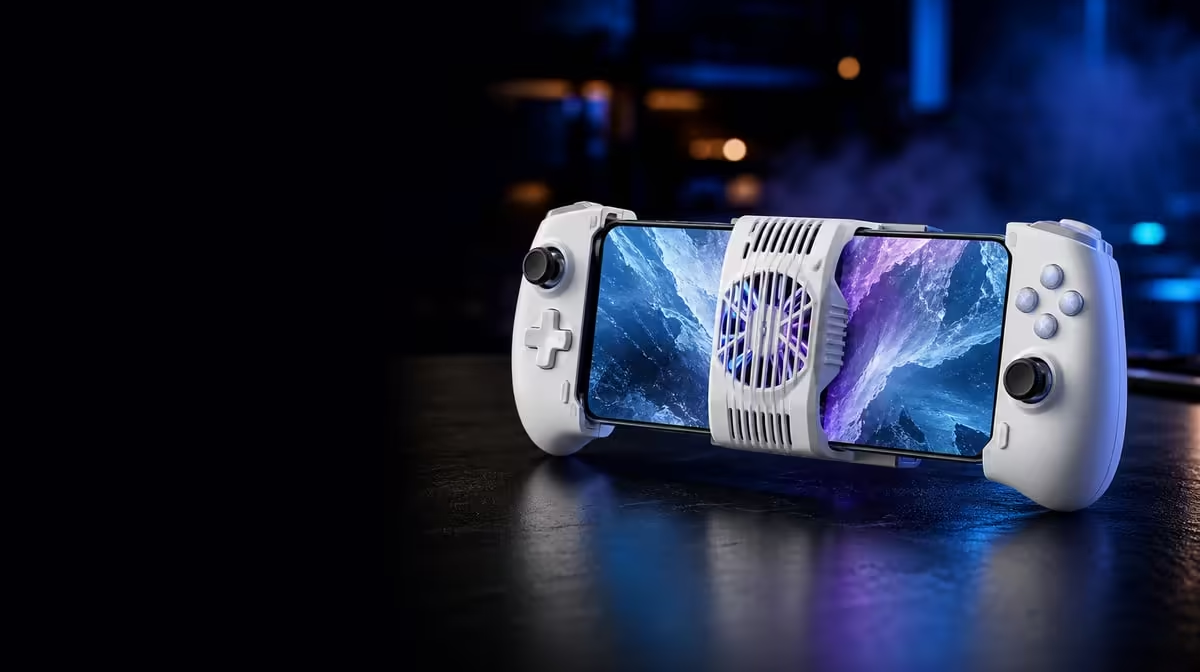
Premium features deserve extra rand only when they solve separate, recurring problems. Integrated cooling and Hall controls can be worth paying for because one supports sustained phone heat management and the other addresses contact-related stick drift. The GameSir X3 Pro combines both at R1,199, alongside quick triggers, gyro and one-cable routing.
Quick Answer
Cooling and Hall sticks are worth extra spend when long sessions challenge the phone's thermal headroom and precise control matters over repeated use. The X3 Pro costs R1,199, which is below R1,500; buyers should still reject it if their handset fit or key-game support does not allow those features to work.
❄️ Cooling must solve a measured thermal problem
An integrated cooler has value for a phone that becomes less consistent during sustained demanding games. That value depends on rear contact, clear air and an appropriate power arrangement. A feature that cannot meet the handset correctly should receive no thermal premium.
Remove the phone case for the first fit and inspect the camera island. Seat the device evenly, identify intake and outlet openings and hold the controller as it will be used. Hands, clothing and furniture must not obstruct airflow.
Test the same game section under equal graphics settings, brightness and room conditions. Record behaviour at fixed intervals and stop at any temperature warning. Cooling cannot guarantee a universal frame rate or override the phone's protective logic.
Evetech's gaming controller selection gives South Africans current layouts and price points to compare. The X3 Pro's R1,199 figure is meaningful only after the handset passes its contact test.
🧲 Hall sticks earn a different kind of value
Hall sensors measure directional position magnetically and avoid the rubbing electrical track used in a common analog design. That targets one wear mechanism linked with drift and can support a stable fine-input region over time.
The surrounding controller remains physical. Springs, pivots, caps, calibration and cleanliness still influence accuracy. Check neutral input, circular travel and return behaviour before adjusting a game deadzone.
Players who rely on fine aim every session may place substantial value on this sensing method. Someone using mostly simple digital controls may not. The technology is sound, while its financial value depends on the player's habits.
Do not merge the two benefits
Cooling does not improve stick sensing, and Hall sticks do not reduce phone heat. Score each feature against its own repeated problem rather than using one to justify the other.
🎮 Account for the rest of the R1,199 package
Rapid digital-style commands suit the E-Sports trigger switches built into this controller. Six-axis gyro can provide supported aim or steering correction after careful calibration. Dual rumble supplies feedback where games send vibration data.
Charge Cool One Cable organises the route around charging and cooling. It can reduce clutter but does not eliminate power needs or guarantee a rising battery percentage during heavy play.
List every feature as frequent, occasional or unused. If cooling and Hall sensing both land in the first column, the combined package has a strong value case. If neither does, the R1,199 should be compared with simpler control needs.
Evetech's mobile gaming accessories area helps account for cable or station pieces. Keep separate purchases out of the controller's own price comparison.
⚖️ Use a two-column decision
Create one column for thermal needs and another for input consistency. Under thermal, record phone fit, cooler contact, airflow and long-session behaviour. Under input, record neutral stability, game deadzone, control comfort and how often accurate sticks matter.
Reject the controller if a required field fails, even if the other column looks excellent. An integrated product needs its combined systems to suit the same phone and player.
Compare R1,199 with the full expected use period, not one impressive first session. Careful storage, clean controls and relaxed cable routing protect that value. Detachable replaceable components may help where the precise part and method are known, though the price does not promise every spare.
The accessories best-seller collection provides additional current setup context. Return to the two-column evidence before buying, because popularity cannot repair a poor physical match.
The extra rand is justified when both systems repeatedly earn it. The X3 Pro does not exceed R1,500, and its R1,199 combination makes a practical local benchmark for that judgement.
Run the two columns over three ordinary sessions. On the thermal side, record whether the cooler stayed aligned, the air path remained open and phone behaviour changed late in play. On the input side, note neutral stability, fine corrections and any deadzone adjustments.
Do not let one excellent result rescue a failed essential condition. Stable Hall input cannot make a mismatched phone safe in the frame, and good cooling cannot create controller support inside a game that ignores it.
Add comfort as a shared row across both columns. The integrated cooler changes weight and balance, while stick placement shapes thumb posture. If the player tightens the grip through an hour, both thermal airflow and input precision may suffer.
Check the one-cable route during the same trial. Its convenience should be visible in fewer obstructions and less connector strain. If the line still catches the hands, revise placement before assigning value.
After three sessions, price only the successful rows. The X3 Pro remains R1,199, but a buyer who uses cooling and Hall sensing repeatedly can explain what the money achieves. Someone whose phone never builds problematic heat may give most of the value to controls instead.
This evidence also guides future purchases. Keeping thermal and input benefits separate prevents vague premium language from taking over a Rand-conscious decision, whether the next controller costs less, the same or more.
Save the completed columns beside the phone model and main game. If either changes, update only the relevant evidence rather than discarding the whole comparison.
Review the score after a month. Cooling used in every long session and stable Hall input through daily play are stronger proof of value than first-day excitement.
At R1,199, the X3 Pro puts both systems below the R1,500 line. Their extra-rand case succeeds when the record shows two recurring benefits, not one blended marketing impression.
Add a failure threshold to each column. Poor cooler contact fails the thermal side; unstable centre after proper checks fails the input side. Naming these boundaries prevents a favourite feature from excusing a foundational problem.
Then mark the convenience benefits separately. One-cable routing, replaceable pieces and integrated construction can strengthen a passing result but should not change a failed essential condition.
This layered score keeps the Rand decision honest: essentials first, repeated benefits second and optional convenience last.
Frequently Asked Questions
When does integrated cooling earn extra spend?
It earns value when the phone develops heat under sustained play and the X3 Pro can provide proper contact with unobstructed airflow.
How do Hall sticks create a separate benefit?
Their magnetic position sensing avoids contact-track wear, addressing input consistency rather than thermal behaviour.
Does the package cost more than R1,500?
No. The GameSir X3 Pro is R1,199, placing it R301 below that figure.
How can a buyer avoid paying for unused hardware?
Map each feature to a frequently played game or repeated setup problem, then refuse to score unused or occasional functions as essential.
Ready to make cooling and control prove their own value?
Browse Evetech's controller range and compare every feature against a measured need in your mobile setup.