Quick Answer
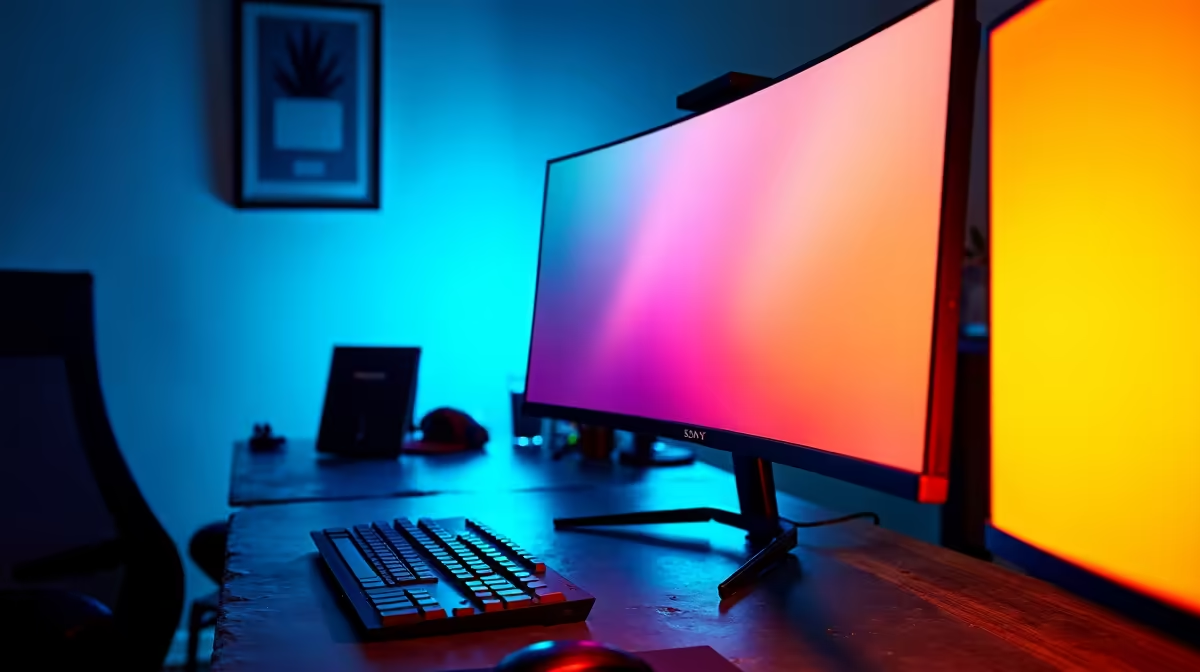
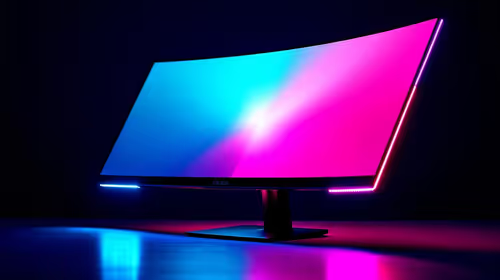
A 240Hz monitor is overkill for office work but excellent for Benoni remote workers who game competitively after hours, costing R5,500 to R11,000 for a 1080p or 1440p panel. You need an RTX 4060 Ti or better and esports settings to push 200-plus fps and actually feel the 240Hz benefit. Turn on your in-game frame counter to confirm you are actually feeding the panel before paying for 240Hz. A 1080p panel is easiest to drive, while 1440p looks sharper but needs a stronger card to keep up.
When 240Hz Is Worth It
At 240Hz, motion is exceptionally smooth, but only if your frame rate keeps up. Competitive shooters at lowered settings can hit 240fps on a mid-to-high GPU, making the panel shine. For browsing and spreadsheets the difference over 144Hz is negligible, so 240Hz is a gaming-first choice that doubles as a sharp work screen.
Resolution And GPU Pairing
A 1080p 240Hz panel is easiest to drive and favoured by competitive players. A 1440p 240Hz panel looks sharper but needs an RTX 4070 or better to feed it. For a desk that does both work and play, 1440p at 240Hz is the more flexible pick if the GPU can keep up.
FAQ
Can I tell the difference between 144Hz and 240Hz?
Fast-paced players often notice smoother tracking and clearer motion at 240Hz, while casual users may not. It rewards high, stable frame rates more than the panel alone.
What GPU do I need for 240fps?
For 1080p esports titles, an RTX 4060 Ti can reach near 240fps at competitive settings. For 1440p, an RTX 4070 or higher is the realistic target.
Is 240Hz wasteful for a work monitor?
It is more than work needs, but it does no harm and keeps everyday motion buttery. Buy it for the gaming benefit, with productivity as a clean bonus.
Match a 240Hz panel to a GPU that can feed it.
Confirm your card hits 200-plus fps at your target resolution, pick 1080p for pure speed or 1440p for sharpness, then check it out.