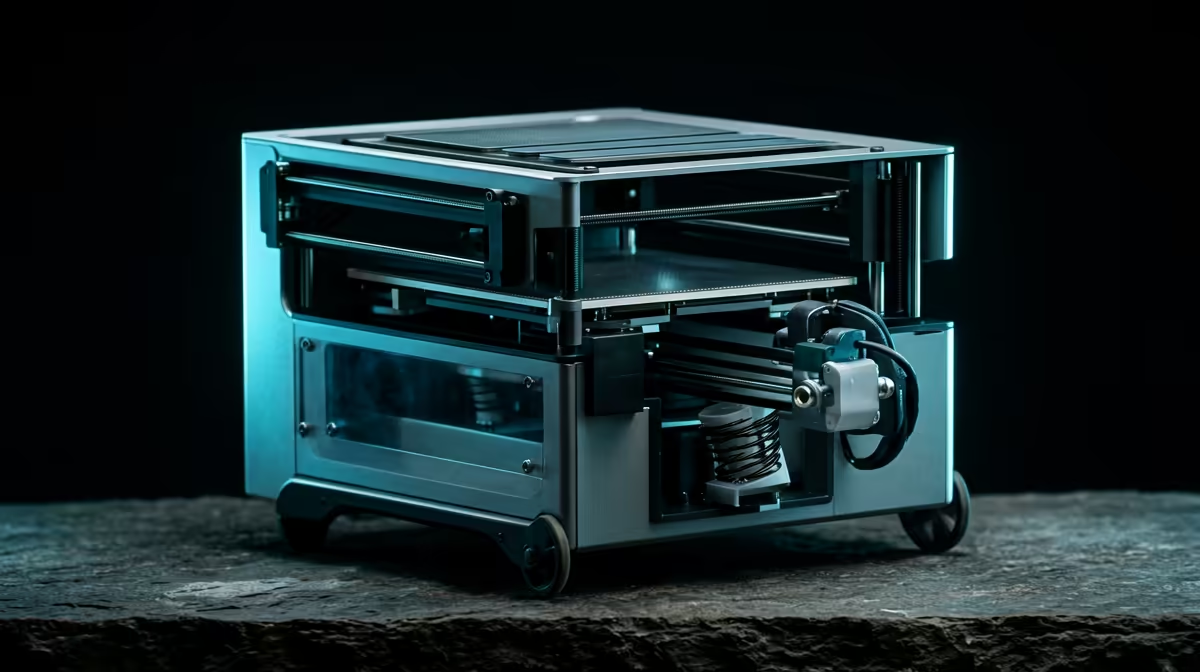
Functional parts live a hard life. A bracket holds a shelf, a jig guides a drill, a housing protects a sensor on a factory floor, and none of that forgives a printer that drifts off-tolerance halfway through a batch. The best 3D printer for functional production parts in South Africa right now is the Creality K2 Plus paired with its CFS filament station, because it combines a large heated chamber, engineering-grade material support, and the kind of automated feeding that keeps a 20-part run identical from the first piece to the last.
Quick Answer
For repeatable functional production in SA, the Creality K2 Plus with the CFS unit at around R32,999 is the pick. It prints across a 350x350x350 mm volume, handles tougher engineering filaments like PETG, ABS and nylon-class materials, and its automatic filament system swaps and tops up spools so long unattended runs do not stall mid-job.
Why a production printer is a different machine
A hobby printer and a production printer share the same basic motion, but the gap shows the moment you need parts that fit a tolerance and survive real load. Production work means three things at once: a build volume big enough to nest multiple parts per plate, a hotend and chamber that can reach and hold the temperatures tough plastics demand, and enough automation that you are not babysitting every spool change.
The K2 Plus earns the top spot because it does all three without forcing you into industrial pricing. The enclosed, actively managed chamber matters more than headline speed numbers. ABS and many nylon blends warp and crack when the air around them cools unevenly, so a stable chamber is the difference between a usable part and a curled reject.
The CFS station is the real production unlock
The Creality Filament System is what turns a capable printer into a production tool. Instead of one spool feeding the machine until it runs dry mid-print, the CFS holds multiple spools and feeds them automatically. For long runs that span more filament than a single roll holds, it keeps the job going without a failed layer at the swap point.
It also keeps material conditioned. Engineering filaments are hygroscopic, meaning they pull moisture from the air, and damp filament prints with weak layers and surface defects. A managed, sealed feeding station slows that absorption and keeps output consistent across a print session that might run for many hours.
Multi-material and multi-colour runs
Because the station holds several spools, you can assign different materials or colours to a single job. For functional parts that is less about looks and more about, say, a flexible gasket section printed alongside a rigid body, or a clearly colour-coded production batch where each variant is easy to sort on the bench.
Materials that matter for functional parts
The plastic you choose decides whether a part survives use. The browsable 3D printer and accessories range is a good starting point for matching a machine to the materials you actually plan to run.
PETG for everyday tough parts
PETG is the workhorse of functional printing. It is tougher and more impact-resistant than basic PLA, resists moisture, and tolerates outdoor and warmer conditions far better. For brackets, enclosures, clips and fixtures, PETG covers most of what a small SA workshop needs.
ABS and nylon for demanding loads
ABS adds heat resistance and a degree of flex before fracture, which suits parts that sit near warm equipment or take repeated stress. Nylon-class filaments go further, offering high wear resistance and toughness for gears, bushings and load-bearing brackets, though they demand the controlled chamber the K2 Plus provides.
Volume, throughput and the SA reality
The 350x350x350 mm build volume is the practical sweet spot for small-batch production. It is large enough to print a single big part or to nest a tray of smaller parts and run them as one job, which is how you get throughput without an industrial machine footprint.
For South African makers and small manufacturers, local stock and support matter as much as specs. Importing a niche printer means long waits and a warranty headache if something fails. Buying a machine that is stocked and supported here keeps a production line running. It is also worth keeping an eye on the accessories and add-ons best sellers for the spare nozzles, build plates and filament you will burn through once a printer earns its keep.
Speed, chamber control and the specs that count
It helps to know which numbers actually matter for production. The K2 Plus runs an active chamber that can hold heat up to around 60 degrees, which is what lets ABS and nylon-class parts cure without curling at the corners. Its nozzle reaches well past 300 degrees and the bed runs hot too, so the machine covers the full span from low-temp PLA up to demanding engineering plastics on the same hardware. High top speeds matter less than that thermal range; a part that prints fast but warps is a reject, while one that prints a little slower in a stable chamber is a part you can ship.
The closed-loop motion system is the other quiet advantage. On a long batch, a printer that drifts a fraction off-tolerance from the first part to the twentieth is useless for production, because the whole point is interchangeable pieces. A stiff frame and accurate motion keep that batch consistent, which is the real difference between a production tool and a fast hobby printer.
Costing a functional part honestly
Before you quote a job, cost it properly. Engineering filament sits above basic PLA, so a kilogram of PETG, ABS or a nylon blend carries a higher rate per gram, and a load-bearing part often uses more material and longer print time than a decorative one. Add the slice of electricity a multi-hour print on a heated chamber consumes, the wear on hardened nozzles, and your own time on setup and finishing. Pricing only against filament is how production work quietly loses money.
Plan for failure and post-processing
Functional parts usually need a little finishing: support removal, a tapped hole, or a test fit against the part they bolt to. Budget time for that, and for the occasional failed print, because a warped first attempt on a twelve-hour engineering run is real lost time and material. A textured engineering build plate, dry filament and a dialled-in first-layer profile cut that failure rate sharply, which on a paid job matters more than shaving minutes off the print speed.
Who should buy what
If you are running genuine small-batch production, the K2 Plus with CFS is the clear recommendation. If your functional work is occasional, a single-spool enclosed printer in the same family covers PETG and light ABS work at lower cost, and you can add a filament station later as volume grows.
Frequently Asked Questions
Is the Creality K2 Plus good for production parts in South Africa?
Yes. At around R32,999 with the CFS station, it offers a 350x350x350 mm volume, an enclosed managed chamber for engineering filaments, and automatic spool feeding for long unattended runs, which makes it well suited to repeatable small-batch production.
What filament should I use for functional parts?
PETG covers most everyday functional work because it is tough, impact-resistant and moisture-resistant. Step up to ABS for heat resistance and nylon-class materials for high-wear, load-bearing parts, both of which benefit from an enclosed chamber.
Why does the CFS filament station matter?
It feeds multiple spools automatically, so a long print does not fail when one roll runs out, and it keeps filament conditioned against moisture. Both keep output consistent across a production run.
Do I need an enclosed printer?
For ABS and many nylon blends, yes. These materials warp and crack when they cool unevenly, so a stable, enclosed chamber is what produces clean, dimensionally accurate parts instead of curled rejects.
Can it print multiple colours or materials in one job?
Yes. Because the CFS holds several spools, you can assign different colours or materials to a single print, which is useful for colour-coded batches or mixed-material functional parts.
Ready to move from prototypes to real production runs? Browse the full lineup of 3D printers and engineering-grade filament at Evetech, including the Creality K2 Plus, and start your build at the 3D printer range.