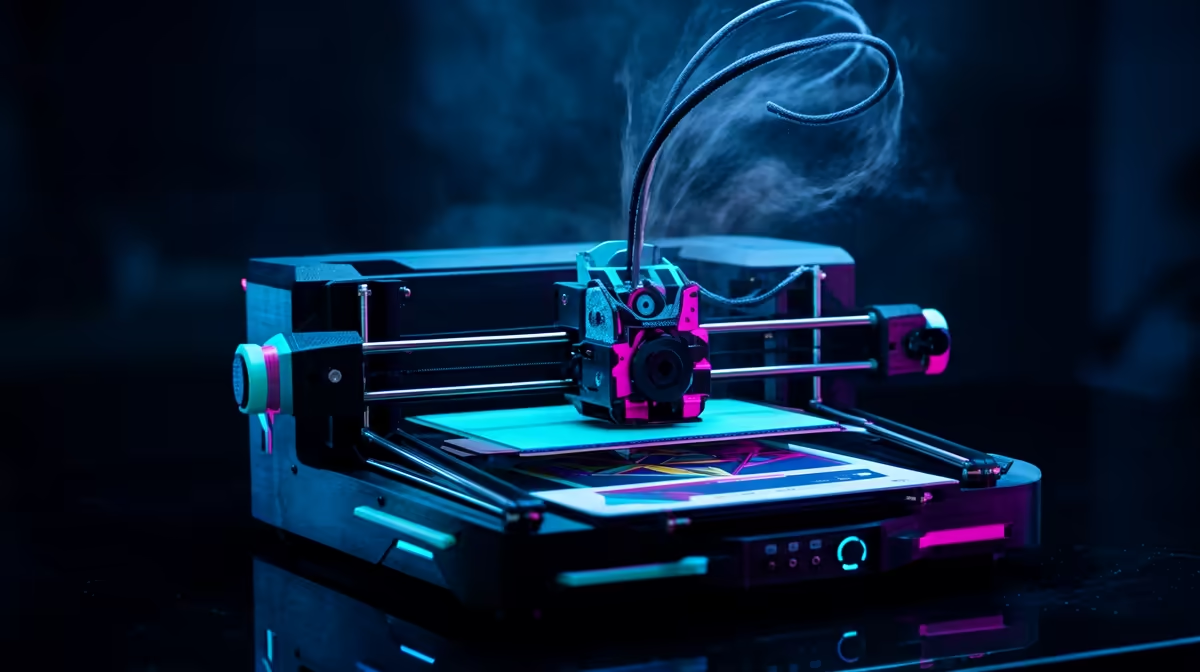
Handing a 3D printer to a child under 13 changes the whole buying calculation. The nozzle on a typical machine sits at 200 degrees or higher, the print bed can run past 60 degrees, and the toolhead moves fast enough to pinch curious fingers. The best 3D printer for kids under 13 in South Africa is the one that puts a sealed wall between all of that and small hands, which is why the fully enclosed Bambu Lab P1S sits at the top of this list rather than a cheaper open-frame starter.
Quick Answer
For under-13s, buy a fully enclosed printer. The Bambu Lab P1S at roughly R12,495 keeps the hot nozzle, heated bed and moving gantry behind a sealed chamber, and its enclosure helps contain fumes from ABS and ASA filaments. Enclosure plus filtration matters far more than top print speed when children are the users.
Why Enclosure Is the First Safety Filter
An open-frame printer leaves the hot end fully exposed. A child reaching in mid-print to "see how it works" can touch a 200-degree nozzle in the time it takes you to look away. A sealed chamber removes that risk almost entirely: the doors and panels mean a curious hand meets glass or plastic, not metal at soldering-iron temperatures.
Enclosure does a second job too. ABS and similar filaments release fine particles and odour as they print. A closed chamber, especially one with a carbon filter on the exhaust, keeps most of that inside the machine rather than drifting around a bedroom or study. For families printing regularly in a small flat, that containment is genuinely useful.
If you want to compare sealed and open designs side by side, the 3D printer range on Evetech lays out which models ship with a full enclosure and which leave the gantry open.
The Features That Actually Protect a Child
Enclosed hot end and bed
This is non-negotiable for the under-13 group. The P1S encloses both the nozzle and the heated bed, so the two hottest surfaces are never within easy reach during a print.
Active filtration
A built-in carbon filter pulls print fumes through the machine before they escape. It will not turn ABS into a health food, but it meaningfully cuts the smell and particle load in the room, which matters when a child sits nearby for an hour-long print.
Auto bed levelling and a forgiving workflow
Kids lose patience fast. Automatic bed levelling and a guided app workflow mean fewer failed first layers and fewer reasons for a frustrated child to start poking at the mechanism. The P1S handles levelling itself, so the path from "press print" to "watch it work" stays short.
A door that signals "wait"
A physical door is also a teaching tool. The rule becomes simple: the door stays shut while the machine is running. That single boundary is far easier for a young child to follow than a list of "don't touch the silver bit" instructions on an open frame.
What About Cheaper Open-Frame Printers?
Budget open-frame machines look tempting on price, and for a supervised teenager they can be fine. For an under-13 working with less supervision, the saving is not worth the exposed hot end. If budget is tight, the smarter move is a smaller enclosed model rather than a larger open one. The enclosure is the safety feature you are actually paying for here, not the build volume.
Why PLA Is the Right Filament to Start a Child On
The machine is only half the safety story. The plastic you load matters just as much, and for a child the answer is almost always PLA. PLA prints at a low nozzle band, usually around 200 to 220 degrees, with a bed near 50 to 60 degrees, so even a brief contact during a fault is less severe than with the 240 degree-plus temperatures ABS demands. It is plant-derived, gives off very little odour, and forgives the kind of interrupted print a curious child causes when they pause a job to inspect it.
Just as importantly, PLA does not need a sealed, superheated chamber to print cleanly, so you are never tempted to run a hot machine for hours in a child's room. Keep ABS and ASA for later, when an older child understands the routine and the filtered P1S chamber is doing its job properly. Starting on PLA keeps temperatures, smells and supervision needs at their lowest while a young printer learns the basics.
Build Volume and Speed Are Not the Point Here
The P1S offers a 256 by 256 by 256 mm build area and tops out at high CoreXY speeds, but neither number is the reason to buy it for a child. A young printer is making keyrings, name tags, small toys and school models, none of which strain a mid-size bed. Chasing a larger open-frame machine for more build volume trades away the one feature, the sealed chamber, that actually protects small hands. For this age group, treat extra speed and bed size as a bonus rather than a deciding factor, and let safety lead the choice every time.
Setting Up Safely at Home
Place the printer on a stable, heat-tolerant surface at adult chest height where a younger child cannot drag it. Keep filament spools and any cleaning tools out of reach. Run the first few prints together so the child learns the "door shut while running" rule by habit. A small fan or open window helps even with filtration, particularly for ABS.
For the spare nozzles, glue sticks and tools that make ongoing printing smoother, our best-selling printer accessories cover the consumables families reorder most.
Frequently Asked Questions
Is the Bambu Lab P1S safe for a child under 13?
It is one of the safer options because it fully encloses the hot nozzle, heated bed and moving parts behind sealed panels. With normal supervision and a "door stays shut while printing" rule, it suits family use well at around R12,495.
Do I still need to supervise a child using an enclosed printer?
Yes. An enclosure removes the biggest burn risk, but children should still be supervised when loading filament, removing prints from a warm bed, or using any cutting tools. Treat it like any other workshop appliance.
Which filament is safest for kids to print with?
PLA is the easiest and lowest-odour option, and it prints at lower temperatures. ABS and ASA are stronger but smellier, so they benefit most from an enclosed, filtered machine like the P1S.
Is an open-frame printer ever acceptable for children?
For supervised teenagers, yes. For under-13s with less oversight, the exposed hot nozzle makes open frames a poor choice. Spend the budget on an enclosure instead of a bigger open build area.
How much should I budget for a family-safe 3D printer in South Africa?
A fully enclosed, child-appropriate machine like the P1S sits around R12,495. Add a modest amount for filament and basic accessories. Cheaper open-frame units exist, but they trade away the very safety feature that justifies the purchase for young children.