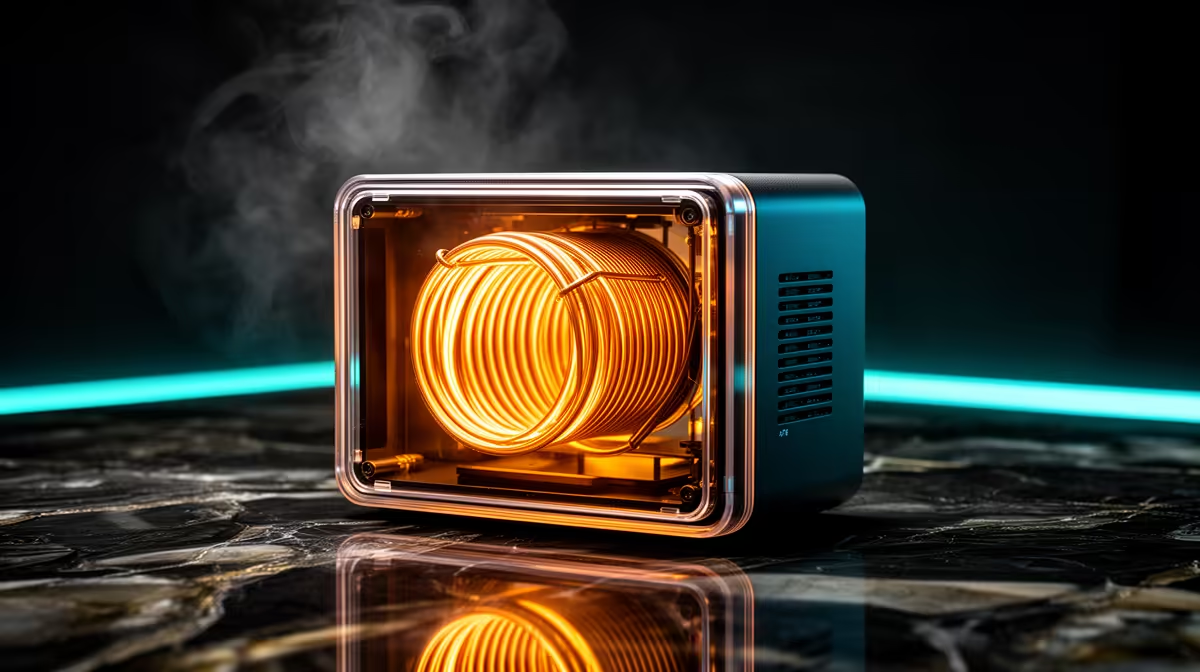
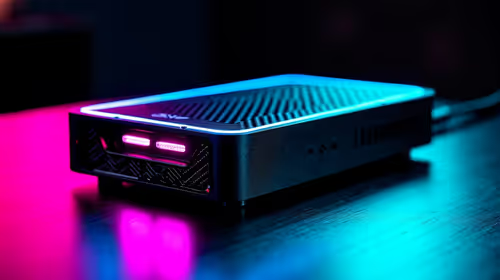
A spool of nylon left on an open shelf in Durban can soak up enough moisture in a weekend to turn a clean print into a stringy, popping mess. An active filament dryer fixes that by holding the spool at a set temperature, usually somewhere between 50 and 70 degrees Celsius, so heat actively pushes absorbed water out of the plastic while the filament sits ready to feed your printer. Passive desiccant boxes slow moisture down. Active dryers reverse it.
Quick Answer
For most South African makers, a heated box that hits a true 70 degrees with even airflow is the sweet spot. The Creality Space Pi and the Sunlu FilaDryer S4 are the two units that consistently hold accurate temperatures, and you should budget roughly R1,500 to R3,500 depending on spool capacity.
Why Active Drying Beats a Desiccant Box
A sealed tub with silica gel keeps dry filament dry. It cannot pull water back out of plastic that has already absorbed it. Once PETG, nylon or TPU has taken on moisture, the only practical way to recover it at home is heat plus airflow over several hours.
Active dryers use a PTC heating element and a fan to circulate warm air around the spool. The warmth lowers the relative humidity inside the chamber far below the surrounding room, and the water in the filament migrates out toward that drier air. That is the mechanism that turns a ruined spool back into one that prints cleanly.
In coastal cities the case for active drying is stronger than inland. Cape Town and Durban sit at high year-round humidity, so even sealed storage struggles between print sessions. A dryer you can leave running, feeding filament straight off the heated spool into the printer, sidesteps the whole problem.
Temperature Is the Spec That Actually Matters
Marketing numbers on the box are not the same as the temperature the chamber really reaches and holds. Independent head-to-head testing has repeatedly flagged cheaper units that overshoot, get stuck at maximum, or read several degrees off what they display.
What Each Material Needs
PLA dries comfortably at 45 to 55 degrees. PETG sits around 60 to 65. Nylon and polycarbonate want a genuine 70 to 80 degrees, and that upper band is where most budget boxes fall short. If you print engineering materials, the headline figure to verify is whether the unit reaches and sustains 70 degrees or higher without drifting.
Even Heat, No Cold Spots
A single element on one side leaves the far edge of the spool cooler than the near edge, so part of the filament dries while part does not. Designs with 360 degree hot-air circulation, like the Creality Space Pi, spread heat around the whole spool and avoid that. Power-off memory is a quieter convenience worth having: settings survive a brief interruption so you do not restart a six-hour cycle from zero.
Fan Airflow Matters as Much as Heat
Heat alone does not dry filament efficiently. An internal fan carries the moisture-laden air out of the chamber and draws in drier air to replace it. Dryers that rely only on passive heat without active circulation are consistently slower in testing. When comparing specs, check that the unit has a built-in fan and a vent, not just a heating element.
Matching a Dryer to Your Setup
The right unit depends on how many spools you run and what you print.
Single-Spool Makers
If you run one printer and mostly PLA or PETG, a single-spool dryer that reaches 70 degrees covers you. The Creality Space Pi is the reliable pick here, holding accurate temperatures where the similarly priced competition wandered in testing. Its internal circulation spreads heat more evenly than flat-element designs and it has the power-off memory that saves a long drying cycle from a brief power interruption.
Multi-Spool and AMS Users
Feeding a multi-material system or running several printers changes the maths. The Sunlu FilaDryer S4 carries up to four spools on industrial-grade PTC heating and is the common choice for Bambu Lab AMS setups, drying noticeably faster than smaller boxes thanks to its higher wattage. Temperature accuracy on the S4 is within roughly plus or minus 2 degrees in testing, which is tight enough for nylon and polycarbonate.
Engineering Materials
Carbon-fibre nylon, ABS and similar high-temperature filaments need a dryer rated above 80 degrees. Units like the Sunlu FilaDryer E2 push to around 110 degrees for exactly this work. If your roadmap includes functional parts rather than display models, buy for that ceiling now rather than replacing a box that tops out too low.
Whichever route you take, pair the dryer with sealed storage between sessions. You can browse the full 3D printing range at Evetech to see what is in stock locally, and the accessories best sellers are a useful sense-check on what other South African makers are actually buying.
Frequently Asked Questions
How long does it take to dry a wet spool?
Most materials need four to eight hours of active drying. PLA and PETG sit at the shorter end, while nylon and polycarbonate often want a full eight hours or more at higher temperatures to fully recover.
Can I print directly from the dryer?
Yes, and that is one of the main advantages of an active unit. Many dryers have a filament pass-through port so you can feed straight from the heated chamber into the printer, keeping the spool warm and dry while it prints.
Will a dryer damage my filament?
Not if you stay within the recommended temperature for the material. The risk comes from running too hot, which can soften or fuse a spool. Match the setting to the filament type rather than always running maximum heat.
Is active drying really necessary in South Africa?
In humid coastal areas like Durban and Cape Town it makes a clear difference, especially for moisture-sensitive materials like nylon, PETG and TPU. Drier inland regions can sometimes get by with good sealed storage, but a heated dryer removes the guesswork.
What temperature should I set?
Roughly 50 to 55 degrees for PLA, 60 to 65 for PETG, and 70 to 80 for nylon and polycarbonate. Always check the filament manufacturer's guidance, because formulations vary.
Ready to stop fighting wet filament? Compare heated dryers and the rest of the 3D printing range at Evetech and get prints that come out clean the first time.