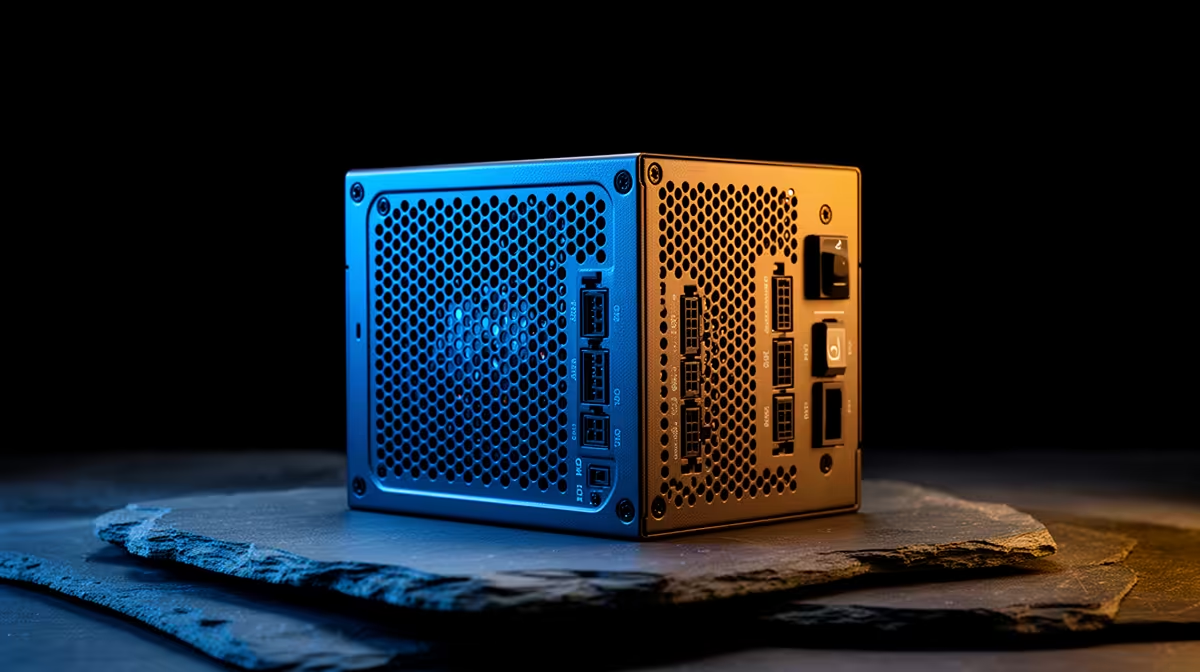
A budget 750W power supply should be affordable because it drops decoration and modular convenience, not because it cuts protection or hides its platform. The wattage is enough for many mid-range and upper-mid-range gaming builds. Quality decides whether it is worth connecting to them.
Quick Answer
Choose a 750W PSU with a clear exact model, the connectors required by your graphics card, independent professional testing and a useful local warranty. An 80 Plus Bronze rating describes efficiency at test loads; it does not prove electrical quality. Prefer a sound lower-wattage unit over a mystery 750W box.
Start with the actual system load
List CPU, graphics card, drives, fans and USB-powered accessories. Use the GPU maker's power guidance for the exact model, then leave headroom for transient load, ageing and quiet fan behaviour.
Do not add every component's maximum as though they all peak together. A reputable PSU calculator can help, but the final choice still needs the GPU connector and manufacturer guidance.
Seven hundred and fifty watts suits many systems built around a mainstream CPU and strong mid-range GPU. A flagship card or heavily tuned processor can need more. An efficient entry system can use less.
Browse the Corsair power supply range and PSUs buyers currently favour. Compare exact series and model reviews; brand and wattage alone do not identify the internal platform.
Efficiency is useful, but it is one test
An 80 Plus rating measures AC-to-DC efficiency at defined loads and voltage. Better efficiency can reduce waste heat and power drawn from the wall. It does not test ripple, transient response, protection tuning, fan quality or component selection.
Bronze can be fine for a budget build when independent electrical testing is strong. Gold can reduce heat and sometimes comes with a better platform, but the badge itself cannot guarantee it.
Look for reviews that test voltage regulation, ripple, hold-up behaviour, protections and noise. A teardown can reveal component quality, though the measured result matters most.
Connectors must match the graphics card
Count PCIe power connectors and check whether the PSU uses the card's native modern connector or needs an adapter. Follow both manufacturers' cable guidance. Do not use CPU EPS cables in GPU sockets even when the shapes look similar.
Modular PSU cables are model-specific. Never reuse cables from another power supply unless the PSU maker confirms compatibility for those exact models. A cable that fits can have a different pinout and damage components.
Seat connectors fully and leave space for the cable to bend without side-panel pressure. Use separate PCIe cables where the card guidance calls for them.
Protection features are essential
Look for over-voltage, under-voltage, over-current, over-power, short-circuit and over-temperature protection in the documentation and testing. The presence of an acronym list is helpful; correct implementation matters.
Active power-factor correction is standard on modern quality units. Input voltage support should suit South African mains. Use a properly earthed wall outlet and do not overload cheap multi-plugs.
A UPS or surge device has its own rating and waveform considerations. The PSU cannot increase the capacity of upstream equipment. Size the chain for the PC and monitor.
Fixed cables can save money cleanly
Non-modular units cost less and remove connector points at the PSU. They can be excellent value when the case has room to hide unused cables. Semi-modular designs keep the motherboard cables fixed and let you add GPU or SATA leads.
Fully modular units make routing easier, especially in compact cases. Pay for that convenience after electrical quality and connectors are secured.
Check PSU length, fan orientation and case ventilation. A bottom intake needs a clean filtered opening. Do not place the fan against a solid panel.
Plan one graphics upgrade
Choose enough headroom for the likely next GPU, not every flagship that might exist. This keeps the PSU useful without spending on unused capacity.
Warranty length can reflect the maker's confidence, but read the terms. Keep the invoice and all modular cables together. Label the bag with the PSU model.
If a PSU begins clicking, shutting down or smelling unusual, stop using the PC and diagnose safely. Never open the PSU enclosure; internal capacitors can retain dangerous energy.
Verify the electrical fit before the cosmetic fit
Read the PSU label and manual for connector allocation. Count the graphics-card plugs and CPU EPS connectors, then compare them with the motherboard and GPU instructions. A total watt figure cannot solve a missing native connection.
Check case depth and cable bend room. Fixed leads need somewhere to go, while modular sockets add length at the PSU body. Keep the fan intake open and avoid stuffing unused cable against it.
Once assembled, test a combined CPU and GPU load while watching stability, temperature and fan behaviour. A shutdown, electrical smell or hot connector needs immediate investigation. Coil noise by itself can have several sources, so isolate it before replacing parts at random.
Keep the PSU invoice and supplied cables together. If the unit moves into a later build, reuse only the cable set approved for that exact model. Similar modular plugs can carry different wiring and damage hardware.
Check the warranty length and local support route before treating two electrically similar units as equal. A PSU can remain through several upgrades, so support has time to matter.
Frequently Asked Questions
The wall connection matters too. Plug the PC into a sound surge-protected setup suited to the load, and avoid stacking overloaded adapters. If outages are common in your room, size a UPS from measured system draw and the shutdown time you need. The PSU cannot correct poor upstream wiring.
Is 750W enough for a gaming PC?
It is enough for many mid-range and upper-mid-range builds. Check the exact CPU, GPU and connector guidance.
Is 80 Plus Bronze safe?
The rating covers efficiency, not safety or full electrical quality. Use independent testing of the exact model.
Should I buy a modular PSU?
Modular cabling helps routing. Fixed cables can save money without reducing electrical quality.
Can I reuse modular cables?
Only when the PSU maker confirms compatibility for the exact models. Fitting the socket is not enough.
What matters more than wattage?
Platform quality, protections, connectors, testing, warranty and suitability for the real system load.
Compare tested 750W power supplies by platform, protections and GPU connectors before trusting one with your build.