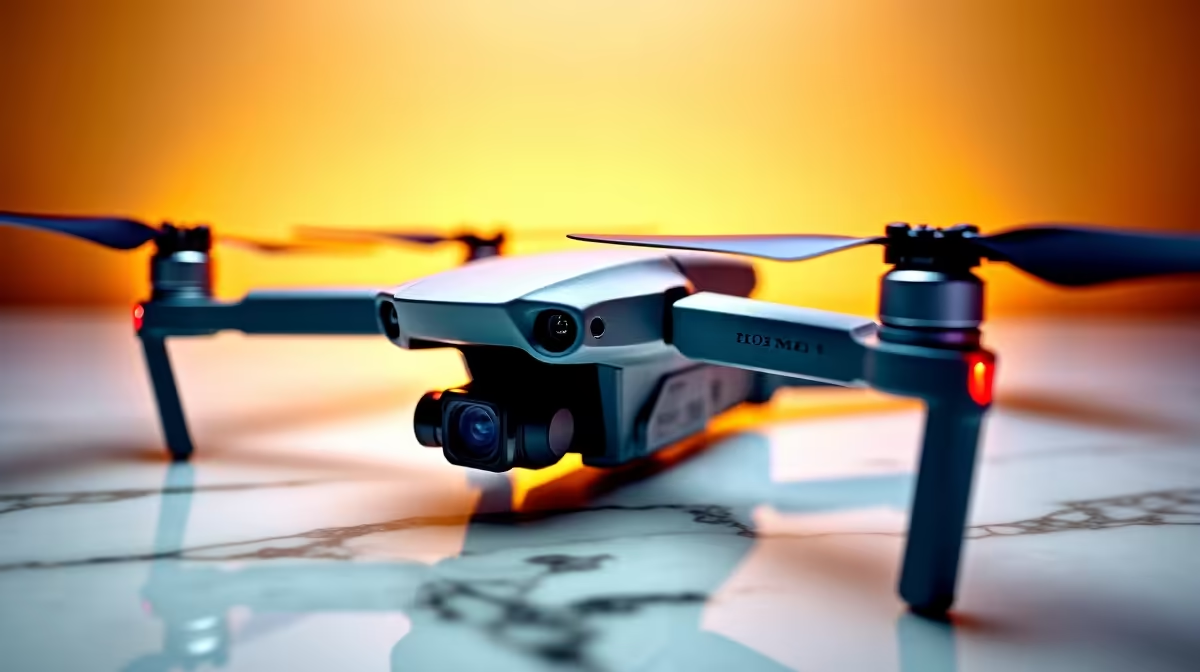
A photographer chasing aerial stills has a cleaner decision than a videographer, because for pure image quality the choice narrows to two DJI drones: the DJI Mini 5 Pro with its 1-inch sensor in the sub-250g class, or the Mavic 4 Pro with a 100MP Hasselblad main sensor and an adjustable aperture. One prioritises portability and travel-friendly rules; the other chases maximum resolution and creative control. Knowing which way your photography leans makes the pick straightforward.
Quick Answer
For aerial stills, the DJI Mini 5 Pro suits travel and everyday shooting with a 1-inch sensor while staying under 250g, which keeps it in the lightest regulatory class. The Mavic 4 Pro is the resolution king, with a 100MP Hasselblad main sensor and an adjustable aperture for finer exposure and depth control. Choose the Mini for portability, the Mavic for the highest image quality.
Why sensor size leads the decision
For stills, the sensor matters more than almost anything else, because it governs detail, dynamic range and how the drone copes with tricky light.
A larger sensor gathers more light, which means cleaner images in the golden-hour and overcast conditions photographers actually shoot in, plus more recoverable detail in bright skies and shadowed land. The Mini 5 Pro's 1-inch sensor is already a serious step up from the tiny sensors in older or cheaper drones, and it is remarkable that it fits in a sub-250g body. The drone captures 50MP stills, records 4K/60fps HDR video, and delivers up to 14 stops of dynamic range alongside a 4K/120fps slow-motion mode for sequences that play back as silky-smooth footage in post. The Mavic 4 Pro pushes further with its 100MP Hasselblad main camera, giving you more resolution to crop into and print large. Browsing the broader smart home and aerial gear category at Evetech is a useful way to get a feel for where drone pricing currently sits before you commit.
The sub-250g advantage of the Mini 5 Pro
Weight is not just about a lighter bag; it changes the rules you fly under and how freely you travel.
Portability and travel
A sub-250g drone folds down to something that genuinely lives in a daypack, which is the difference between bringing it on a hike up Table Mountain and leaving it at home. For a travelling photographer, that convenience is the whole point, because the best aerial shot is the one you were actually carrying when the light turned.
Lighter regulatory weight
Across many jurisdictions, the sub-250g class faces lighter restrictions than heavier drones. In South Africa, recreational drone flying still comes with sensible rules about where and how you may fly, so always check the current SACAA guidance for your situation, but a lighter drone generally keeps you in the most permissive bracket. That makes the Mini 5 Pro the easier companion for casual and travel photography.
Low-light and slow-motion capability
The Mini 5 Pro's f/1.8 aperture and 10-bit H.265 recording give the still photographer a genuine edge at dawn and dusk, two times of day that aerial work depends on. The 4K/120fps slow-motion mode is a bonus for mixed-media shooters who want both stills and cinematic video from a single platform.
When the Mavic 4 Pro is worth it
If your aerial work is closer to professional or fine-art landscape, the Mavic earns its larger footprint.
The 100MP Hasselblad main sensor gives you resolution to spare, which matters when a client wants a billboard-sized print or you want to crop hard into a composition without losing crispness. The adjustable aperture is the other serious advantage: instead of a fixed opening, you can stop down for sharpness across a landscape or open up to control exposure in bright conditions, the same creative latitude you expect from a proper camera. For deliberate, planned shoots where image quality is the priority and a slightly bigger kit is acceptable, the Mavic 4 Pro is the stronger tool.
Matching the drone to your photography
Be honest about how you shoot. If you photograph while travelling, hiking and exploring, and you want a capable camera that disappears into a bag, the Mini 5 Pro is the better fit and the friendlier one to fly. If you plan shoots around the light, print large, and want aperture control and maximum resolution, the Mavic 4 Pro is the photographer's choice. Both deliver excellent stills; the deciding factors are weight, regulatory ease and how much resolution and control you genuinely need. Whichever you choose, spare batteries and ND filters transform a day in the field, and browsing the accessories best sellers at Evetech is a straightforward way to pick up the extras that keep you flying longer.
Frequently Asked Questions
Is the Mini 5 Pro good enough for serious aerial photography?
Yes. Its 1-inch sensor captures genuinely high-quality stills with good detail and dynamic range, all in a sub-250g body. For travel, social work and most enthusiast photography it is more than capable, with the lighter regulatory class as a bonus.
What does an adjustable aperture do on a drone?
An adjustable aperture lets you control how much light reaches the sensor and how much of the scene is in sharp focus. For aerial stills it means better exposure control in bright conditions and the creative latitude photographers expect from a dedicated camera, which is a key Mavic 4 Pro advantage.
Why does staying under 250g matter?
Sub-250g drones typically face lighter restrictions than heavier models in many regions, making them simpler to fly recreationally. They are also far more portable. Always check current South African SACAA rules for where and how you may fly before you take off.
Should I choose resolution or portability?
If you print large or shoot professionally, the Mavic 4 Pro's 100MP sensor and aperture control favour resolution. If you shoot while travelling and value carrying the drone everywhere, the Mini 5 Pro's portability and lighter class win. Match the choice to how you actually photograph.
Do I need extra batteries for aerial photography?
Almost certainly. Drone flight times are limited, so a couple of spare batteries roughly triples your time in the air and lets you wait out the light for a better shot. They are among the first accessories most drone photographers add.