Quick Answer
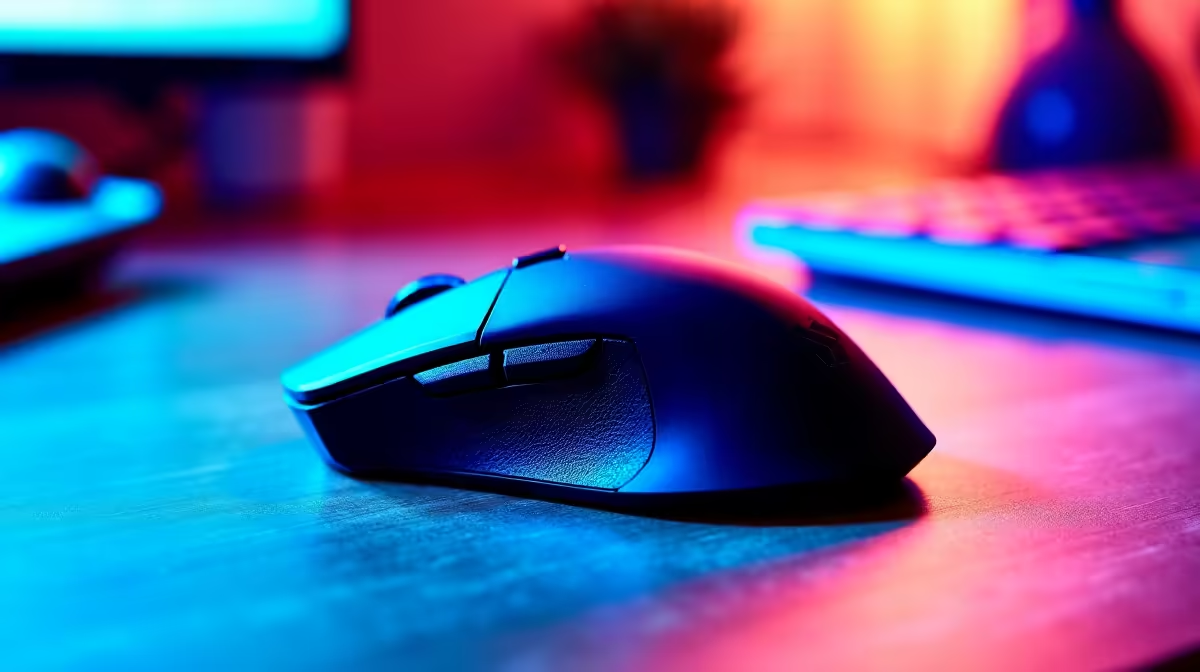
For SA gamers using laptops and compact setups, the five features that matter most are compact body dimensions (under 120 mm length), dual-mode wireless with both Bluetooth and 2.4 GHz, a sensor that tracks reliably on varied surfaces, a weight under 85g, and USB-C charging or replaceable AA batteries. Programmable buttons and RGB are secondary priorities.
Why Wireless Versatility Defines Compact Setup Needs 📡
Laptop setups in South Africa span dorm rooms at Wits or Stellenbosch, home office desks, kitchen tables, and coffee shop tables. Each context has different connectivity constraints: your dorm laptop may lack a free USB-A port, a campus lab computer may not accept USB devices, and a home office desktop may want the receiver docked semi-permanently. A mouse with both Bluetooth and a 2.4 GHz receiver covers all three without compromise: Bluetooth for restricted environments, 2.4 GHz for the home setup where sub-1 ms gaming latency is available. Mice that offer only one wireless mode force a connectivity trade-off limiting versatility across the real-world usage patterns of SA students and professionals.
Surface Tracking and Pad Independence for Varied Desks 🖥️
Compact setups rarely include a dedicated gaming mousepad: a student might game on a wooden study desk, a hotel writing table, or a laptop bag flap. A quality optical sensor with broad surface compatibility, such as the Razer Focus Pro 30K or Logitech HERO sensor, tracks reliably on wood, laminate, and medium-texture cloth. Budget sensors with narrow surface tolerance skip on textured wood or uneven surfaces, producing cursor jitter on varied surfaces. Carrying a thin rollable cloth mousepad under 3 mm thick weighing around 80 to 100g solves the surface problem at low bag weight cost and is a sensible addition to any compact gaming kit.
Compact Body and Ambidextrous vs Ergonomic Shape 🎒
For compact setups, ambidextrous designs have a practical advantage: they fit into smaller bags without the protruding right-hand wing that ergonomic designs require. An ambi mouse under 120 mm in length can slip alongside a laptop in a sleeve pocket, while a full ergonomic gaming mouse often needs its own carry pouch. The decision depends on usage: if the mouse is primarily a travel peripheral that sees occasional gaming, go ambidextrous and compact. If it lives on your desk at home and travels occasionally, ergonomic is more comfortable for daily extended use.
Use Bluetooth When Docked at a Library or Lab ⚡
Many SA university computer labs and library study rooms restrict USB devices on their terminals. A mouse with Bluetooth pairing gives you full wireless freedom without the USB receiver, letting you use your personal mouse on shared university computers without IT permissions or adapters. Pair in Bluetooth mode once and it reconnects automatically on subsequent visits.
FAQ
What compact wireless mouse suits SA university students best?
The Razer Orochi V2 and Logitech G305 are both compact, available at Evetech under R1,200, and offer the wireless flexibility required for multi-device campus use. The Orochi V2 adds Bluetooth dual-mode, more versatile for students using shared lab computers.
Is a compact gaming mouse accurate enough for competitive esports on a laptop?
Yes. Compact mice like the Razer Orochi V2 carry the same sensor quality as larger gaming mice. Performance in esports titles is not compromised by body size, provided the sensor specification matches what a full-size gaming mouse offers at the same price point.
How do I manage the USB receiver across multiple devices in a compact setup?
Store the 2.4 GHz receiver in the onboard compartment of the mouse when using Bluetooth mode. This ensures the receiver is always with the mouse when you need to switch to low-latency mode.
Building a compact gaming setup for your laptop?
Browse compact and portable wireless gaming mice stocked at Evetech sized and featured for SA students and mobile gamers.