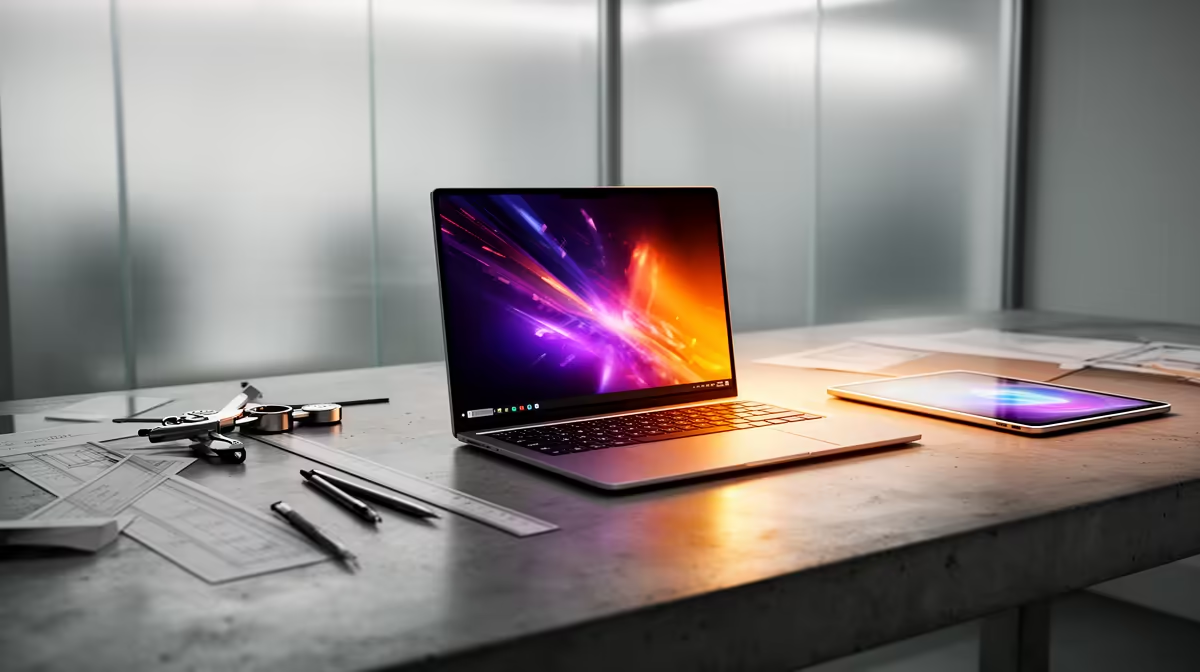
The NSFAS laptop allowance is a fixed amount, so the smart move is spending it on the things that make a architecture laptop feel fast for four years, not on specs the coursework never uses. Here is how to stretch R6,000.
Quick Answer
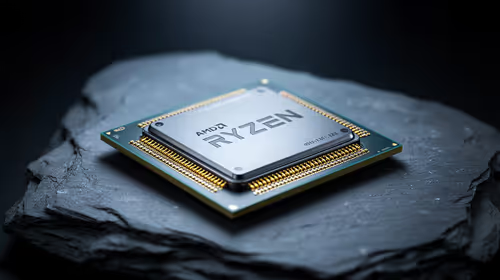
For NSFAS first-years, R6,000 buys a Core i5 or Ryzen 5 laptop with 8GB of RAM (16GB if you hunt for a deal), a 256GB or 512GB SSD and a Full HD IPS screen, which is the right shape for Architecture. Within the R6,000 band, prioritise the SSD and RAM over screen size or a discrete GPU.
What R6,000 realistically buys
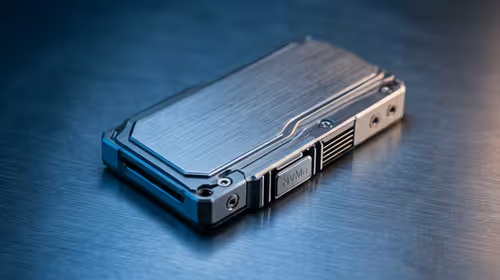
In the R5,500-R6,000 band you should walk out with a Core i5 or Ryzen 5 laptop with 8GB of RAM (16GB if you hunt for a deal), a 256GB or 512GB SSD and a Full HD IPS screen. An SSD is non-negotiable, because it is the single biggest reason a cheap laptop feels quick at startup and when opening files. Skip touchscreens and chase battery life and build quality instead, since you will carry this between lectures every day.
Matching the laptop to Architecture
Architecture is the heaviest student workload here: AutoCAD, Revit and SketchUp want a quad-core CPU, 16GB of RAM and ideally a discrete GPU. The NSFAS allowance covers a capable note-taking and 2D-drafting machine; heavy 3D rendering is best done in a campus lab. If the budget cannot reach 16GB now, buy a model with a free RAM slot so you can add a stick later for a few hundred Rand.
Where to spend and where to save
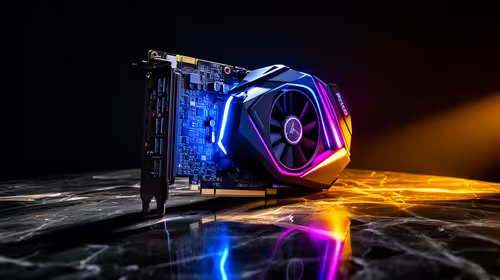
Spend on RAM and the SSD; save on screen size, RGB and a discrete GPU you will rarely use. A 14-inch panel is lighter to carry than a 15.6-inch and the battery usually lasts longer. Evetech ships nationwide from Centurion, so Joburg, Cape Town, Durban and Pietermaritzburg buyers get the same pricing and warranty cover.
FAQ
Is R6,000 enough for Architecture?
Yes for everyday coursework, browsing and Office. For the heaviest architecture software, use campus labs for rendering or simulation and keep the laptop for notes, writing and lighter work.
Should I prioritise RAM or storage?
Get the SSD first, then as much RAM as the budget allows. 8GB is the working floor and 16GB is the comfortable target; both beat a bigger screen for daily speed.
Can I upgrade the laptop later?
Often yes. Choose a model with an accessible RAM slot and an M.2 slot so you can add memory or storage in second or third year without buying a new machine.
{ text: "Filter Evetech laptops to your NSFAS budget and sort by SSD and RAM before you decide." }