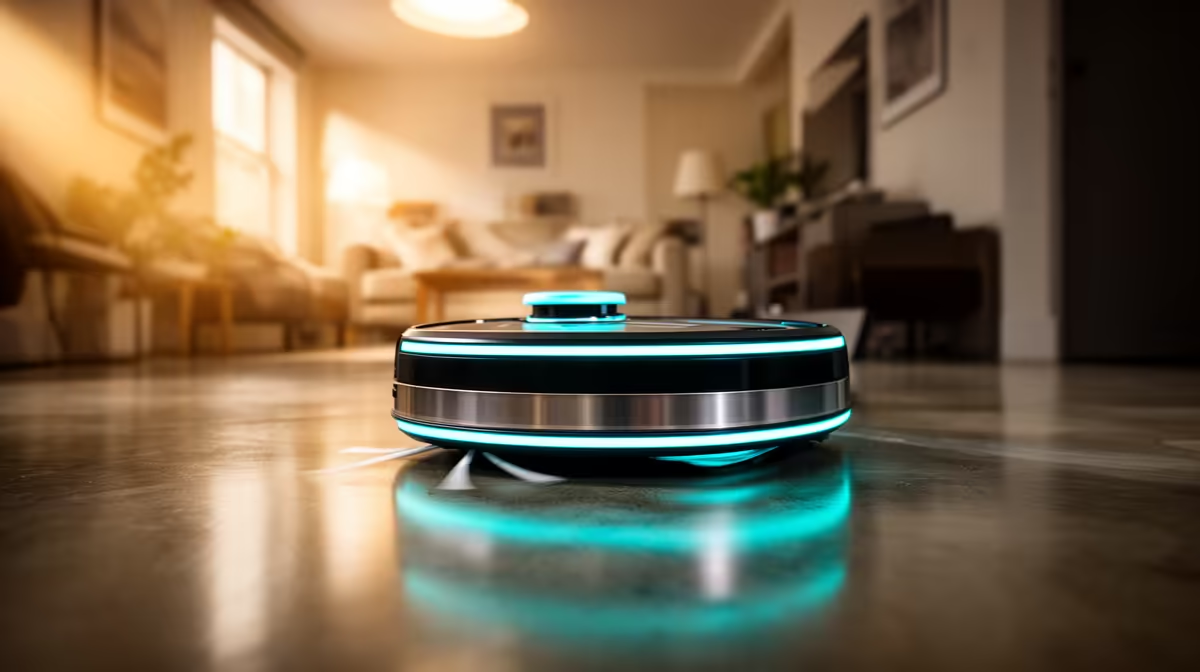
A small flat changes what makes a robot vacuum good. The features that matter in a 200 square metre house are not the ones that matter in a one-bedroom flat or a res room, where the real constraints are a slim dock that fits beside a cupboard, navigation tight enough to thread between table legs, and a footprint that slips under low furniture. For SA students in digs and young professionals in a first apartment, getting this match right is the difference between a helpful gadget and a clumsy one that gets shelved.
Quick Answer
The best robot vacuums for a small flat are compact units with a slim dock and accurate LiDAR mapping, so they navigate tight gaps and dock without hogging floor space. Look for a low profile that clears furniture under roughly 9 to 10 cm, precise mapping and a sensible price. These suit SA students in res or digs and professionals in one-bedroom flats.
Why small-space requirements are different
In a large home, a robot vacuum's biggest job is covering ground efficiently across many rooms. In a flat, ground coverage is trivial; the challenge is manoeuvring. A small space is dense with obstacles relative to its floor area: chair legs, a bed frame, a couch, cables and the gap between the fridge and the wall. A vacuum that bumps and reverses its way around wastes time and misses corners.
This is why mapping precision outranks raw suction or battery size for flat dwellers. A unit that builds an accurate map and plans tidy, systematic paths will clean a small space quickly and thoroughly. One that navigates randomly will knock into things and leave patches untouched, which is exactly the frustration that gets a robot vacuum abandoned in a corner.
The features that actually matter in a flat
LiDAR mapping and navigation
LiDAR-based navigation uses a spinning laser to measure distances and build a precise map of the room, then plans efficient back-and-forth paths instead of bouncing around. In a cramped flat full of furniture legs, this accuracy is the single most valuable feature. It also enables no-go zones, so you can fence off a charging cable nest or a pet bowl without physical barriers. Cheaper gyroscope-and-bump navigation can work in a very simple room, but in a real flat with clutter, LiDAR earns its place.
A slim, sensible dock
The dock is the part you live with every day, parked against a wall. In a small flat, a bulky self-emptying tower can dominate a corner you cannot spare. A slim, low-profile dock is easier to tuck beside a cupboard or under a console. Self-emptying docks are genuinely convenient, since they hold weeks of debris, but weigh that convenience against the floor space they claim in a room where every square metre counts.
Low profile to clear furniture
Measure the gap under your bed, couch and TV unit before buying. Much of a flat's dust hides under low furniture, and a vacuum that is too tall simply cannot reach it. A unit around 9 to 10 cm tall clears most furniture; a taller one with a raised LiDAR turret may be blocked from the very spaces that need cleaning most. This one measurement saves real regret.
Mopping, suction and battery in a small space
Many flats in Cape Town and Joburg have tiled or laminate floors, where a combined vacuum-and-mop unit makes sense, wiping as it goes. For a small space a basic mopping function handles everyday dust and light marks well; you do not need the most elaborate scrubbing system. Suction matters more on carpet and rugs, so match it to your floors rather than buying the highest number on principle.
Battery life is rarely a constraint in a flat. Even a modest battery covers a one-bedroom space on a single charge, and the vacuum returns to dock automatically if needed. Do not overpay for marathon runtime you will never use in a small home. You can compare the current smart-home lineup, including robot vacuums, in the Evetech smart-home and appliances range, and the latest value picks surface in the accessories best-sellers list.
Buying context for SA flats specifically
A few local realities shape the choice here. Many SA flats and student units mix tiled common areas with a carpeted or rug-covered bedroom, so a unit that handles both surfaces, lifting suction on the rug and mopping the tiles, earns its keep more than a single-surface specialist. Check that the model transitions between floor types automatically rather than needing you to swap modes by hand each time.
Pet hair is the other common factor, since plenty of young professionals and shared houses keep a cat or small dog. Tangle-resistant brush designs and a bin large enough to handle hair without daily emptying matter more in those homes than headline suction figures. If your flat is pet-free and mostly hard-floored, you can prioritise a slimmer, simpler unit and save the difference.
Setting realistic expectations
A robot vacuum is upkeep between proper cleans, not a replacement for them. It keeps dust and crumbs down day to day so the flat stays presentable with far less effort, but it will not move furniture, clean deep into a thick rug, or replace an occasional manual vacuum of the edges. Going in with that expectation is what separates owners who love their robot vacuum from those who feel let down. For a small flat, that daily maintenance is exactly the job worth automating, freeing your weekends from a chore that never quite stays done.
Who each type suits
A student in res or a vaalie's bedroom at home wants the most compact unit with a simple dock, since space and budget are both tight. A young professional in a one-bedroom flat with tiles benefits from a vacuum-and-mop combo with LiDAR for hands-off upkeep across the week. A couple in a slightly larger flat can justify a self-emptying dock if they have a corner to spare, trading a little floor space for not touching the dustbin for weeks. Match the unit to your floors, your furniture gaps and the space you can give the dock, and a robot vacuum becomes genuinely useful rather than a novelty.
Frequently Asked Questions
Do I need LiDAR mapping in a small flat?
It helps more than in a large home, not less. A flat is dense with obstacles relative to its size, and LiDAR plans tidy, efficient paths around furniture legs and clutter, where simpler bump navigation wastes time and misses spots.
Is a self-emptying dock worth it in a small space?
It depends on your floor space. Self-emptying docks are very convenient, holding weeks of debris, but they are bulky in a room where every corner counts. If you have a spare nook for it, yes; if not, a slim standard dock is the better fit.
Will a robot vacuum fit under my furniture?
Only if it is short enough. Measure the gap under your bed, couch and units before buying, since much of a flat's dust hides there. A unit around 9 to 10 cm tall clears most furniture, while taller models with raised sensors may be blocked.
Do I need a mopping function?
If your flat has tiles or laminate, a combined vacuum-and-mop unit is a real time-saver for everyday dust and light marks. On mostly carpeted floors it adds little, so match the feature to your actual flooring.
How much suction do I really need?
Match it to your floors. High suction matters on carpet and rugs, while hard floors need far less. In a small flat with tiles or laminate, a mid-range suction unit cleans well without the premium of a flagship's power you will not use.
A small flat deserves a vacuum built for tight spaces, not a scaled-down version of a house cleaner. Browse compact, LiDAR-equipped options in the Evetech smart-home range and pick the one that fits your floor space.