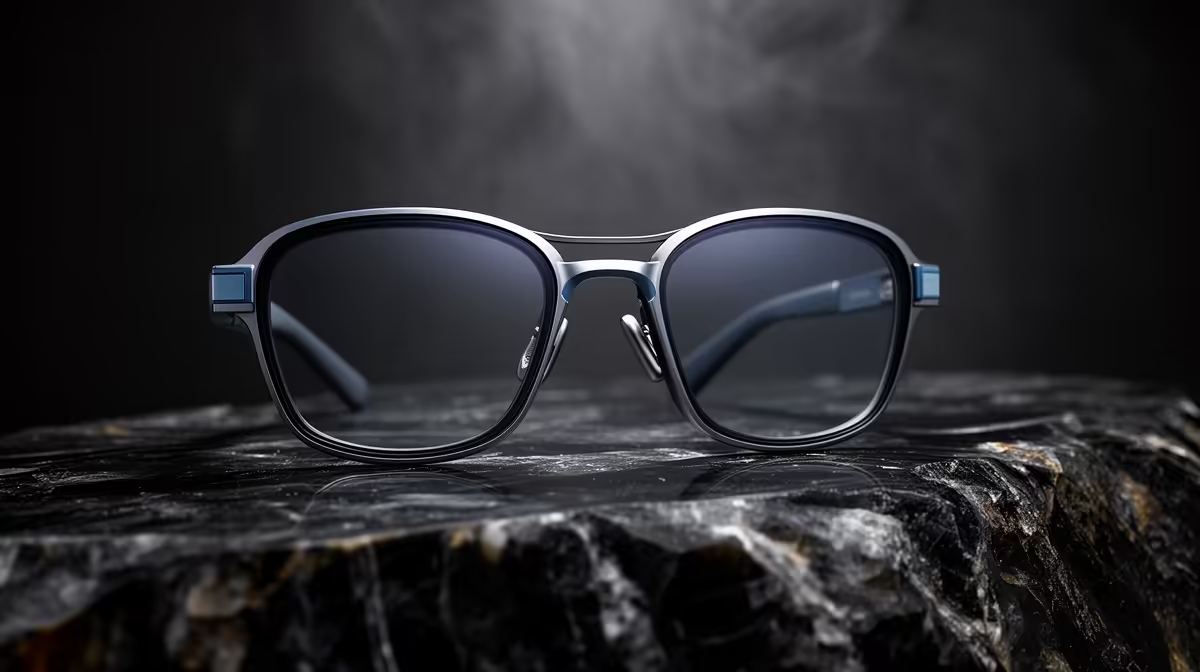
Wearing glasses already is no longer a barrier to wearing smart ones. The Ray-Ban Meta Gen 2 frames take real prescription lenses, single-vision and progressive, so a spectacle wearer can swap their everyday frames for a pair that also has a camera, open-ear speakers and an AI assistant built in. The catch for South African buyers is not the technology; it is planning the prescription correctly when local stock and lens fitting are not as simple as walking into a shop down the road.
Quick Answer
Yes, the Ray-Ban Meta Gen 2 glasses support prescription lenses, including single-vision and progressive, so they can replace your normal spectacles. The Gen 2 frames, launched in 2026, were redesigned specifically for prescription wearers with easier lens fitting. SA buyers should consult their optometrist about their exact prescription and confirm how the Rx lenses will be sourced and fitted before committing.
Yes, they take your prescription
The headline answer is straightforward. Ray-Ban Meta Gen 2 frames accept prescription lenses across a wide range, covering near-sightedness, far-sightedness, astigmatism and progressives. That means most people who currently wear glasses can have these frames glazed to their script and use them as their primary pair, rather than treating smart glasses as a separate gadget worn over contacts.
Progressive support is the meaningful upgrade. Progressives correct for multiple distances in one lens with a seamless transition, which is what many over-40 wearers need, and having that option means the glasses are not limited to single-prescription users. The Gen 2 generation was engineered with prescription wearers in mind, with frames designed to integrate Rx lenses more cleanly than earlier models.
What you actually get in the frame
These are not just glasses with a chip. The Gen 2 frames pack a camera that captures photos and video without you touching your phone, temple speakers that sit outside the ear canal for audio and calls, and Meta AI you converse with for quick questions, object descriptions and everyday tasks. Glazed to your prescription, they let you see clearly and use those features through the same pair you wear all day, which is the appeal: one set of frames on your face doing two jobs.
The open-ear audio is worth a note for anyone weighing them against ordinary glasses. Sound comes from the arms rather than from in-ear buds, so you hear directions, calls or AI responses without blocking out the world around you. For a daily-wear pair that doubles as occasional headphones, that is a sensible design rather than a gimmick.
The South African planning checklist
This is where local buyers need to think ahead rather than assume a like-for-like local shopping experience.
- Confirm your prescription with your optometrist first. Get your current script and ask specifically whether single-vision or progressive suits your needs in this style of frame.
- Check the prescription range. The frames support a broad band of corrections, but very strong or unusual scripts should be confirmed against the supported range before you order.
- Plan the lens fitting. Depending on how you source the glasses, the prescription lenses may be fitted by a specialist optician rather than at point of sale, so establish that path before buying the frames.
- Treat availability cautiously. The newest Gen 2 models and their full prescription options may not all be carried locally at any given moment, so verify current stock rather than assuming.
For what is carried locally in this category, review the live stock in the AR and smart glasses range at Evetech and confirm exactly which models and lens options are available before you firm up a prescription plan with your optometrist.
Are they worth replacing your normal glasses?
For the right person, yes. If you wear glasses every waking hour anyway, and you want hands-free photos, audio and an AI assistant without carrying extra devices, having all of that in your prescription frames is genuinely convenient. The trade-offs are real, though: they are heavier and pricier than plain spectacles, battery life is measured in hours of active use, and the smart features add a layer of charging and app management that ordinary glasses never need.
They make less sense if you only occasionally wear glasses, or if you want a second pair purely for the tech. In that case contacts plus non-prescription smart glasses can work too. That choice hinges on whether consolidating everything into one daily-wear pair genuinely matters to you. To see how the wider supporting kit, cases, chargers and the like, fits in, the accessories best sellers at Evetech give a feel for what goes alongside a pair of smart frames.
Single-vision versus progressive in a smart frame
The choice between single-vision and progressive lenses deserves thought, because it affects how the glasses feel in daily use. Single-vision lenses correct for one distance and are the simpler option, ideal if you only need help seeing far or near. They are lighter and there is no adjustment period, which makes them the easier starting point in a frame you will wear all day.
Progressive lenses correct for multiple distances in one seamless lens, which is what many wearers over 40 rely on, but they carry their own considerations. Progressives need precise fitting to position the viewing zones correctly, and some people take time to adapt to moving their head to look through the right part of the lens. In a smart frame that also has a camera and electronics, getting the progressive fitting right is worth extra care, which is exactly why an optometrist consultation matters more here than for a basic pair.
Weight and comfort for all-day wear
Smart glasses are heavier than ordinary spectacles because of the camera, speakers and battery built into the frame, and that weight is more noticeable once prescription lenses are added. For a pair meant to replace your everyday glasses, comfort over a full day is a genuine factor, not a footnote. Heavier frames can press on the nose and ears over hours of wear, so the fit and weight distribution matter. Trying the frame style for comfort, and choosing thinner lens options where your prescription allows, both help keep an all-day smart pair from becoming a literal weight on your face by evening.
Frequently Asked Questions
Can Ray-Ban Meta Gen 2 glasses take progressive lenses?
Yes. The Gen 2 frames support progressive prescriptions as well as single-vision, so wearers who need correction for multiple distances can use them as their main glasses. Confirm with your optometrist that progressives suit you in this frame style.
Will my exact prescription fit these frames?
The frames cover a wide prescription range including astigmatism, but very strong or unusual scripts should be checked against the supported range first. Take your current prescription to your optometrist and confirm before ordering.
Do I need to consult an optometrist?
It is strongly advised. An optometrist confirms your current prescription, whether single-vision or progressive suits you, and how the lenses will be fitted. This avoids ordering frames that do not match your real visual needs.
Are the full Gen 2 prescription options available in South Africa?
Not necessarily at all times. The newest models and lens options may not be carried locally at any given moment, so check current stock before assuming availability and plan the lens fitting path accordingly.
Can these replace my everyday glasses entirely?
For full-time glasses wearers, yes, once glazed to your prescription they work as a primary pair. Bear in mind they are heavier, costlier and need charging, so weigh that convenience against the extra upkeep.
Thinking about turning your everyday glasses into smart ones? Confirm your prescription with your optometrist, then check live local options in the AR and smart glasses range at Evetech to plan your frames and lenses with confidence.