Quick Answer
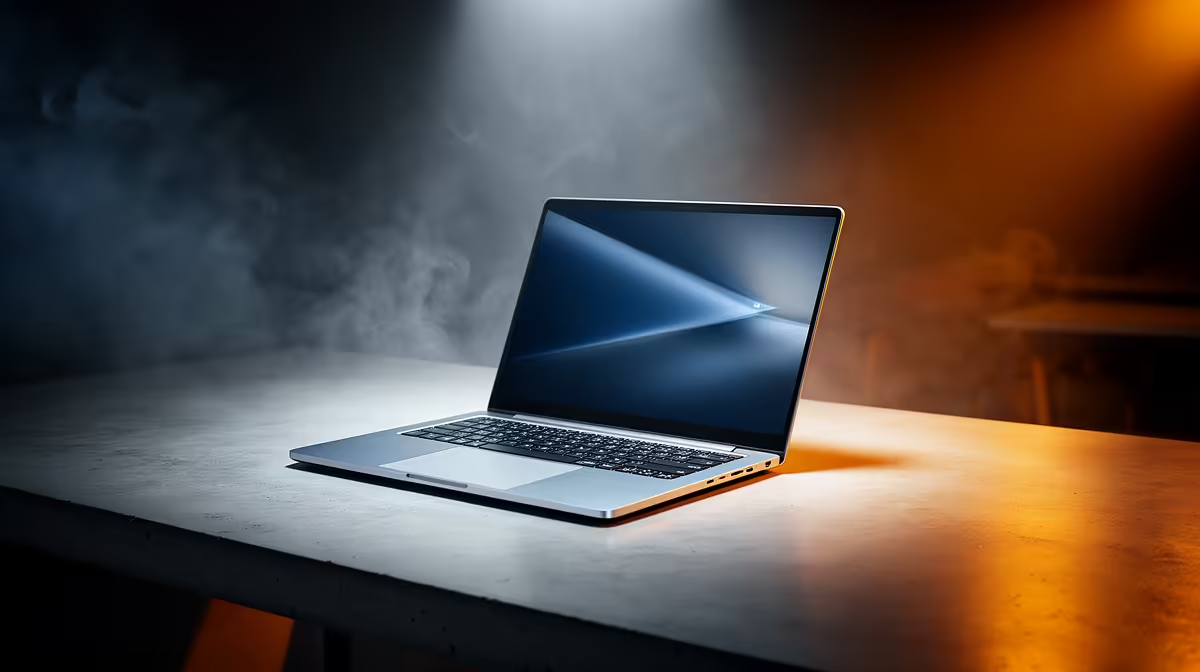
For Gugulethu students, the best laptop is a 15.6-inch Windows notebook with at least a Core i3 or Ryzen 3 CPU, 8GB RAM and a 256GB SSD, usually starting around R8,000 to R11,000. Spend closer to R12,000 to R15,000 if coding, design work or heavy browser tabs are part of the course load.
Specs That Matter For Study
Do not buy below 8GB RAM for a daily student machine. A Lenovo IdeaPad 1, ASUS Vivobook 15 or HP 250-class laptop with 8GB RAM and SSD storage is a better study tool than a cheaper machine with slow storage, because Windows, Teams, Chrome and Office can easily sit above 6GB of memory use.
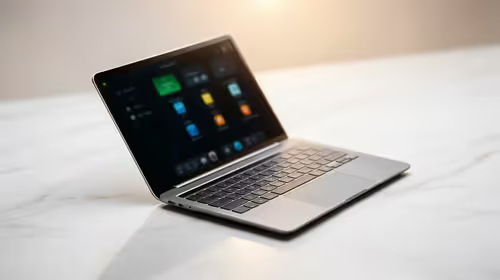
A 14-inch model is easier to carry, but a 15.6-inch screen is more comfortable for assignments and PDFs. If the student will keep the laptop for three years, prioritise 16GB RAM or an upgradeable RAM slot before cosmetic extras.
Delivery Notes For Gugulethu
For Gugulethu buyers, compare home delivery with a Cape Town pickup point or workplace handover if driver access, security or daytime availability is a concern. Laptops are compact high-value parcels, so the safest handover is signed delivery to the person who can check the box immediately.
Check the charger, serial label, screen, keyboard and hinge before discarding packaging. If a claim is needed, photos of the sealed box, waybill and laptop condition make the process clearer.
Budget And Course Fit
The NSFAS device allowance does not cover a new mainstream laptop on its own, so plan the shortfall honestly instead of chasing unrealistic under-R5,000 options. For accounting, teaching, law or general admin, 8GB RAM is workable; for IT, engineering or design, 16GB RAM and a Ryzen 5 or Core i5 class CPU is the safer target.
FAQ
What is the minimum student laptop spec for Gugulethu buyers?
Start with 8GB RAM, a 256GB SSD and a current Core i3, Core i5, Ryzen 3 or Ryzen 5 CPU. That keeps the laptop usable for video calls, research and assignments without constant slowdowns.
Should a student choose 14-inch or 15.6-inch?
Choose 14-inch for daily travel and 15.6-inch for more comfortable typing and reading. If the laptop stays mostly at home, the larger screen is usually worth it.
How should a student receive a laptop delivery?
Use a reachable daytime address, inspect the parcel before signing and keep the packaging until the laptop has been tested. Check Wi-Fi, charger, keyboard and screen on the same day.
Student laptop check
Shortlist models with 8GB RAM minimum, SSD storage and a screen size the student can carry comfortably before choosing the final laptop.