


PCIe 5.0 vs PCIe 4.0 for Video editing in 4k in SA
PCIe 5.0 vs PCIe 4.0 for video editing in 4k is mainly about fit, features, compatibility, cost, and upgrade path, not one automatic winner. SA buyers should match the choice to the setup.
Read morePremium drones add larger sensors, omnidirectional obstacle sensing, extended 40+ minute flight times and longer transmission range over entry-level models that offer fixed cameras, limited sensing and shorter battery life. In South Africa, the price gap between budget
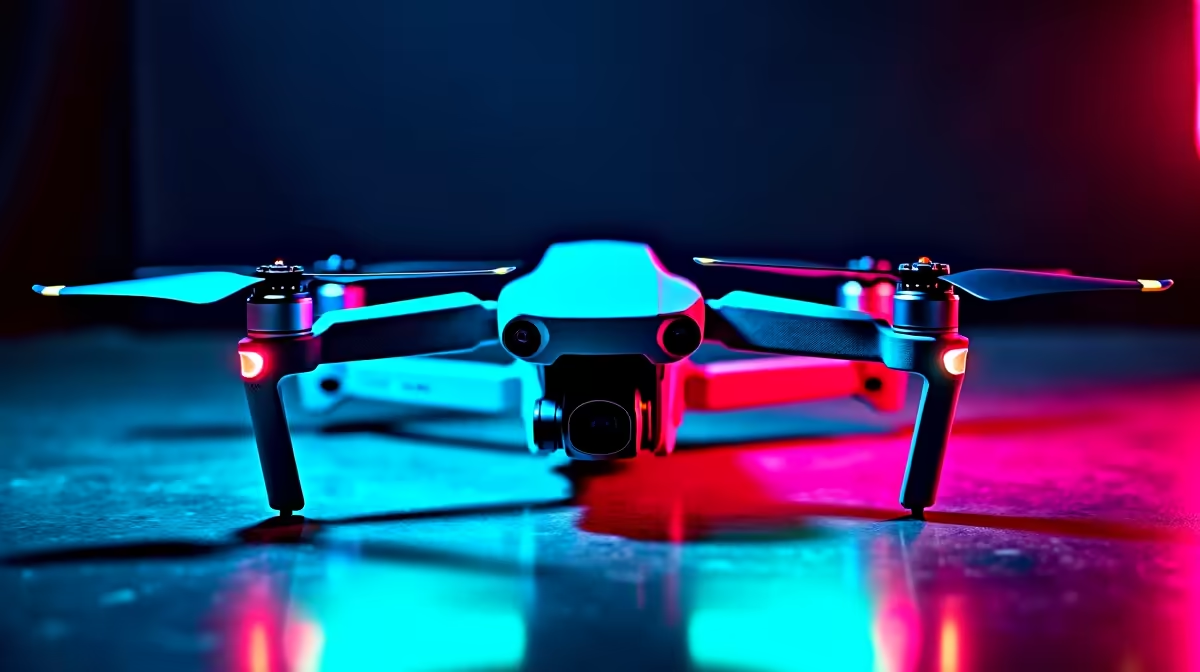
The drone market splits sharply by price, and the gap between a R5,000 starter and a R20,000-plus flagship buys far more than a nicer camera. Comparing budget vs premium drones in South Africa is really about understanding which upgrades you actually feel in the air, the sensor size, the obstacle sensing, the flight time and the range, and which ones are just numbers on a box.
Premium drones add larger camera sensors, omnidirectional obstacle avoidance, flight times of 40 minutes or more, and far longer transmission range. Budget models give you a fixed or smaller camera, limited or no obstacle sensing, and shorter battery life. In South Africa prices run from under R5,000 for entry-level drones to well over R20,000 for premium models, and the right pick depends on what you are filming and how forgiving you need the drone to be.
The single biggest difference between brackets is the camera sensor. Budget drones tend to use small sensors, which struggle the moment light drops, producing noisy footage at dusk, indoors or under overcast Cape Town skies. They often have a fixed lens and limited dynamic range, so bright skies blow out and shadows go murky.
Premium drones carry physically larger sensors that gather more light, hold detail in both highlights and shadows, and shoot cleaner footage in difficult conditions. They also tend to support higher resolutions and richer colour profiles for editing. If the footage is the point, the sensor is where the premium money earns its keep.
Entry-level drones often have little or no obstacle detection, which puts the entire job of avoiding trees, walls and power lines on the pilot. That is fine in open fields once you have practised, but it makes a beginner's first flights nervous and costly when something goes wrong.
Premium drones add omnidirectional obstacle sensing, cameras and sensors watching in every direction that let the drone brake or steer around hazards on its own. For a new pilot, or for flying in tighter spaces, this single feature is often worth the price jump, because it dramatically lowers the odds of an expensive crash.
Budget drones typically give shorter flight times, which means more battery swaps and less footage per session. Premium models stretch to 40 minutes or more on a charge, so you spend more time framing shots and less time landing to change packs.
Transmission range follows the same pattern. Cheaper drones lose a stable signal sooner and can suffer interference, while premium models hold a clean feed much further out, giving you the confidence to fly to a distant subject and bring the drone back without the picture dropping. For South African landscapes and coastlines, that extra range opens up shots a budget drone simply cannot reach safely.
There is a less obvious gap too. Premium drones are usually heavier and better stabilised, so they hold position in a stiff coastal breeze where a light budget drone gets pushed around. That stability shows up directly in smoother footage. Budget drones are easier to carry and less painful to lose, but they ask more of the conditions and the pilot.
One pattern catches buyers off guard: the drone price is rarely the total cost of getting into the air properly. Budget models sometimes include a single standard battery with a short flight time, and manufacturers know that the first accessory almost every buyer reaches for is a second battery. Add a carry case, spare propellers (crashing is part of learning), a good memory card for 4K footage and an ND filter set for shooting in SA sunshine, and you can add a substantial amount on top of the drone itself.
Premium drones carry their own premium accessories. Extended or intelligent flight batteries for flagship models cost noticeably more per pack than the simpler batteries for budget drones. A fly-more bundle that includes two or three batteries and a multi-charger is worth pricing from the start, because rotating packs is how you turn a 45-minute drone into a practical all-day platform.
When comparing budget versus premium, add the realistic total kit cost rather than comparing the base drone prices. A budget drone that needs three batteries, a case and ND filters often closes the cost gap with an entry-level premium model that comes bundled.
For a casual flyer learning the ropes, capturing the occasional holiday clip, or simply enjoying the hobby, a budget drone under R10,000 delivers genuine fun without a large outlay. For content creators, property and event work, or anyone who needs reliable footage in varied light and wind, a premium drone justifies its cost through the sensor, the safety net and the flight time. Many buyers start with an affordable model to learn, then move up once they know what they want.
Whichever bracket fits, it helps to see what is actually stocked. The smart home and aerial gear category is where these devices sit, and it gives a feel for the range available locally.
For the spare batteries, propellers, cases and memory cards that every drone owner ends up buying, a scan of the accessories with the strongest sales flags the extras worth budgeting for upfront.
The camera sensor. Premium drones use larger sensors that capture cleaner footage in low light and hold detail in highlights and shadows, while budget drones use smaller sensors that struggle as light drops.
Yes, for casual flyers and beginners. A budget drone under R10,000 is a low-risk way to learn and capture occasional footage, though it asks more of the pilot and the weather conditions.
It is one of the most valuable premium features, especially for new pilots or tight spaces. Omnidirectional sensing lets the drone avoid trees, walls and power lines on its own, sharply reducing crash risk.
Prices run from under R5,000 for entry-level models to well over R20,000 for premium drones, with the gap reflecting sensor quality, obstacle sensing, flight time and range.
Premium models commonly reach 40 minutes or more per battery, against the shorter flight times of budget drones, meaning fewer battery swaps and more footage per session.
Trying to decide where your Rands go furthest in the air? Browse the drones and aerial gear at Evetech and match a model to the footage, range and safety features you actually need.
The camera sensor. Premium drones use larger sensors that capture cleaner footage in low light and hold detail in highlights and shadows, while budget drones use smaller sensors that struggle as light drops.
Yes, for casual flyers and beginners. A budget drone under R10,000 is a low-risk way to learn and capture occasional footage, though it asks more of the pilot and the weather conditions.
It is one of the most valuable premium features, especially for new pilots or tight spaces. Omnidirectional sensing lets the drone avoid trees, walls and power lines on its own, sharply reducing crash risk.
Prices run from under R5,000 for entry-level models to well over R20,000 for premium drones, with the gap reflecting sensor quality, obstacle sensing, flight time and range.
Premium models commonly reach 40 minutes or more per battery, against the shorter flight times of budget drones, meaning fewer battery swaps and more footage per session.
PCIe 5.0 vs PCIe 4.0 for video editing in 4k is mainly about fit, features, compatibility, cost, and upgrade path, not one automatic winner. SA buyers should match the choice to the setup.
Read more
Wi-Fi 7 vs Wi-Fi 6e for competitive esports comes down to router support, latency goals, device compatibility, and coverage. SA buyers should match the choice to the real network setup.
Read more
ATX 3.1 vs ATX 3.0 for mMO and live-service games buyers - what changes is mostly about compatibility, budget, upgrade path, and setup fit. SA buyers should check device support and real needs before expecting a clear win from either option.
Read more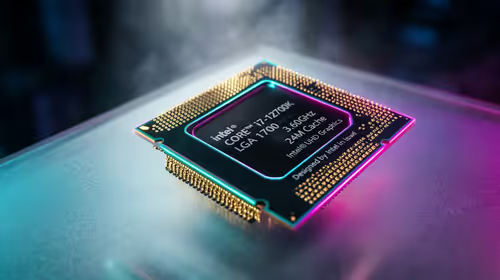
LGA 1851 vs LGA 1700 can affect Twitch and YouTube streaming when gaming and encoding share CPU resources. For SA creators, the real-world difference depends on encoder choice, memory support, motherboard cost, thermals, and upgrade plans.
Read more
X870E vs X670E for aaa single-player gaming is mainly about fit, features, compatibility, cost, and upgrade path, not one automatic winner. SA buyers should match the choice to the setup.
Read more
Hall Effect switches vs Mechanical switches for mMO and live-service games is mostly about compatibility, budget, upgrade path, and setup fit. SA buyers should check device support and real needs before expecting a clear win from either option.
Read more
A fake 113GB GTA VI ISO reportedly used empty padding around a small malware payload. SA gamers should delete unofficial builds, keep Windows security active and wait for official channels.
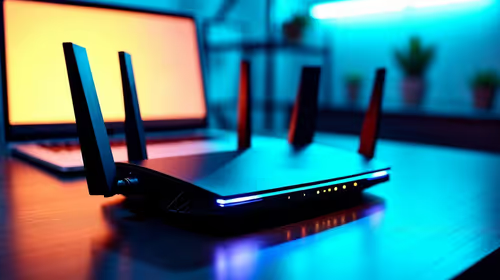
Wi-Fi 6E vs Wi-Fi 6 matters for 4K video editing when files move across a network. The real-world difference between Wi-Fi 6E and Wi-Fi 6 for video editing in 4K depends on NAS access, cloud uploads, router range, and SA creator workflows.

The difference between PCIe 5.0 and PCIe 4.0 for SA gamers is mostly bandwidth headroom. Compare GPU slot needs, NVMe speed, motherboard support, and upgrade timing before paying extra for a newer platform.

Gaming PC stuck pixel checks in South Africa should confirm the monitor fault first. Use colour tests, screenshot comparison, cable swaps, display menu checks, and clear photos before deciding on support.

Shokz OpenFit Air 2 earbuds weigh 7.2g each and use a redesigned dual-driver open-ear layout. SA buyers should choose them for comfort and awareness, not maximum isolation.

AMD's current driver now lists a Radeon RX 9050 4GB, while product coverage details a narrowed memory system. SA buyers should weigh the low VRAM ceiling against current local Radeon options.

Samsung Display has demonstrated a 16-inch 2.5K OLED laptop panel running at 300Hz. SA buyers should wait for a named notebook, full panel specifications and a local price before planning an upgrade.

Microsoft says some Windows 11 game crashes after recent updates are linked to RGB-related drivers. Affected SA gamers should confirm the update and driver before using the published registry workaround.
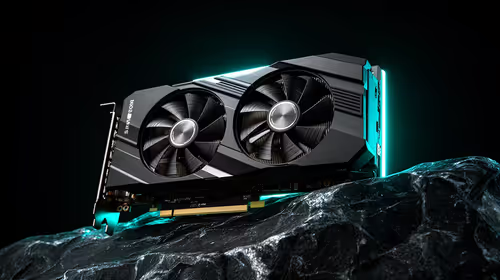
RTX 5090 on a 650W PSU is a tight pairing with very limited headroom. For SA gaming PCs, focus on total system draw, PSU quality, connector support, CPU choice, and avoid OC plans unless the full build is carefully power-limited.
PCIe 5.0 vs PCIe 4.0 for video editing in 4k is mainly about fit, features, compatibility, cost, and upgrade path, not one automatic winner. SA buyers should match the choice to the setup.
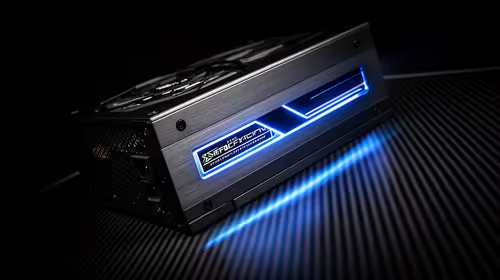
850W PSU safety for RTX 5090 is plausible with a quality unit and balanced parts. In SA, confirm connector support, CPU power draw, case airflow, PSU age, and spare capacity before building around 850W.
Wi-Fi 7 vs Wi-Fi 6e for competitive esports comes down to router support, latency goals, device compatibility, and coverage. SA buyers should match the choice to the real network setup.