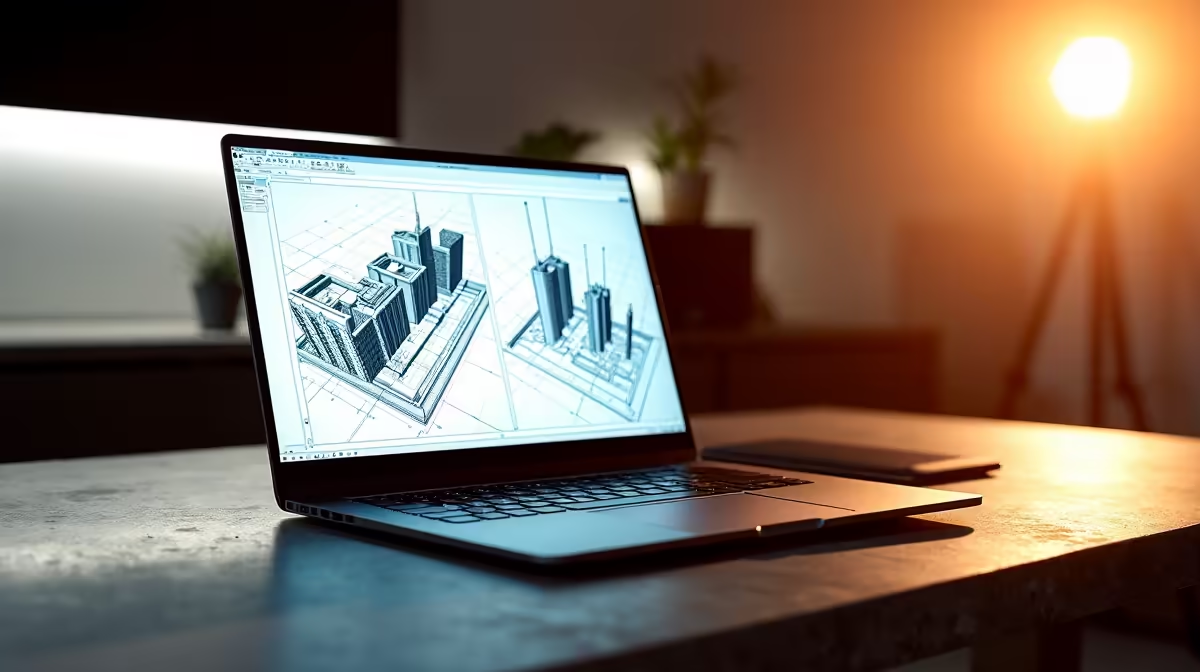
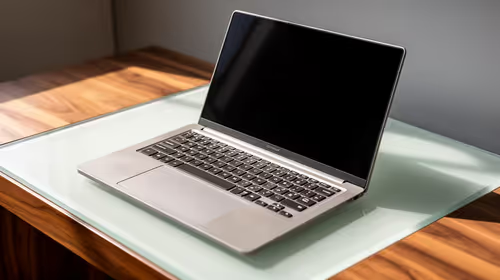
The ASUS ExpertBook P1503 i5 at R9,858 suits an engineering student who needs a reliable laptop for notes, spreadsheets, CAD basics, coding, browser research, and campus admin without paying for more machine than the workload needs. A business model is not automatically overkill, but it only makes sense when its practical build and everyday stability matter more than gaming graphics or premium display extras.
Best laptop picks for engineering study
The ASUS ExpertBook P1503 i5 at R9,858 is the sensible baseline because the i5 spec is enough for lecture work, reports, light programming, and general engineering software prep. It is the better answer when the student wants a work-focused machine that can move between campus, home, and group projects without pushing the budget into unnecessary territory.
The Lenovo IdeaPad Slim 3 i7 at R13,400 and ASUS Vivobook X1504VA i7 at R13,999 are more useful if the student regularly keeps heavy browser tabs, spreadsheets, PDFs, and coding tools open together. The i7 spec gives more breathing room for multitasking, so the extra spend is easier to justify for a demanding course load than for basic note-taking.
Student desk reality in South Africa
On a small student desk, the ASUS Vivobook S14 OLED at R10,719 makes sense when screen quality matters for long reading sessions, diagrams, presentations, and evening study. The OLED spec is the real reason to choose it over a plain productivity machine, especially if the laptop is also used as the main screen in res, digs, or at home.
The Lenovo LOQ RTX3050 at R9,500 is the practical exception: the RTX3050 spec helps when graphics capability matters for visual workloads or after-hours gaming. The ASUS ExpertBook P5405 at R12,700 sits closer to the business-laptop lane, useful when the student values a more serious daily work machine over a gaming-first setup.
Ready to choose the right laptop?
Use its listed spec as the filter for the student study desk, with ASUS ExpertBook P1503 i5 at R9,858 as the first listed match.