Quick Answer
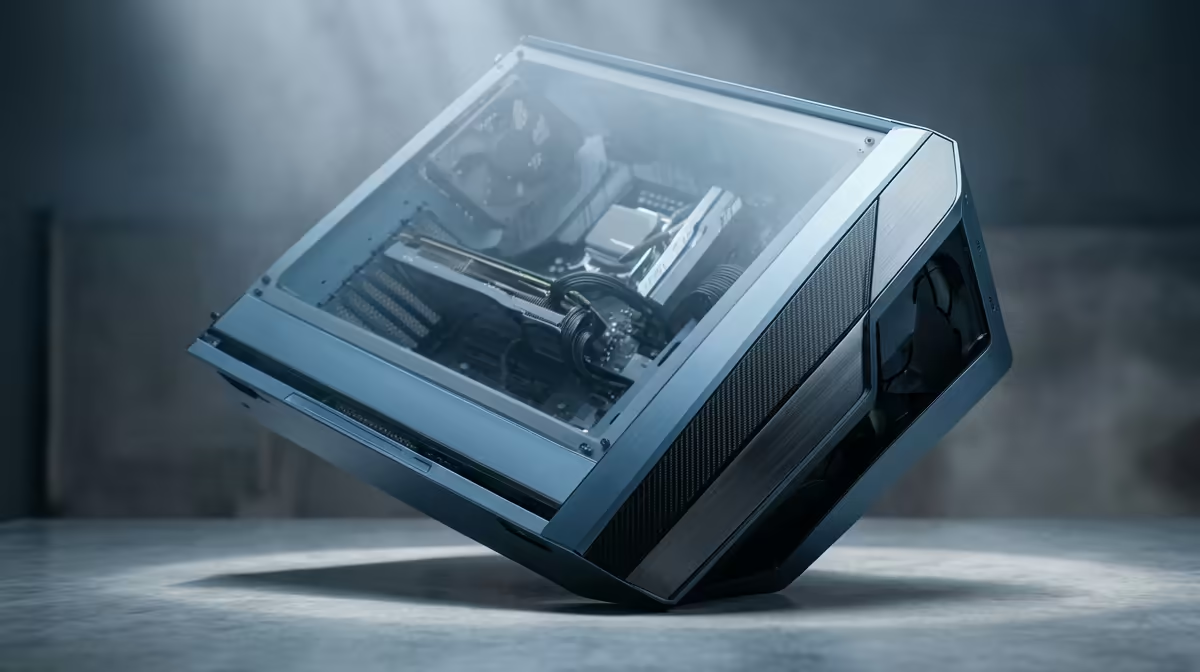
Buy now if your current part is the bottleneck for data-science coursework; otherwise wait and bank the budget. The decision turns on good airflow, GPU and cooler clearance, enough drive bays and clean cable routing, not the calendar. A Corsair 4000D Airflow-class option in the R900 to R3,500 band is the right buy-now pick when the case is real.
How to avoid overpaying
Overspending for data-science coursework usually hides in headline specs you will never reach in real use and in bundled extras that add cost without changing the result. Write down the three things you truly need — that is good airflow, GPU and cooler clearance, enough drive bays and clean cable routing — and treat everything else as optional. If you game at a modest resolution or work on light tasks, you do not need the top tier; the R900 to R3,500 band already covers it. The money you save is better spent on a part that is actually limiting you.
Matching it to your setup
Whatever you pick has to fit the rest of your setup for data-science coursework. Check sizing, connectors, power and the space on or around your desk before you order. If two options are close, choose the one with the clearer warranty and quieter operation. Targeting support for 360mm radiators, 330mm+ GPUs and at least three pre-fitted fans on a NZXT H5 Flow-class part keeps the whole system balanced so no single component is left waiting on another.
A practical spec target
Aim for support for 360mm radiators, 330mm+ GPUs and at least three pre-fitted fans. That floor is what keeps data-science coursework feeling smooth instead of compromised. Below it you end up fighting the hardware; at or above it you have room to grow. Once the core spec is right, check the supporting details — fit, connectors, warranty and SA stock — before you commit. A part that clears the spec floor and is in stock locally beats a slightly faster one you have to wait weeks to receive.
FAQ
Will entry-level be enough for this use?
It can be, as long as it clears support for 360mm radiators, 330mm+ GPUs and at least three pre-fitted fans. For data-science coursework, the cheapest tier sometimes misses that floor, so check the spec before you decide. If it falls short, step up one rung rather than overbuying two.
What is the most common buying mistake here?
Paying for headline numbers you will never reach while skimping on good airflow, GPU and cooler clearance, enough drive bays and clean cable routing. For data-science coursework, that gets the priorities backwards. Lock the essentials first, then add extras only if budget allows.
What should I check first before buying?
Start with good airflow, GPU and cooler clearance, enough drive bays and clean cable routing. Those are the factors that decide whether the part works for data-science coursework, so they come before brand or marketing extras. Hold each option against support for 360mm radiators, 330mm+ GPUs and at least three pre-fitted fans and you have a clear way to compare.
title:"Ready to choose?" , Match good airflow, GPU and cooler clearance, enough drive bays and clean cable routing to your setup, target support for 360mm radiators, 330mm+ GPUs and at least three pre-fitted fans, and compare the in-stock Corsair 4000D Airflow-class options at Evetech to lock in the right pick for data-science coursework.