Quick Answer
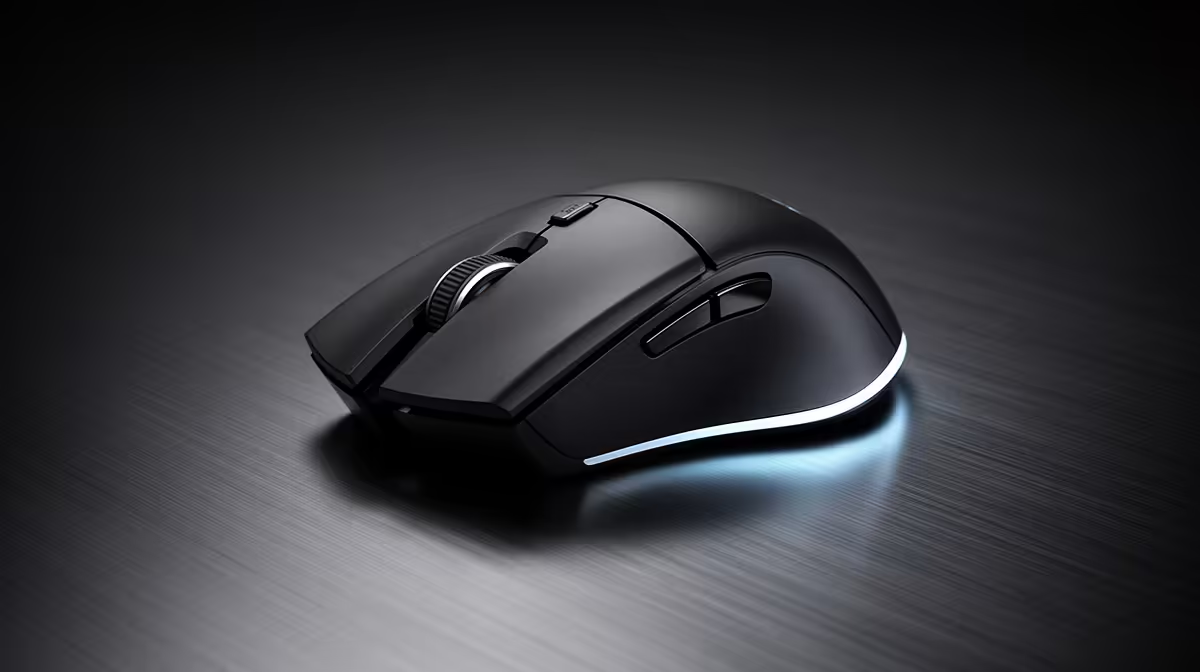
At 4,000 DPI, a sensor improves work and study tasks only on larger displays such as 1440p or 4K monitors, or in multi-monitor setups where cursor travel distances are long. On a standard 1080p laptop screen, most users set 4,000 DPI-capable mice to 800 to 1,600 DPI and rarely engage the upper range.
The Display Size Factor 🖥️
DPI usefulness scales directly with screen resolution and physical size. On a 15-inch 1080p laptop screen, moving the mouse 2 to 3cm already traverses the full display at 1,200 DPI. Setting DPI to 4,000 on the same screen makes the cursor jump almost uncontrollably with any hand movement. The real benefit of a 4,000 DPI upper limit appears when the laptop is docked to a 27-inch 4K external monitor, increasingly common for South African students studying design, architecture, or data science at home. At that resolution, 3,000 to 4,000 DPI enables natural full-screen cursor travel without the wrist fatigue of sweeping across a large physical distance at low sensitivity.
Study-Specific Tasks Where Higher DPI Helps 📚
For students working with large-format reference images, zoomed-in maps in geography tools, or multi-panel layouts in scientific visualisation software, higher DPI allows rapid cursor movement between reference points without repositioning the mouse. A law student reviewing a 150-page PDF with multiple windows open across a dual-display setup can set 2,400 to 3,200 DPI to navigate between windows without the hand effort of low-DPI sweeping. Conversely, for precise text selection and citation formatting, dropping back to 800 DPI improves accuracy. The value of a 4,000 DPI sensor is the range it provides, not the upper ceiling used constantly.
Sensor Quality Matters More Than Peak DPI 🔬
A well-implemented 2,000 DPI optical sensor tracks more cleanly than a poorly-implemented 8,000 DPI sensor. The important specifications for productivity are tracking accuracy across the operating DPI range, low angle snapping, zero acceleration at typical desk-speed movement, and low minimum tracking speed. Mice in the R500 to R900 range at Evetech in this sensor class offer 4,000 DPI capability alongside the quality that makes all DPI settings usable.
Match DPI to Your Monitor Before Finalising Settings ⚡
Connect your mouse to your largest display and open the DPI settings in the companion software. Start at 1,200 DPI and increase in 400 DPI steps until cursor travel across the full screen requires roughly 8 to 12cm of hand movement. That sweet spot gives you speed with control, and it changes if you switch monitors.
FAQ
Will setting a mouse to 4,000 DPI make document editing harder?
Yes, if used at that sensitivity for precise text selection and formatting. The cursor moves too fast for the fine motor control needed in detailed editing. Lower DPI settings on the same mouse, around 800 to 1,200, are better suited to precision document work.
Is there a DPI setting that works well for both study research and gaming?
For casual gaming on a full HD display, 1,600 to 2,400 DPI is a common crossover point that also works reasonably for web research and multi-window study workflows. This range is the most versatile for mixed use.
Do cheap wireless mice with listed 4,000 DPI actually track accurately at that setting?
Often not. Budget sensors that claim high DPI numbers interpolate data rather than natively resolving at those speeds, producing jitter. Reputable sensor manufacturers like PixArt publish native DPI specifications; check whether the sensor name appears in reviews before trusting the DPI claim on a budget mouse.
Need a sensor that handles both precise study work and large display navigation?
Evetech carries wireless mice with quality optical sensors rated for 4,000 DPI and above, with reliable tracking across every setting in the range.