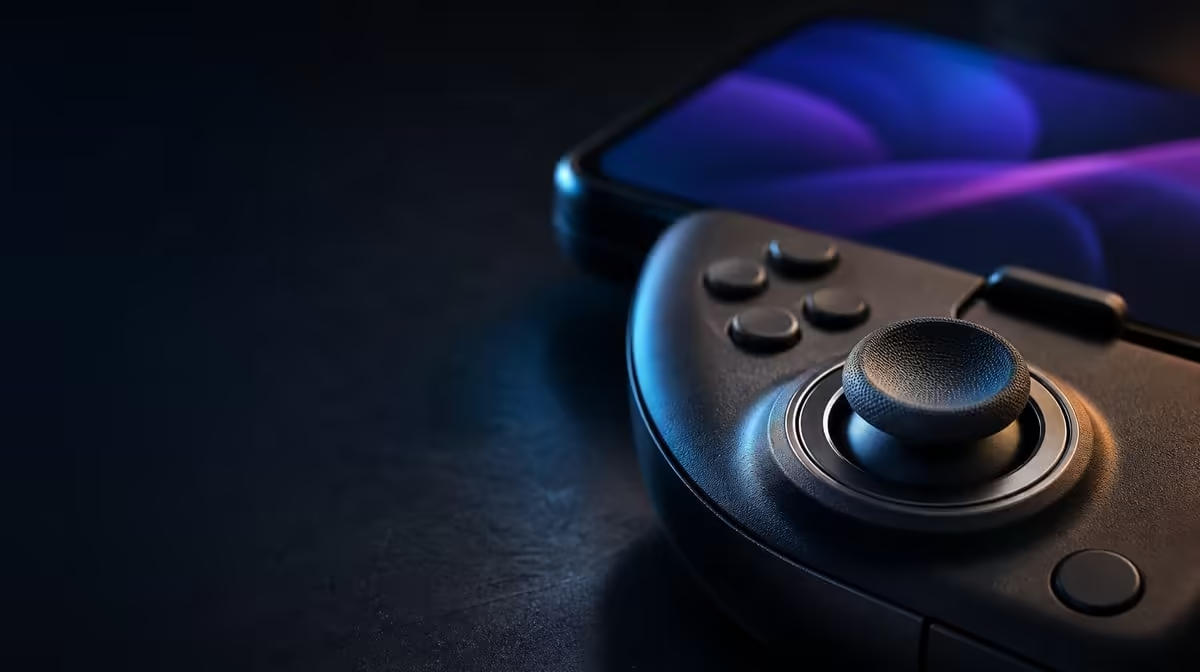
Hall sensing removes a common wear mechanism, but it cannot place a controller outside physics or software. The direct answer to can Hall Effect sticks prevent controller drift is that they reduce drift caused by worn potentiometer contacts, while calibration, damage and the surrounding stick assembly still matter. The GameSir X5s brings anti-drift Hall sticks to a R699 mobile controller.
Quick Answer
Hall Effect sticks can prevent or reduce contact-wear drift because they measure position magnetically rather than rubbing along potentiometer tracks. They cannot guarantee that neutral input will remain perfect after bad calibration, obstruction or physical damage. At R699, the X5s provides an anti-drift Hall stick foundation that should still be checked and configured carefully.
🧲 Identify the drift cause Hall sensing addresses
Traditional potentiometer sticks measure position through physical contact on resistive tracks. Repeated use can wear those tracks, and the resulting signal may stop settling neatly at neutral. Hall Effect sensing reads magnetic position, so that specific rubbing measurement surface is absent.
This is a meaningful advantage, not merely a new label. It targets a known source of unwanted movement and can improve resistance to contact-related drift over time. The X5s describes its sticks as anti-drift because of this magnetic sensing approach.
The technology should be explained precisely. It reduces a cause; it does not eliminate every possible cause. A damaged centring mechanism, poor calibration, debris around moving parts or a problematic software profile can still produce an off-centre result.
It also helps to distinguish drift from overshoot and interruption. Drift is unwanted input near neutral. Overshoot follows a deliberate movement and often points to sensitivity or technique. A dropped wireless input belongs to the connection path. Using the right name stops one deadzone control from being asked to solve three unrelated symptoms.
Players comparing sensing designs can use the Evetech gaming controller section to keep the R699 X5s within a relevant category rather than isolating one feature from the complete controller.
🎯 Test neutral before changing deadzone
Put the controller on a steady surface and release both sticks. Observe an input display in the game or supported software. Move one stick slowly around its range, let it return without guidance and repeat from different directions.
If the reading settles in the same place, preserve that result as a baseline. If the view moves while the stick is untouched, note whether it happens constantly or after a particular movement. An occasional connection interruption looks different from a consistent neutral offset, and gyro movement can be mistaken for stick drift if motion input remains active.
Deadzone ignores a small area around centre. Increasing it may hide tiny movement, but too much can make initial aim feel unresponsive. Confirm calibration and restore a default profile before raising it. Then adjust in small steps and retest fine movement.
Hall hardware does not make these checks pointless. It makes them more informative by removing contact-track wear from much of the diagnosis. If a new offset appears, the investigation can focus on the remaining physical, software and game layers.
Repeat the neutral sequence after a profile change and after transport. Do not rely on one result from the day the controller arrived. A short history shows whether behaviour is stable and whether an unusual reading follows a specific event.
Write down the game and connection with each result. A centre problem that appears only in one title may come from its settings. A pause that appears only over one wireless route is not the same as a stick that rests off centre everywhere.
🛡️ Protect the surrounding mechanism
Store the X5s without pressure on its sticks. A controller squeezed into a bag against another object may not rest naturally and can stress moving parts. Give the controls room and check their return after travel.
Keep grit, food and moisture away from the stick openings. Cleaning should be gentle and external, without forcing the controls past their normal motion. Magnetic sensing still depends on a physical assembly that must move and centre.
Save a known software profile before experimenting. The X5s supports customisation, and a stable baseline makes sensitivity or mapping changes reversible. Test sticks separately from its analog triggers, Turbo and 6-axis gyro.
Gyro should be disabled during neutral diagnosis because controller tilt can move the view with untouched sticks. Turbo and button mappings should also remain at baseline. Isolation is the difference between testing a sensor and testing an entire customised control scheme.
The broader Evetech gaming accessories range can help with setup planning after the controller has a safe storage and calibration routine.
🔎 Diagnose unexpected movement in layers
Begin with the simplest offline test and a default profile. Confirm the chosen Bluetooth or USB-C route is stable. Disable gyro for the stick check. Observe neutral, then compare behaviour in another controller-compatible game if necessary.
If unwanted movement follows one game only, its deadzone or response settings deserve attention. If it follows every title but changes after calibration, preserve the corrected profile and continue monitoring. If the controller is physically obstructed, software compensation is not the first answer.
Use USB-C as a connection reference if Bluetooth behaviour is intermittent. Keep the game and input display unchanged. If the neutral reading is stable wired and the apparent drift occurs only during wireless interruptions, focus on the local link rather than the Hall sensor.
The X5s also supports 2.4GHz, although its dongle is not included. A missing receiver is a connection requirement rather than a drift diagnosis. Keep these concerns separate so an incomplete wireless route is not confused with unstable stick input.
At R699, Hall sticks are a strong reason to consider the X5s, especially for players concerned about potentiometer wear. The honest conclusion remains balanced: magnetic sensing meaningfully reduces contact-related drift risk, while accurate control still depends on setup, care and the complete input chain.
Prevention therefore has two parts. Choose sensing that avoids a known wear mechanism, then maintain a clean baseline through storage, calibration and measured settings. Hall Effect technology provides the first part; the owner still controls much of the second.
Use that baseline before and after major software changes. If neutral remains stable while sensitivity feels different, the problem is response rather than drift. If the input centre changes only after a profile loads, return to default and rebuild the setting deliberately.
This evidence-led routine is the best companion to anti-drift hardware. It protects the advantage of Hall sensing without turning the label into a promise broader than the technology can make.
The Evetech accessories best-seller view provides wider context once the drift-resistance decision has been made.
Frequently Asked Questions
Which drift source do Hall sticks reduce?
They reduce drift associated with worn potentiometer contact tracks by sensing position magnetically. Other physical and software causes can still affect neutral.
Can calibration move a Hall stick off centre?
An incorrect software baseline can produce a poor neutral result even with Hall hardware. Recalibrate from a still position before adding a large deadzone.
Should gyro be active during a drift test?
No. Isolate the sticks first, because physical controller movement can move the view through gyro and resemble drift.
How much is the anti-drift X5s?
The anti-drift X5s is R699, placing magnetic Hall sticks inside its Android-compatible control package.
Ready to choose drift resistance with realistic expectations?
Browse Evetech gaming controllers and compare Hall sensing, platform support and connection needs as one complete decision.