Quick Answer
Yes, reinforced sleeved tubing improves long-term AIO reliability by reducing permeation of coolant through the tube walls, resisting kinking during routing, and protecting the inner rubber core from UV degradation and physical abrasion. Premium AIOs with reinforced braided sleeves retain coolant volume better over five-plus years than plain rubber tubes.
How Reinforced Tubing Differs from Standard Rubber 🔧
Standard AIO tubing is a rubber or polymer core tube with no external reinforcement. Over time, the coolant mixture inside slowly permeates through the rubber wall at a molecular level, a process called vapour transmission or evaporation permeation. Plain rubber tubes in budget AIOs can lose 5 to 10 mL of coolant per year through this process, which over three to four years causes air to enter the pump chamber, producing audible gurgling and reducing pump efficiency.
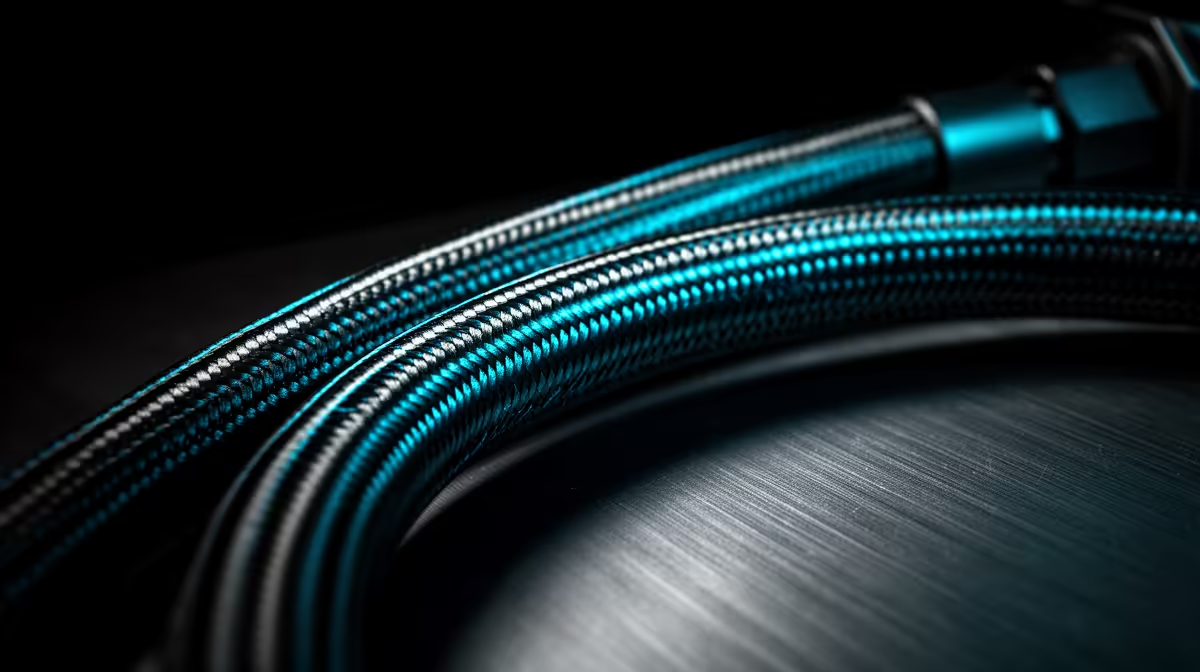
Reinforced sleeved tubing uses a braided textile or polymer mesh layer bonded over the rubber core. This reinforcement reduces wall flex under internal pressure and cuts vapour transmission rates significantly, often by 40 to 60 percent compared to plain rubber.
Kink Resistance and Physical Durability 🖥️
Beyond permeation, reinforced tubes resist kinking more effectively than plain rubber when routing from the radiator to the CPU socket in constrained cases.
The sleeve also provides physical abrasion protection. Inside a case with multiple sharp metal edges (standoffs, cable routing cutouts, PSU cage corners), an unprotected rubber tube rubbing against a bare metal edge will wear through over several years of thermal cycling vibration. A sleeved tube can sustain years of contact with case metalwork without abrasion breakthrough.
Practical Impact for SA Builders Over a Long Ownership Period 💡
South African builders often retain hardware longer than their counterparts in markets where upgrading every 12 to 18 months is standard.
The cost difference between a standard and premium AIO with sleeved tubing at Evetech is typically R800 to R1,800. Over a six to eight year ownership period, that premium is roughly R150 to R300 per year, a sound maintenance cost avoided versus replacing a failed AIO mid-lifecycle at full current pricing.
Inspect Tubing Annually for Soft Spots ⚡
Even reinforced sleeved tubing can develop soft spots near the pump block and radiator fittings where the tube bends repeatedly during temperature cycling. Once a year, run a clean cloth along the full tube length and feel for sections that compress more easily than the rest. A soft spot indicates inner wall degradation and is an early warning sign to plan a cooler replacement before failure.
FAQ
Does reinforced sleeved tubing affect thermal performance?
No. Tube material and sleeve construction do not significantly affect coolant flow rate or thermal performance. The pump impeller and radiator surface area determine performance; tubing construction affects durability and permeation resistance rather than cooling efficiency.
Can I re-sleeve existing AIO tubing with aftermarket braiding?
Yes. Aftermarket PET braided sleeving in 10mm and 12mm inner diameter is available and can be slipped over existing plain rubber AIO tubes without disassembly. This adds abrasion protection but does not improve vapour permeation resistance, as that requires the reinforcement to be bonded to the rubber core during manufacturing.
What is the standard tube diameter on most retail AIO coolers?
Most retail AIOs use 10mm to 12mm inner diameter tubing (12mm to 16mm outer diameter when sleeved). This is consistent across Asetek-platform AIOs including those from ASUS ROG, Corsair, NZXT, and MSI. The fitting attachments at pump and radiator are not standardised between brands and are not interchangeable.
Planning a long-term reliable cooling solution?
Browse premium AIO coolers at Evetech, including models with reinforced sleeved tubing, for builds that need to last through multiple upgrade cycles.