A 3D printer business in South Africa can pay for itself faster than most people expect, but only if you treat it as a small manufacturing operation rather than a hobby that occasionally sells a keyring. A R12,495 Bambu Lab P1S running at the going local print-service rate of roughly R100 per hour clears its purchase price in about 125 billable hours of machine time. After that, your main cost is filament, and the maths shifts firmly into profit.
Quick Answer
Yes. A R12,495 P1S charged out at around R100 per hour of print time recovers its cost in roughly 125 billable hours. With filament at R300 to R400 per kg and a typical part using 50g to 150g, gross margins above 70 percent on custom orders are realistic once the machine is paid off.
The real cost of running a printer
The sticker price is only the entry fee. To build an honest return-on-investment picture you need to account for everything that eats into a print job, because underpricing is the fastest way to lose money on work that looks busy.
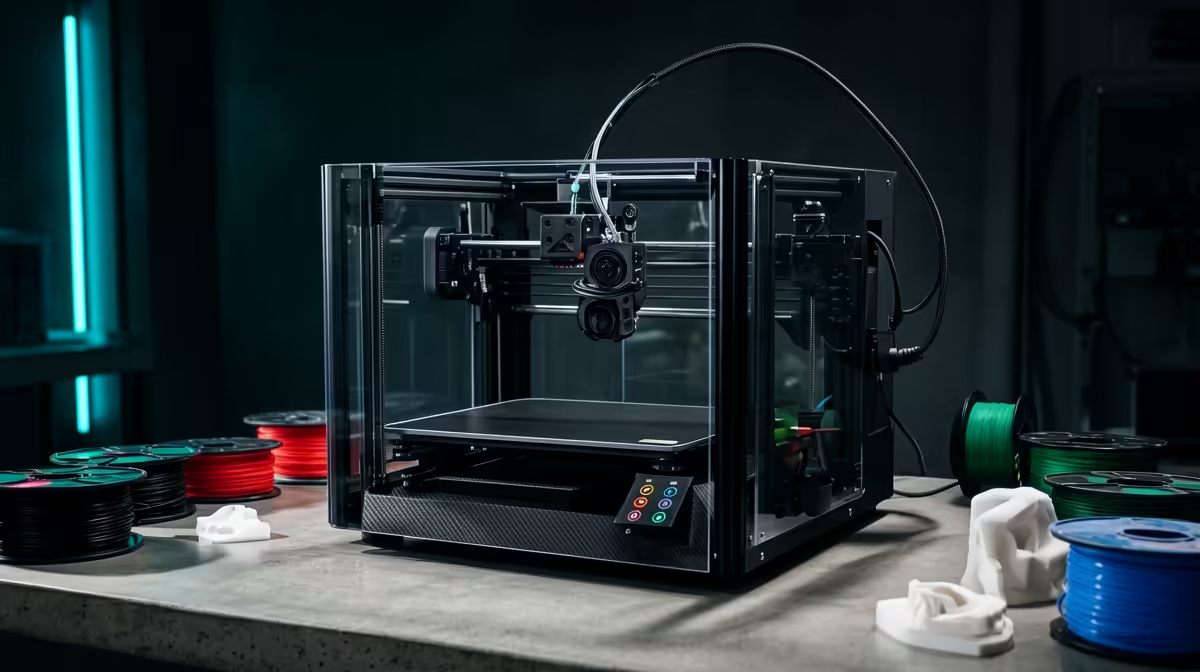
Your running costs fall into a few buckets. Filament is the obvious one: a 1kg spool of decent PLA sits around R300 to R400, and a single desk organiser or phone stand might use 80g to 120g, so material cost per part is often under R50. Electricity is small but real, since an enclosed printer like the P1S draws a few hundred watts during a print and far less while holding temperature. Then there is wear: nozzles, build plates and the occasional belt or fan are consumables you should budget a few hundred Rand a year toward. The browsing experience for entry machines and spares is easiest if you start from the dedicated 3D printer and filament listings at Evetech so you can line up a printer with the consumables it actually needs.
Where the money actually comes from
The income side splits into two broad models, and most profitable SA operators run both.
Print-on-demand and custom orders
This is the bread and butter: someone sends you a file or a brief, you quote, you print, you ship or hand over. Custom phone grips, replacement knobs for appliances, cosplay props, board-game inserts, model bases and bespoke gifts all sell steadily. Because each job is priced individually, your margin is whatever the market will bear minus material and time. At R100 per machine-hour plus a small material markup, a part that takes three hours and R40 of filament can comfortably be quoted at R350 to R450.
Selling your own designs
Higher effort, higher ceiling. Instead of waiting for orders you design products, desk organisers, planters, headphone stands, cable trays, and sell them through Facebook Marketplace, a craft market stall, or your own social pages. The first design takes hours; the hundredth copy takes minutes of your attention. This is where a single printer quietly becomes a product line.
Choosing a machine that earns
Not every printer is built for paying work. For a business you want reliability and repeatability over raw novelty. The P1S earns its place because it is fast, enclosed (which matters for consistent results and for printing tougher materials later), and forgiving enough that you spend time printing rather than tinkering. A cheaper open-frame Ender-class machine can absolutely make money too, and is a sensible R5,000-ish entry point, but expect to spend more of your own hours dialling it in.
If you are weighing up which model to start with, the practical filter is print speed and uptime, because both translate directly into billable hours. A machine that prints twice as fast and rarely fails a job earns far more per week than a cheaper one that needs babysitting.
A realistic first-year picture
Say you buy the P1S for R12,495 and sell roughly 10 hours of print time a week at R100, alongside a handful of your own R150 to R250 products. That is around R1,000 to R1,500 weekly in revenue early on, scaling as you build a customer base. Filament and electricity might take R200 to R300 of that. By the time you have logged your first 125 or so billable hours, the printer is paid off and almost everything after is margin. Reinvesting that into a second machine is how single-printer side hustles turn into small print farms. Picking up spares and add-ons as you grow is simple from the accessories best-sellers at Evetech, which is handy when you need a replacement nozzle or build surface in a hurry.
Pricing your work so it actually pays
The single biggest reason small print operations fail is underpricing. It is tempting to look only at the R40 of filament in a part and quote off that, but the real cost includes machine time, the slice of electricity a long print draws, nozzle and plate wear, and your own hours on setup, support removal and finishing. Price against true cost, not just plastic. A healthy markup on the full cost is what turns a busy-looking side hustle into one that genuinely banks money rather than just wearing out your printer.
A practical rule is to set a machine-hour rate, add a material markup on top, and never quote below the floor that covers your time. A part that takes three hours and R40 of filament should clear comfortably above R300 once your hourly rate is in the price. Custom and bespoke work carries the fattest margin because the customer is paying for the design and the convenience, not just the grams of PLA.
Avoiding the common money traps
Two mistakes drain profit fast. The first is saying yes to huge, low-value prints that tie up a machine for a day and pay almost nothing per hour; politely steer those quotes higher or turn them down. The second is skipping a small deposit on custom jobs, then eating the cost when a customer vanishes after you have printed their part. Take a deposit on bespoke work, keep your popular designs printing in the background, and let the machine earn while you sleep.
Scaling from one printer to a small line
Once a single printer is paid off and consistently busy, the natural next step is a second identical machine. Matching models means shared slicer profiles, shared spare parts and one workflow to learn, so the jump from one printer to two roughly doubles output without doubling the hassle. That is how a single-printer side hustle quietly becomes a small print line. Reinvest early profit into a second cell and a proper dry box rather than into a flashier single machine, because two reliable printers earning in parallel beat one idle premium unit every time.
Frequently Asked Questions
How long does it take to recover the cost of a 3D printer?
For a R12,495 machine charged at roughly R100 per hour of print time, payback lands at about 125 billable hours. How quickly that arrives depends entirely on how much work you take on, but consistent custom orders can clear it inside a few months.
What is the profit margin on a typical 3D print?
Material for a small to medium part usually costs under R50, while the part can sell for R200 to R450 depending on size and complexity. Once the printer is paid off, gross margins above 70 percent on custom jobs are normal.
Is PLA or PETG better for selling parts?
PLA is cheaper, easier and perfect for indoor decorative items and gifts. PETG costs a little more and handles heat and outdoor use better, so price functional or car-related parts higher to reflect the tougher material.
Do I need an expensive printer to start a business?
No. A R5,000-class open-frame printer can make money, but it needs more setup time. A R12,495 enclosed machine like the P1S earns more per week because it prints faster and fails fewer jobs, so it pays for the premium.
What sells best for a small SA print operation?
Custom and repair parts move steadily: appliance knobs, phone grips, cable management, board-game inserts and bespoke gifts. Your own repeatable designs, such as desk organisers and stands, give the best long-term margin.