Quick Answer
For Law, the sensible SA desktop PC target is 16GB RAM as a floor, 32GB where projects get heavy, and a modern Ryzen 7, Core i7 or Core Ultra 7 class processor. Budget around R12,000-R18,000 for a machine that will last the degree without feeling slow in second year. Core 5 or Ryzen 5 with 16GB RAM is the safer shortlist than buying only by screen size.
What the course actually needs
Law students need a desktop PC that can handle research databases, long documents, Teams calls and battery-heavy lecture days. A cheap entry machine can write notes, but it becomes painful once large PDFs, browser tabs, Teams calls and project software are open together. Treat 512GB NVMe storage as the minimum and 1TB as the better pick if you keep lecture files, datasets, media or CAD projects locally.
SA price bands and hardware picks
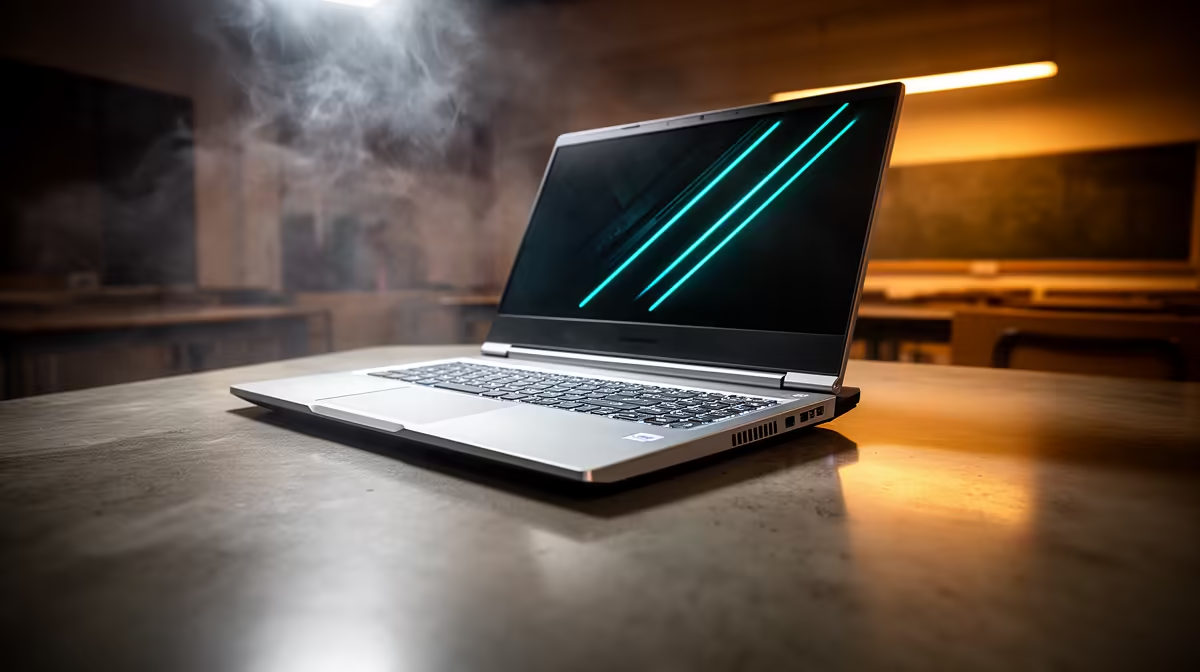
A practical shortlist is a Lenovo LOQ, ASUS TUF A15, MSI Cyborg 15 or Acer Nitro class machine when GPU work matters, and a lighter Core Ultra or Ryzen 7 productivity model when it does not. Expect broad SA pricing around R12,000-R18,000; RTX 4060 models usually sit above RTX 4050 models but buy better cooling before chasing a louder spec label. lightweight 14-inch chassis and 512GB SSD.
Campus fit and support
CPUT students moving between Cape Town and Bellville campuses should prioritise a bag-friendly chassis and a warranty path inside SA. A 1.7kg to 2.3kg system is easier to live with than an oversized spec sheet, and a 14-inch or 15.6-inch screen still works well with an external monitor at home. If gaming is part of the same purchase, target 60fps at 1080p on medium settings rather than paying for a machine that only looks good in benchmarks.
FAQ
Is 16GB RAM enough for Law?
16GB is enough for first-year notes, browser work and lighter assignments. Choose 32GB if the course uses CAD, video timelines, virtual machines, large spreadsheets or simulation tools, because RAM is what keeps the machine responsive when several apps are open.
Should a Law student buy RTX graphics?
Buy integrated Radeon 780M or Intel Arc graphics, with RTX 4050 only for creative extras when the course includes 3D, rendering, GPU acceleration or game-engine work. For document-heavy degrees, a fast CPU, 16GB to 32GB RAM, a sharp screen and long battery life matter more than a discrete GPU.
What is the safest SA student budget?
Plan around R12,000-R18,000 for a dependable mid-range desktop PC. Cheaper devices can work for notes, but they usually compromise RAM, storage, screen quality or cooling, which are the problems students feel every week.
Buyer check
Before ordering, confirm RAM, SSD size and warranty terms against the software list for Law; do not let a discount hide an 8GB RAM or 256GB SSD configuration.