Quick Answer
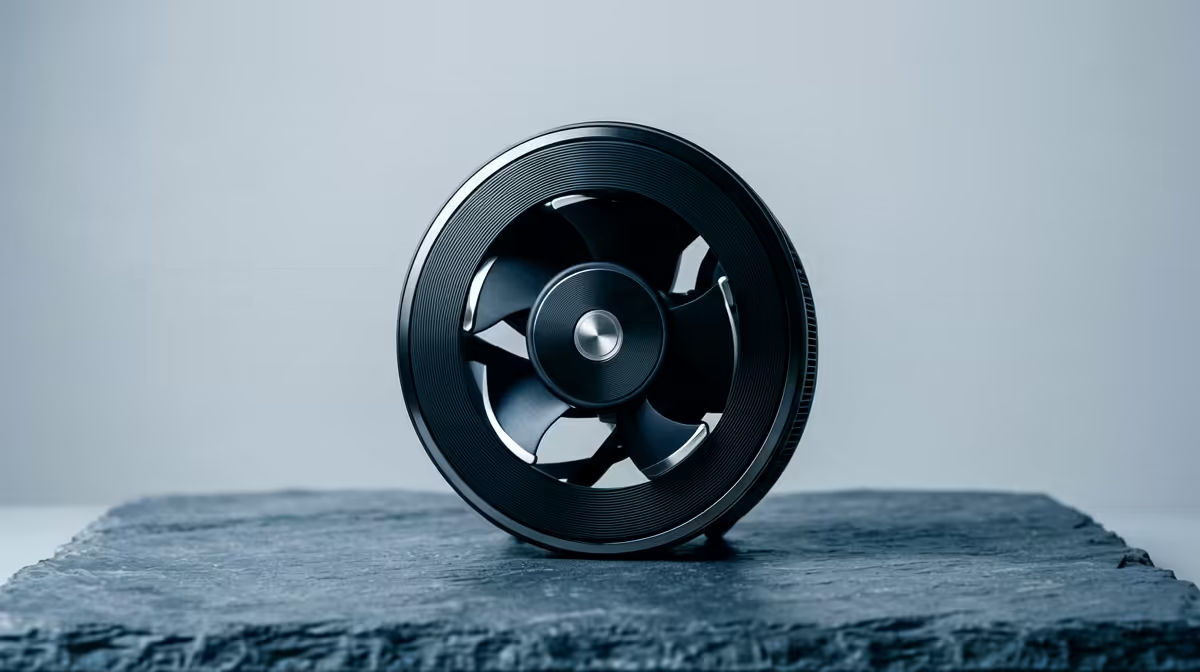
For a quiet build, choose case fans by noise rating and bearing quality, not RGB or peak RPM; budget around R250 each for FDB fans with a low dBA figure. Larger 140mm fans at low speed move good air quietly, so size up where the case allows.
The Quiet-Build Checklist
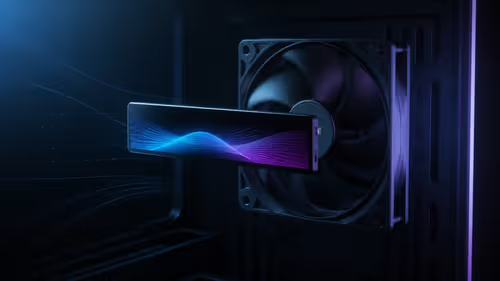
For silence, the key spec is the noise rating (dBA) at the airflow you need. Larger fans, like 140mm, spin slower to move the same air, so they run quieter than smaller fans. Fluid dynamic bearings stay quiet for years, while cheap sleeve bearings develop rattle. PWM control lets fans idle slow and only ramp under load.
Balance and Tuning
Set up balanced intake and exhaust so the case is not fighting itself, and tune a gentle PWM curve so fans stay slow during light tasks. Slightly positive air pressure with dust filters keeps the interior clean, which matters in dusty SA rooms and avoids fans clogging and getting louder over time.
Fan Size and Case Fit
Check your case's supported fan sizes. Where it accepts 140mm fans, they are usually the quieter choice. Confirm clearance for radiators or tall coolers before buying.
FAQ
What is the most important spec for a quiet fan?
The noise rating in dBA at the airflow you need. A fan that moves good air at low dBA is the quiet-build goal. Bearing quality and PWM control matter for staying quiet long term.
Are 140mm fans quieter than 120mm?
Generally yes, for the same airflow, because they spin slower. Where your case supports 140mm fans, they are usually the quieter choice. Check clearance before assuming they fit.
Do dust filters help keep a build quiet?
Yes, indirectly. Filters stop dust clogging fans and heatsinks, which would otherwise raise temperatures and force fans to spin faster and louder. Clean filters keep the build quiet over time.
Choose low-dBA FDB fans, size up to 140mm where the case allows, and tune a gentle PWM curve for a near-silent build.