Quick Answer
For new builders, the case-fan upgrade that gives the most for the least is correct airflow direction with quiet PWM fans, not exotic models. Quality 120mm PWM fans from around R200 each, set as front intake and rear exhaust, deliver the biggest temperature and noise win.
Spend Less, Notice More
First-time builders often overspend on premium fans while ignoring the free upgrade: airflow direction. Getting front fans as intake and rear and top fans as exhaust creates clean front-to-back flow that drops component temperatures more than swapping to pricier fans ever would. This costs nothing beyond mounting fans the right way round.
The next high-value step is PWM control with a sensible fan curve, so fans stay slow and quiet at idle and ramp only under load. A few quiet PWM fans on a good curve beat a case full of expensive fans running flat out, both for noise and for sanity.
Where Not To Overspend
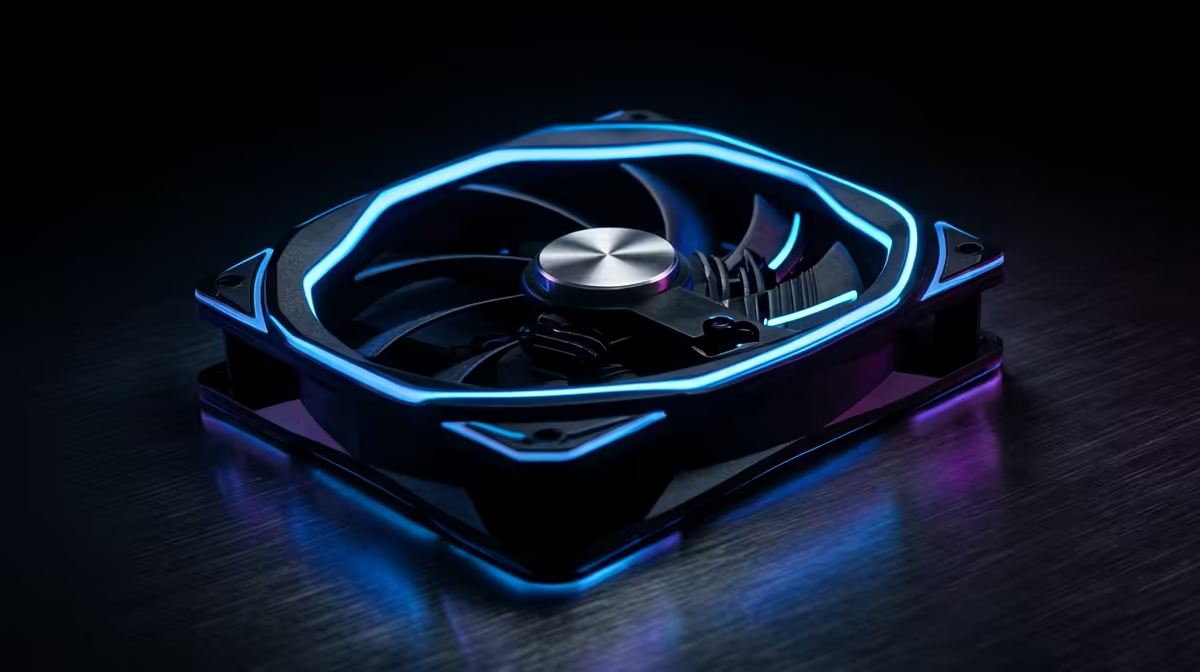
You do not need flagship high-static-pressure fans everywhere; reserve those for radiators or restrictive filters. RGB adds cost and cabling without cooling benefit, so add it only if you want the look. For a first build, two or three quiet PWM fans, mounted for proper airflow and tuned with a curve, deliver excellent results for modest money.
FAQ
What is the cheapest way to improve PC cooling?
Set correct airflow direction: front intake, rear and top exhaust. This costs nothing beyond mounting fans correctly and lowers temperatures noticeably.
How many case fans does a first build need?
Two or three quiet PWM fans, arranged for front-to-back airflow, cover most builds well. More fans add noise and diminishing returns unless airflow demands it.
Do I need expensive fans for a first build?
No. Quiet mid-range PWM fans mounted correctly and tuned with a fan curve deliver great cooling. Premium fans are only needed for radiators or restrictive setups.
fans as intake and rear and top fans as exhaust, then set a gentle PWM curve; airflow direction beats expensive fans for a first build.