A South African fightstick choice becomes easier when parts and support are treated as connected questions. Choosing a fightstick by parts and support means asking where it works, what the player's hands touch, how configuration is recovered and whether custom plans preserve the controller's known state.
Quick Answer
Choose the R1,799 GameSir C2 when its Sanwa Denshi controls, PS4 and Xbox One support, directional toggle, Key Lock and custom faceplate match your regular South African setup. Do not add unconfirmed PC coverage, exact component models or gate details to the decision.
🕹️ Parts should improve repeatable use
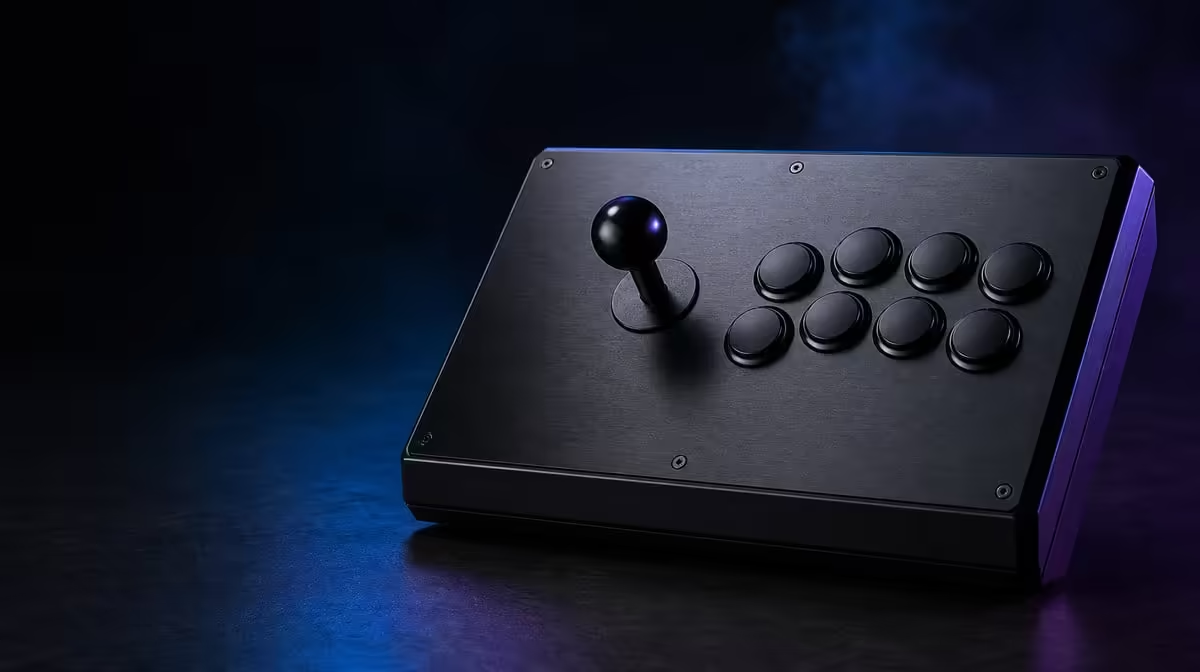
The C2's Sanwa Denshi identity gives buyers a named arcade-control baseline. Press every button individually, then test pairs and real game combinations. Move the joystick through cardinals, diagonals and neutral return while watching a visible input history.
The brand does not establish every internal model, force, connector or restrictor. Those details matter if replacement or service plans influence the purchase. Identify the installed components directly before treating future upgrades as easy.
Hand fit can outweigh reputation. Check outer-button reach, lever-arm comfort and wrist angle after enough time for fatigue. Repeat the same drill on another day so first-session novelty does not become the verdict.
Compare other complete layouts through Evetech's gaming controller selection. The right parts are those that remain comfortable inside the right enclosure.
Care belongs in the parts score. Dry storage, gentle surface cleaning and a stable cable route protect the complete layout. Easy everyday care may matter more than a theoretical upgrade that requires uncertain disassembly.
🎮 Support must name platform and game
PS4 and Xbox One are explicitly supported by the C2. Establish recognition in the system interface, then open each intended title and test the complete map. Host support and game handling belong on separate lines.
PC, newer consoles and other devices require their own exact checks. The direction toggle and Sanwa hardware cannot create protocol support, so unknown pathways should not raise the score.
Store a support card with console, game, button map, direction position and Key Lock state. Precise notes make a working setup repeatable and help describe a problem if it later appears.
If an input fails, record the exact screen and control. A narrow observation such as one absent diagonal across menus is more useful than a broad claim that the controller has stopped working.
Include what still succeeds. Host recognition, working buttons and seven correct directions can narrow a support conversation far faster than a total-failure label.
🧭 Configuration adds ownership value
The directional toggle sets the form in which a compatible setup receives lever input. Record its starting state, test all eight directions, move it once and repeat. Save the working result per game.
The Key Lock guards selected functions. Establish ordinary operation before enabling it, confirm one protected action and retest active buttons. It reduces a category of match mistakes without replacing careful hand placement.
These switches deserve value when they shorten setup and reduce confusion. They deserve less when nobody documents them and every session begins with random adjustments.
For a tournament or shared station, practise a brief handover routine. The next player reads the state, loads the labelled map and confirms one movement plus one action.
After transport, inspect switch positions before connecting. A moved control can explain different behaviour even when the enclosure and Sanwa parts arrive unharmed.
🎨 Customisation should preserve supportability
The C2's artwork-ready faceplate gives visual flexibility. Obtain the exact template, print a paper proof and follow proper removal steps. A good design stays clear around the lever, buttons and switch labels.
Internal component work needs a stronger plan. Photograph the standard arrangement, label connections, organise fasteners and change one compatible item at a time. Preserve every original part.
Evetech's gaming accessories category can support storage, transport or the desk. Assign money only to additions that solve an observed ownership need.
At R1,799, the standard C2 is the baseline a modification must improve. If practice and configuration solve the issue, keeping the original parts is a valid success.
Evaluate visual work after normal play. Glare, hidden labels or lifted edges may only appear with the hands on the panel. A reversible art project protects the supportable baseline.
Make the final SA decision auditable
Create a one-page score with four rows: supported systems, control comfort, useful configuration and unresolved assumptions. Mark support pass or fail, record practice results and leave unknowns blank.
Review Evetech's accessories best sellers for the broader station, then return to the score with current availability in view. Popular add-ons should not rescue a poor platform match.
Review the score after several weeks. A feature used regularly can gain weight, while an option ignored after setup should lose it. This protects the purchase from the first day's enthusiasm.
The final choice should sound concrete: named consoles, observed comfort, understood switches and a price of R1,799. That sentence is stronger than any generic claim about the best fightstick in South Africa.
Store the score beside the setup note and update it after a month. Ownership evidence should be allowed to change the original assumptions.
Date every revision.
Use the same practice sample during that review. Comparable results reveal whether comfort and clean inputs improved, while a different drill would blur progress. If a limitation remains, describe it narrowly enough that the next purchase or adjustment can be tested against it.
Add a service threshold to the score. A control that fails once during an uncertain map does not justify opening the enclosure; a repeatable physical input problem across supported screens produces stronger evidence. Define that distinction before frustration changes the plan.
Keep parts documentation with the controller. Photographs, identified interfaces and the standard input map make later work safer, while an unlabeled bag of removed components weakens supportability even if the modification initially succeeds.
Ask how the setup will be restored after another person uses it. Shared ownership needs a default direction mode, lock state and map. A clear handover routine can add more daily value than an optional component nobody understands.
Include the room in the decision. Desk depth, cable path and storage space influence whether the C2 can be used and protected comfortably. These physical facts deserve attention beside console names and Sanwa hardware.
Finally, let the audit end. Once the platform, parts, configuration and R1,799 value all meet the player's requirements, continue practising on the known setup instead of searching endlessly for another feature. A defensible choice should create more play, not permanent comparison.
Frequently Asked Questions
How should parts be weighted?
Give most weight to consistent response and comfort in the complete enclosure. Brand identity is useful but not sufficient.
Which platform facts support the C2?
The fightstick names PS4 and Xbox One. Every other host and individual title requires its own check.
When is customisation genuinely useful?
Artwork is useful when personal identity matters and the installation preserves control movement. Hardware changes need a defined functional goal.
How does Key Lock affect competition?
It can protect selected functions as part of a rehearsed setup routine. It does not stop accidental presses on active buttons.
Should unconfirmed PC use increase the score?
No. Add a PC route only after the exact host, connection and game have been tested.
What should decide the final purchase?
Confirmed support, sustained comfort, useful configuration and the complete R1,799 value should decide together.
Ready to choose with a score you can explain later?
Compare Evetech's gaming controllers, test the C2's parts and supported systems, and keep every custom plan tied to a real ownership need.