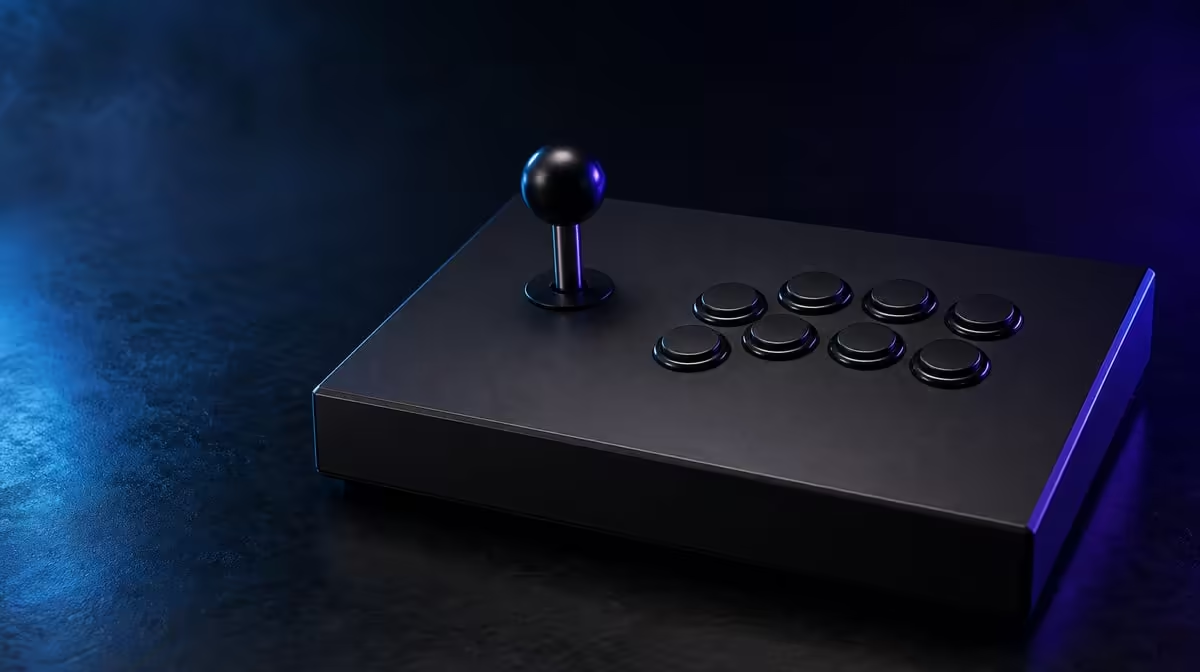
Tournament hardware has to be predictable in unfamiliar rooms. A fightstick for South African tournaments should match the event platform, survive a careful trip and pass a short input routine before a round. Features matter only when they strengthen that chain.
Quick Answer
Choose the R1,799 GameSir C2 for an event when the organiser uses its confirmed PS4 or Xbox One support and you are comfortable with its Sanwa Denshi layout. Rehearse the directional toggle, Key Lock and full input check at home, then repeat that same sequence after transport.
🗓️ Confirm the event environment
Ask for the host platform and game version before planning around the controller. The C2 explicitly supports PS4 and Xbox One. If the event uses a computer or another console, establish that exact pathway rather than relying on the multi-console description.
Rules may also cover connection timing, button assignments or equipment checks. Read them early enough to practise the required setup. A device that works perfectly at home can still create delay if the player has never followed the event's connection sequence.
Confirm whether setups are shared between rounds and how much changeover time is expected. A prepared player should be able to state the working toggle position, establish recognition and test core inputs without exploring menus under pressure.
The gaming controllers at Evetech can be compared by their named hosts and control style. Remove platform mismatches before treating price or appearance as a tournament advantage.
🕹️ Rehearse the complete input inspection
Build a sixty-second routine. Establish recognition, test four cardinals and diagonals, press every active button, check the directional-toggle position and verify the Key Lock boundary. Perform it until the order no longer depends on calm conditions.
Use the input display or training screen where possible. A visible history distinguishes a missed direction from a game action that failed for timing reasons. Keep a note of the working mode and button map on your phone.
The C2's Sanwa Denshi controls provide a named arcade baseline, but tournament consistency still comes from familiarity. Practise on the desk or lap position closest to the event posture and include full-session fatigue in the evaluation.
Train the recovery sequence too. If the first test fails, return to the known state, check the lock and repeat one direction plus one action. Random button pressing communicates little to the player or an organiser trying to help.
🧳 Protect the known configuration
Carry the fightstick so the lever and buttons are not bearing weight. Keep the cable arranged without a hard bend and prevent loose objects from pressing the switch area. After arrival, inspect the enclosure and read the toggle plus lock positions before connecting.
Transport can move a switch without damaging the controller. That is why the post-travel test should be routine rather than a reaction to visible harm. Never assume the state from the previous evening survived the trip.
Pack the setup note where it can be reached without opening every bag. Include platform, game, map, mode and lock routine. The note is especially useful after a long drive when memory is less dependable.
Evetech's gaming accessory range may help complete the event kit, but each addition should address a named carrying, cable or surface requirement. Keep liquids away from the hardware during travel and play.
🔒 Use the Key Lock deliberately
The C2's Key Lock can protect selected match functions, which is valuable under pressure. Enable it after normal controls pass and deliberately confirm one protected action. Then check an active game button so the boundary is clear.
The lock does not prevent fingers from hitting live Sanwa buttons. Practise a neutral hover and watch unused fingers during rapid combinations. A stable base and relaxed shoulders can reduce stray contact more effectively than an emergency remap.
Between rounds, use a shortened routine: platform recognised, direction mode read, lock state set, one movement and one action. The sequence should be quick enough to survive a tight schedule.
Practise the routine after winning and losing sets. Emotion changes how forcefully players handle controls and how easily a check is skipped. The habit should remain the same regardless of the previous result.
Judge event value beyond one day
At R1,799, the C2 offers useful tournament-focused controls when the named consoles match the events a player attends. Its customisable faceplate can help identify the unit, but exact compatibility and trained operation carry more value than appearance.
Calculate frequency. A fightstick used for weekly practice and several events earns its cost differently from one purchased for a single uncertain host. Include travel ease, setup confidence and hand comfort in the judgement.
Check Evetech's best-selling accessory collection for current availability around the kit. Keep unconfirmed systems out of the score and let the actual South African event calendar define usefulness.
After each event, capture one practical lesson. Note whether the surface, travel method, mode record or lock check caused friction. Small adjustments between events build a stronger kit without replacing working hardware.
Do not wait for a major tournament to try the full process. Pack the C2, carry it around the house, set it up on a different table and perform the same sixty-second check. A low-stakes rehearsal exposes awkward packing and forgotten steps.
Keep a fallback plan that stays within event rules. Know who to approach if recognition fails, have the exact symptom ready and avoid opening hardware in a rushed venue. Calm evidence is more useful than hurried improvisation.
Create an event card with the C2's working console, game map, direction position, lock routine and one proof command. Keep it on the phone and, if useful, as a small printed copy in the transport kit. A card remains available when memory is occupied by brackets and match preparation.
Practise sharing the setup with an organiser. Describe the host-recognition result and any specific missing input in one sentence. Clear language shortens troubleshooting and prevents random changes made by several people at once.
After returning home, inspect the controller before packing it away. Confirm that the cable, faceplate and controls look normal, then restore the usual practice state. The event is not complete until the fightstick can begin the next session from a known baseline.
Track which event features actually mattered. If Key Lock prevented a stray function, note it; if the custom faceplate only helped identification, value it for that honest role. The record will guide future tournament spending more reliably than general anxiety about being prepared.
Frequently Asked Questions
Which tournament detail should be confirmed first?
Confirm the host platform and game. The C2 names PS4 and Xbox One, while other event setups need an exact compatibility check.
What belongs in the pre-match test?
Check recognition, all eight directions, active buttons, toggle position and the Key Lock boundary in a safe screen.
Why practise the connection sequence?
Familiar steps reduce delay and confusion in a busy event environment. They also make a failure easier to describe.
Does the Key Lock prevent every stray input?
It protects designated functions, not every active arcade button. Hand position remains part of tournament preparation.
How should the fightstick be checked after travel?
Inspect the enclosure and cable, read both switch states, then repeat the normal input routine before serious play.
What is the C2 tournament price reference?
The GameSir C2 costs R1,799. Its event value depends on confirmed host support and regular use.
Ready to arrive with a routine instead of a hunch?
Compare Evetech's controllers against the tournament platform, then rehearse transport, setup and lock checks as one continuous sequence.