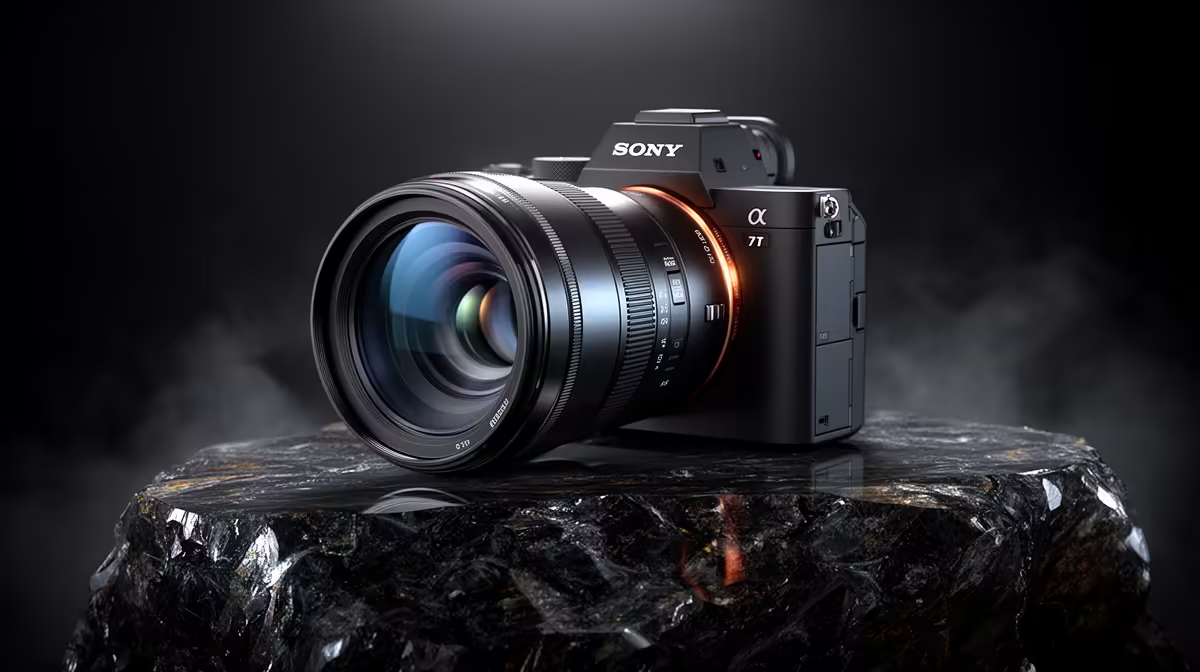
There is a real gap between a camera that captures 4K video and a camera that captures cinematic 4K video. The difference lives in sensor size, frame rate control, and whether the optical zoom reaches are genuinely sharp or just digitally extended. Choosing a cinematic 4K camera with 40X optical zoom means knowing which of those three variables matters most for your specific shooting style, and making sure the headline zoom figure is not hiding a weak glass stage.
Quick Answer
Cinematic 4K quality comes from a large back-illuminated sensor, at least 12X true optical zoom, and frame rate control that lets you set 24fps or 25fps for film-like motion. The 40X total reach extends framing, but the glass stage determines whether the base image holds cinematic character or flattens out at medium range.
🎬 What "Cinematic" Actually Requires From a Sensor
The word cinematic refers to a visual quality that audiences associate with professional film and television: shallow depth of field that separates subject from background, smooth natural colour rendering, and clean shadow detail that holds gradation rather than crushing to flat black.
All three characteristics depend on sensor size more than on any other single specification. A large photoreceptor well captures more tonal information per pixel, producing the gradual shadow rolloff and highlight retention that characterises film-like footage. Small sensors on compact webcams saturate quickly in highlight areas and clip shadow information abruptly, which is why the footage looks flat regardless of resolution.
For cinematic streaming work, a back-illuminated sensor measuring 1 to 1.8 inches or larger is the minimum to aim for. At that physical size, the photosites are large enough to deliver the gradual tonal transitions and low-grain performance that make 4K footage feel cinematic rather than just high-resolution.
Depth of Field and Subject Separation
Shallow depth of field is a sensor-size phenomenon. A large sensor at longer focal lengths produces a shallower depth plane than a small sensor covering the same view. The 40X zoom camera helps here because longer focal lengths at moderate distances compress depth and separate subject from background in a way a wide-angle close-up cannot replicate.
🔭 Optical Zoom, Hybrid Reach, and the Cinematic Frame
The 40X total zoom on a high-end streaming camera is a hybrid figure. Real glass elements handle the first stage, typically to around 12X. A digital AI extension layer builds on that optical base for the remaining reach toward 40X.
The cinematic quality of the image is determined entirely by the glass stage. A multi-element coated lens corrects for the aberrations that cause soft edges and chromatic fringing, which are the enemies of the sharp, clean frame that reads as cinematic. If the optical stage is well-designed, the image at 12X carries the same character as the image at 1X, just at a longer framing distance.
The digital extension toward 40X is useful for framing at range, but its contribution to cinematic quality is limited. Treat the 40X as a framing tool and the 12X optical as the quality foundation.
At longer focal lengths, continuous autofocus can lock on a face across a room and hold it through movement, keeping a Durban or Cape Town studio presenter in a usable shot without manual adjustment.
⚙️ Frame Rate and Shutter Settings
Frame rate is where most streaming cameras disappoint creators chasing a cinematic aesthetic. The 50 or 60 frames per second broadcast standard carries a smooth quality that trained eyes read as television. The 24 or 25 frames per second cadence is what decades of film have trained audiences to associate with cinematic motion.
A proper cinematic 4K camera should offer at least 25fps and ideally 24fps as selectable options at 4K resolution. At those rates, a shutter speed of double the frame rate, so 1/50 at 25fps, produces the motion blur on moving subjects that the eye reads as natural film motion. Shorter shutters at the same frame rate freeze motion too cleanly, making it look sharp but artificially stiff.
Manual exposure control, specifically the ability to set ISO and shutter speed independently, is necessary to hit that 1/50 shutter value in typical indoor lighting without the camera overriding it for exposure reasons.
Pro Tip ⚡
Shoot at 25fps with a 1 50 shutter and set the aperture or ND filter to control exposure rather than adjusting shutter speed. That pairing produces the natural motion blur that defines a cinematic frame. Most compact studio setups in SA can achieve this with a basic ND filter held in front of the lens in well-lit conditions.
🔌 Output Requirements for a Clean Workflow
A cinematic 4K camera is only useful if the signal it produces can reach an editor or broadcasting software without baked-in processing destroying the tonal information that the large sensor captured. The ideal output is clean HDMI or USB-C UVC at 4K30, with no overlay graphics or automatic colour processing burned into the outgoing feed.
Clean HDMI output, where the signal carries no on-screen display elements, feeds a capture device that passes the signal to recording software without interference. USB-C UVC at 4K30 bypasses the capture device entirely for simpler setups. In both cases the key requirement is that the camera is not cooking the picture before it leaves the chassis.
4K30 is the practical cinematic streaming target. The data rate at 4K60 is substantially higher and the motion cadence loses the film character, so 4K30 is the right setting for this use case.
Frequently Asked Questions
What sensor size actually delivers a cinematic 4K image?
A sensor measuring 1 to 1.8 inches or larger. At that size the individual photosites are large enough to capture gradual tonal transitions, hold shadow detail without crushing, and produce the shallow depth of field at longer focal lengths that separates a cinematic look from standard webcam footage. Smaller 1/4 or 1/3 inch sensors can output 4K resolution but cannot reproduce the tonal character that makes footage look cinematic.
How much genuine optical zoom is necessary for cinematic framing?
At least 12X of true glass-driven focal length change. Below that range the framing choices at any given distance are limited, and the compression effect that longer focal lengths add to portrait and presenter shots is reduced. The full 40X hybrid reach is useful for getting tight crops from across a room, but the characteristic of the image at any zoom setting flows from how well the glass stage is designed.
Which frame rate should a cinematic 4K streaming camera use?
24fps or 25fps at 4K resolution for the film-like motion cadence that audiences read as cinematic. 30fps is a reasonable compromise for streaming platforms where the slower cadences cause minor sync issues. 60fps is reserved for fast action content where motion clarity takes priority. Set the shutter at double the frame rate to achieve the motion blur that makes slow frame rates feel natural rather than choppy.
Does manual exposure control matter on a streaming camera?
Yes. Manual ISO and shutter control lets you lock the shutter angle needed for natural motion blur regardless of ambient light changes. Auto exposure adjusts shutter speed in response to lighting shifts, changing the motion character mid-stream. Locking the shutter and managing exposure through ISO or supplementary lighting keeps the cinematic look consistent.
Is a 40X zoom camera impractical for a small home studio?
Not at all. In a compact room the optical zoom stages give you framing flexibility that a fixed-lens camera cannot offer. A tight portrait crop from 1.5 metres away produces the subject compression and background separation that the same room at 30cm with a wide lens cannot. Small spaces actually benefit from the ability to stand back and zoom in, giving the image a more controlled and considered look.
What output connection should a cinematic 4K camera use?
Clean HDMI into a capture device, or USB-C UVC at 4K30 directly to the PC. In both cases the camera should output without burned-in overlays or automatic colour processing. A log or flat colour profile preserves more tonal range for grading in software.
Ready to capture 4K footage with genuine cinematic character?
Browse the high-end 4K streaming cameras at Evetech and find the model with the sensor and optical zoom range that fits your studio setup.