Quick Answer
For South African summer evenings, 2700K to 3000K warm white reduces visual fatigue as natural light fades. For home office work during daylight hours, 4000K to 5000K cool white improves focus and colour accuracy on screen. Smart LEDs let you schedule both automatically.
Understanding Colour Temperature in SA Conditions 🌅
South Africa's summer sun is intense, with Gauteng and the Western Cape regularly hitting 35 degrees Celsius in December and January. As the sun sets late, around 19:30 in midsummer, your indoor lighting needs to transition gradually from functional task light to relaxed ambient. LEDs measured at 6500K produce a harsh blue-white light that mimics midday overcast sky conditions, which is fine for a workshop or retail space but actively disrupts melatonin production when used in bedrooms or living areas after sunset. The sweet spot for gaming rooms used across day and evening sessions is a tunable white LED or smart panel that lets you shift from 4000K during the afternoon to 2700K by 20:00. Most smart LED panels stocked locally support at least a 2700K to 6500K tunable range through their companion apps.
Home Office Colour Temperature Choices 🖥️
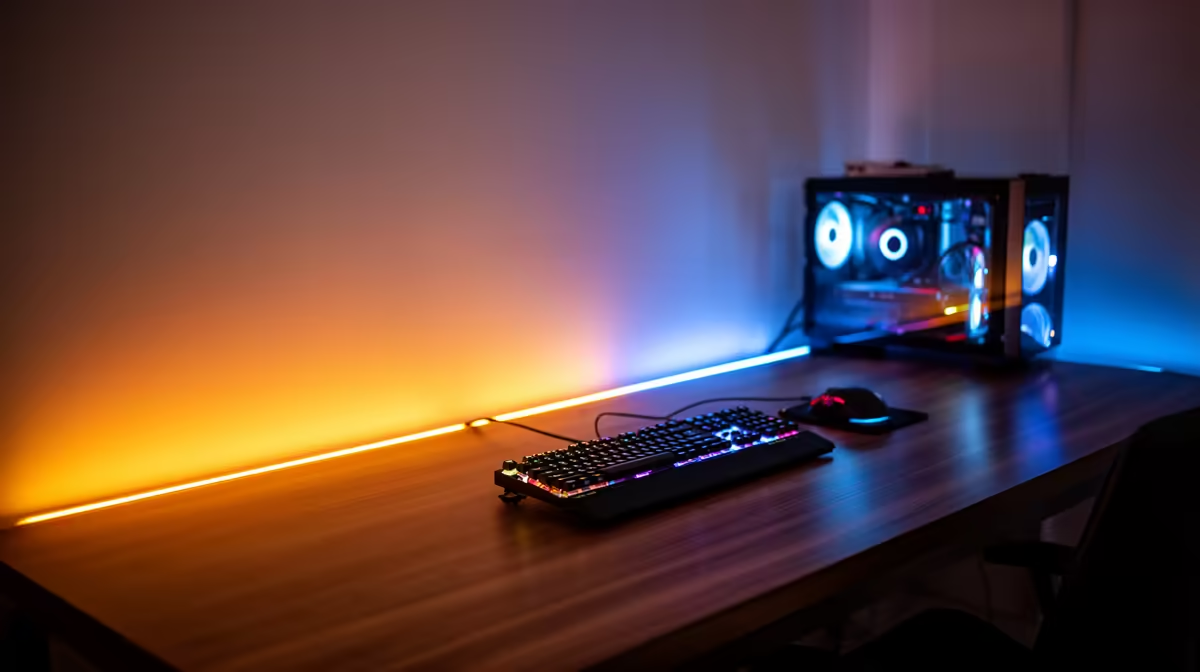
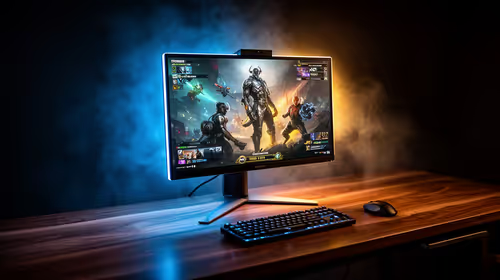
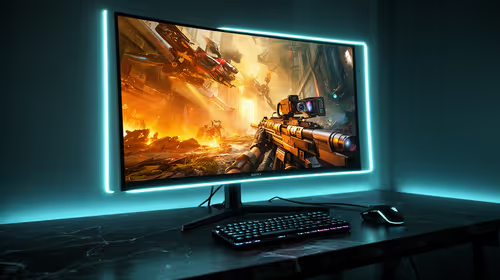
For a dedicated home office, colour temperature affects two things directly: eye strain during long typing sessions and colour accuracy if you do graphic work or video editing. At 4000K (neutral white), most monitors calibrated to sRGB look accurate without the room light skewing perceived colours. If you work with print-bound colour matching, step up to 5000K which is closer to the D50 standard used in professional colour environments. A common SA home office mistake is using warm R49 Edison-style bulbs from hardware stores: they look cosy but make screen colours appear too cool by comparison, causing your eye to constantly adjust. Replacing overhead lights with a 4000K LED panel and adding a bias light strip behind your monitor at 5000K creates a balanced visual environment.
Seasonal Adjustment for Summer vs Winter 🌿
SA winters, particularly in Johannesburg where night-time temperatures drop to 4 to 8 degrees Celsius, mean earlier evenings and less natural light entering home offices. In winter you may need the warm 2700K setting activated two hours earlier than in summer. Smart lighting platforms like Philips Hue and Nanoleaf support location-based sunset schedules that adjust automatically based on your GPS coordinates, so your Joburg setup shifts earlier in June without manual changes. This kind of adaptive scheduling is the primary reason smart lighting earns its premium over fixed-colour LED strips.
Colour Accuracy Check ⚡
If you use your home office for photo or video editing, set your ambient LED to 5000K and your monitor to the sRGB colour space before colour-grading. This minimises the perceptual shift between what you see on screen and how the finished work looks on other devices.
FAQ
What LED colour temperature is best for gaming at night in SA?
For evening gaming sessions, 2700K to 3000K warm white is easiest on the eyes. Pair it with a bias light strip behind your monitor set slightly cooler at 4000K to reduce the contrast between your bright screen and the surrounding room.
Do colour temperature choices affect electricity costs in SA?
Colour temperature itself does not change wattage, so there is no direct cost difference between a 2700K and a 6500K LED of the same wattage. Dimming the LED to 50 to 70 percent in the evening, which most smart panels support, does reduce consumption proportionally.
Can I use the same smart LED for both office and gaming use?
Yes. A tunable white smart panel or strip with app control handles both use cases. Set a daytime work scene at 5000K and a gaming scene at 3000K, then switch with a single tap. Panels that also support RGB colour effects give you the extra option of accent colours during gaming without buying separate products.
Looking to optimise your lighting for work and play?
Evetech stocks tunable white and full-colour smart LED panels suited to SA home offices and gaming setups.