We’ve all been there. You’re deep in a ranked match, the final circle is closing, and then… lag. Your ping skyrockets and your character freezes. Is it your ISP? Maybe. But often, the culprit is closer to home: a poorly placed Wi-Fi router or extender. Thankfully, modern gear has a brilliantly simple solution. The days of guesswork are over, because colour-coded signal lights simplify your setup process and get you back in the game faster. ⚡
Why Your Router Placement Is So Important
Think of your Wi-Fi signal like sound. The further it travels and the more walls it has to pass through, the weaker it gets. Microwaves, fridges, and even fish tanks can interfere with the signal. Finding that 'sweet spot' for your router or extender is crucial for a stable, low-latency connection. This is where those handy little LEDs come in.
Instead of running speed tests in every corner of the room, you can now get instant feedback. These visual cues are designed to make optimising your network a breeze.
How Colour-Coded Lights Make Setup a Breeze
Most modern networking devices use a simple traffic light system to show signal strength. It’s intuitive, fast, and removes all the guesswork.
Imagine you've just unboxed a new wireless range extender. You plug it in, and a light starts blinking. Now, you just walk around your home. As you move, the light changes, telling you exactly how strong the connection to your main router is.
- Red Light: Too far, no signal.
- Amber/Orange Light: It's working, but the signal is weak. Try moving closer.
- Green/Blue Light: BINGO! You’ve found the perfect spot for maximum speed and stability. 🚀
This simple visual guide ensures you’re not placing your extender too close to the router (which is pointless) or too far away (where it struggles to get a signal).
Blink and You'll Miss It
A blinking light usually means the device is thinking or trying to connect. A solid light means it has established a stable state. For example, a blinking blue light often means it's pairing, while a solid blue light means it's successfully connected and has a strong signal.
Decoding the Lights on Your Main Router
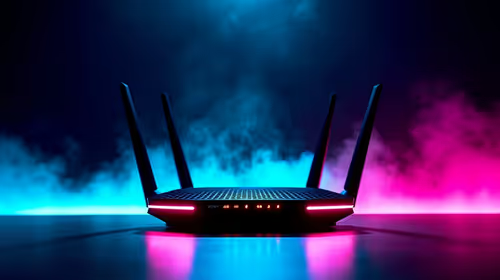
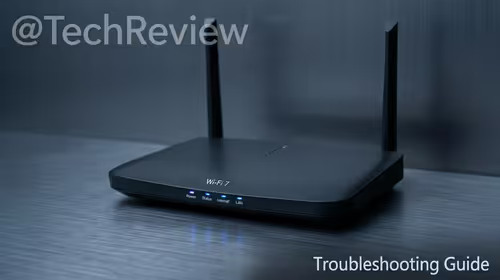
This same logic applies when you’re setting up one of today’s powerful new wireless routers. The status lights give you a quick diagnostic check without needing to log into a complex admin panel. While colours can vary slightly by brand, the general rules are:
- Power Light: Solid green or blue means it's on. Simple.
- Internet/WAN Light (often a globe icon 🌐): Solid green/blue means you’re connected to the internet. If it's red, orange, or off, there might be an issue with your ISP or the cable from your fibre box.
- Wi-Fi/WLAN Light: A solid or steadily blinking light shows your Wi-Fi network is broadcasting correctly.
Even a simple wireless adapter for your desktop PC will have a status light to confirm it’s powered on and connected to your network, giving you peace of mind. By understanding what these colours mean, you can solve most common connection problems in seconds.
Stop Guessing, Start Gaming
Don't let a weak signal ruin another match. Upgrade to networking gear with intuitive, easy-to-read signal lights for a flawless setup and unbeatable performance. Explore our full range of wireless networking solutions and build a network that just works.