Quick Answer
For precise movement, analog optical switches win in genres requiring variable-speed input (racing, RPG, open-world) because they output continuous position values. Standard mechanical switches win for FPS and competitive binary-input genres where the fastest possible digital registration at a fixed actuation point is optimal. Neither is universally better; genre determines the right choice.
How Analog Optical Switches Deliver Precise Movement 🔬
Analog optical switches read key travel depth continuously using an infrared sensor, outputting a value from 0 to 100 percent across the full 0 to 3.6 mm travel range. For movement precision, this means a 30 percent press outputs 30 percent velocity, a 70 percent press outputs 70 percent, and the transition between speeds is smooth rather than stepped. Games that accept DirectInput analog values (most open-world, racing, and RPG titles) translate this directly into character or vehicle speed.
How Standard Mechanical Switches Excel in Competitive Precision 🏆
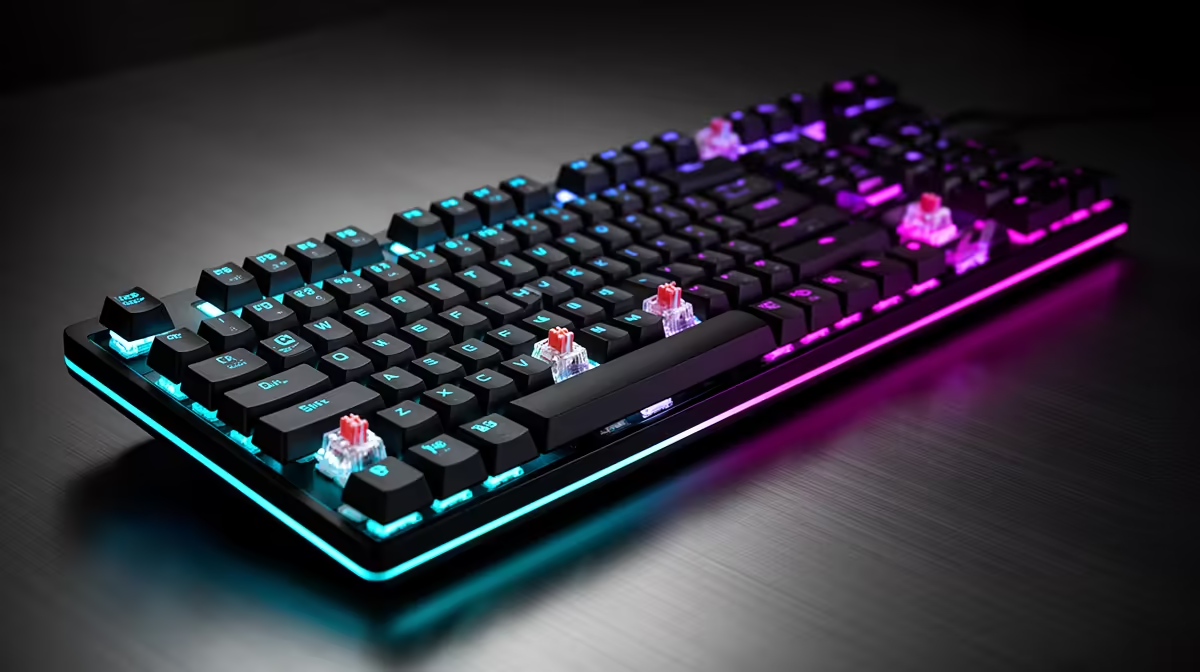
Standard mechanical switches, particularly linear variants like the Razer Yellow or Cherry MX Speed, offer one major precision advantage: a fixed, predictable actuation point that fires at the same depth every single time. For FPS players, this consistency matters more than variability. When strafing in a competitive shooter, an instant switch from stationary to full movement speed is the desired behaviour; any variable output between those states is lag in the movement response.
ZAR Cost and Durability Comparison 💰
Analog optical keypads with full analog switch arrays sit at R1,800 to R2,500 in the South African market. Mechanical gaming keyboards with linear switches start from R800 for entry-level and reach R2,500 to R4,000 for flagship layouts with premium switches. Durability: analog optical switches carry 100M click ratings with no contact wear. Premium mechanical switches carry 50M to 100M click ratings depending on manufacturer.
Match Your Switch to Your Primary Genre ⚡
players develop switch preferences based on feel, but the more important variable is genre suitability. Test your primary game's movement system: if the game processes movement as binary (on off), mechanical switches are the technically correct choice. If the game accepts analog input values, optical analog switches are objectively more capable. Play style preference should be a tiebreaker, not the primary decision factor.
FAQ
Can I use an analog optical keypad for FPS games where digital switches would be better?
Yes. Analog optical keypads include a digital output mode that makes every key behave identically to a standard switch, firing at your chosen fixed actuation point without variable output. You lose the analog advantage but retain full keypad functionality. This makes analog optical keypads versatile across genres.
Are mechanical switches cheaper to replace or repair in SA when they fail?
Hot-swap mechanical keyboard sockets (available on mid-to-high-range models) allow individual switch replacement without soldering. Replacement mechanical switches cost R15 to R60 each locally. Analog optical switch keypads do not offer hot-swap repair; the entire unit requires warranty service. Factor repair access into the long-term cost comparison.
Which switch type is better for mixed gaming and productivity use in SA?
For mixed use, mechanical tactile switches (Razer Orange, Cherry MX Brown equivalents) offer a strong compromise: physical confirmation per keypress for typing accuracy, fast enough actuation for gaming, and no variable output that could accidentally trigger analog game responses during document work.
Choosing between analog optical and mechanical switches for your next peripheral?
Evetech stocks both analog optical gaming keypads and mechanical keyboards across ZAR price tiers. Browse the gaming peripherals section to compare switch types and find the right match for your genre.