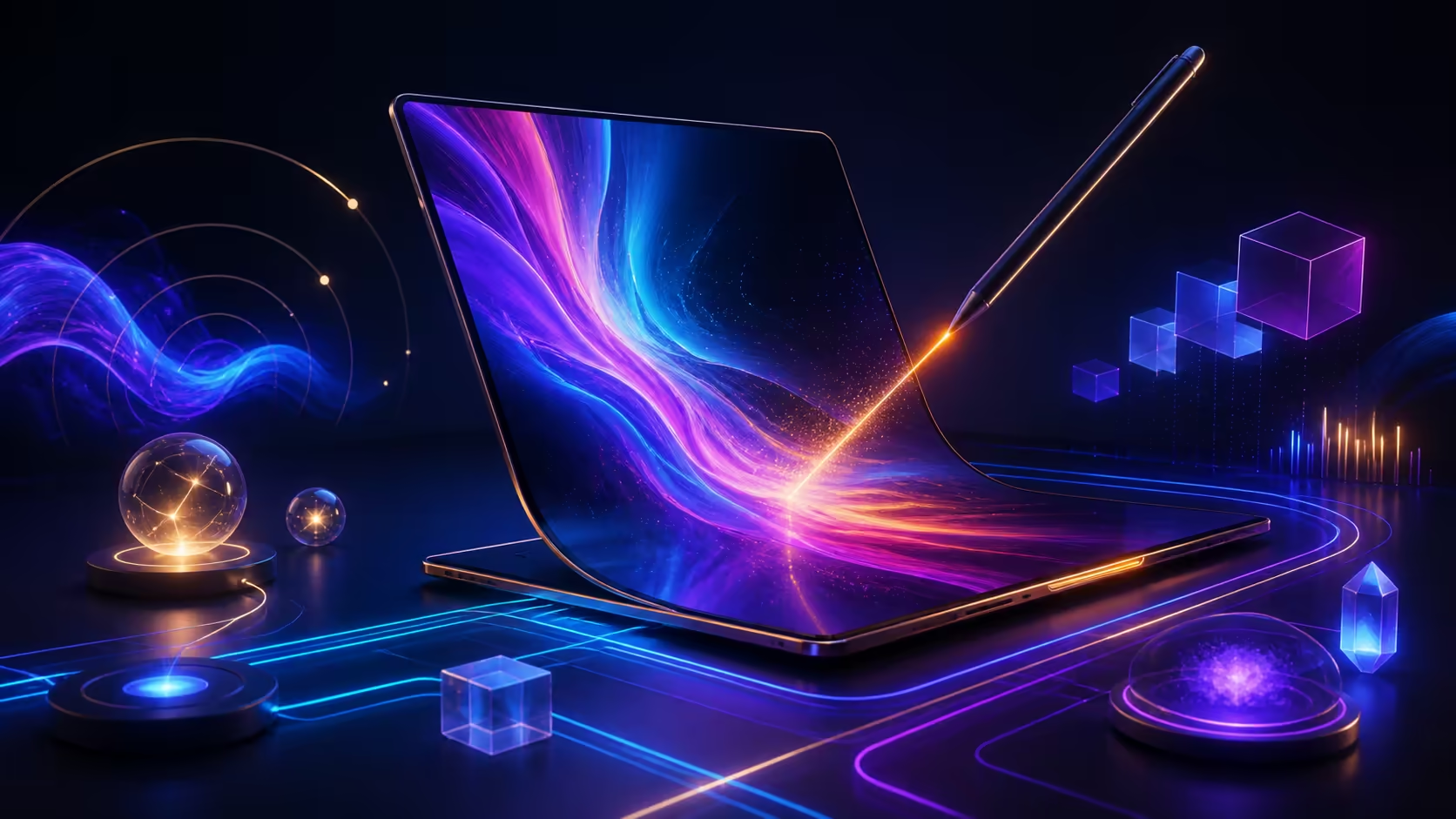
A convertible OLED laptop combines computing, touch, presentation postures and desk connectivity, but each benefit can fail independently. A convertible OLED laptop performance and connectivity guide should test software, screen, hinge and peripherals as separate systems. The MSI Prestige 16 Flip AI+ brings those elements together at R37,999.
Quick Answer
The Prestige costs R37,999. Core Ultra 9 386H handles general processing, supported AI features can access 90 TOPS, and working memory totals 32GB LPDDR5X. The 1TB NVMe device stores local data. Its 16-inch OLED touch panel pairs 2.8K resolution with a 120Hz refresh and folds into convertible positions. Thunderbolt 4 remains a separate connection path to test.
🧭 Define performance through complete projects
Choose a document-heavy session and creative project, then test one supported AI operation independently. Record the application versions, source files, settings and outputs. Measure response and completion only after correctness passes.
The Core Ultra 9 386H identifies the processor, while 90 TOPS concerns AI compute. Graphics configuration remains an independent requirement for GPU-led tasks.
Trace the limiting stage
Monitor processor activity, memory use, storage behaviour and the application's selected device. A delay may occur before or after the accelerated operation. More compute in one stage cannot repair an unsupported route elsewhere.
Compare complete models through the MSI professional laptop range.
🧭 Test the flexible screen in each role
Use clamshell posture for typing, an angled position for viewing and touch for direct navigation. The hinge earns value when changing posture makes a recurring action easier. Confirm stability on the intended surfaces.
The screen is 16 inches, 2.8K, 120Hz and OLED. Select scaling before comparing workspace, then test motion using real application content. Colour coverage, error, calibration and brightness require model measurements.
Finger touch and active-pen compatibility use separate input paths. Test the intended pen protocol, device and software behaviour.
Compare internal and external review
Use a trusted image or document on the internal screen and the intended external display. Do not edit the source to compensate for unmeasured differences. The output workflow should identify which display is the delivery reference.
🧭 Assemble connectivity as a chain
Thunderbolt 4 can participate in a docked setup, but the result depends on the dock, cable and peripherals. Document required display resolution, refresh, storage and power. Connect devices individually, then test the complete chain after sleep and reconnection.
The 1TB NVMe drive provides local capacity. If external storage extends the project space, measure real transfers and application use rather than crediting the interface label.
Use Evetech's creator laptop selection for wider connection and display alternatives.
🧭 Preserve flexibility away from the desk
Disconnect every peripheral and reopen the core project from the laptop. Check whether 32GB memory, local storage and the 16-inch workspace keep the task usable. A dock should extend the system rather than become a single point of failure.
Run an actual unplugged session and record battery duration, performance mode and display settings. Pack the charger and normal tools to measure carried weight and bag fit. Convertible design is a form-factor capability, not a portability measurement.
Create two acceptance profiles: mobile and docked. Each should list applications, displays, inputs, storage and recovery steps. The R37,999 system succeeds only if both profiles needed by the owner pass without hidden dependencies.
Build a fault-isolation ladder
When the complete setup fails, remove one layer at a time. Reopen the file locally, connect the essential peripheral directly, restore the accepted display scale and run the operation without an optional AI or graphics step. Record the first point at which behaviour returns to normal. This sequence keeps a dock issue from becoming a processor accusation and a software fault from being blamed on OLED.
Save the ladder beside the accepted mobile and desk profiles. A user under deadline should be able to reach a working fallback without inventing a new setup.
Compare recovery, not only peak capability
Put the system through sleep, a desk disconnect, a rotated screen session and an application restart. After each event, time how long it takes to reach the original file with the expected inputs and displays. Include unsaved-work protection and storage access in the result. A flexible laptop creates value when transitions are predictable as well as when the main project runs well.
Repeat the weakest recovery step after a clean boot. This distinguishes a recurring compatibility condition from an occasional state left by an earlier session.
Use two independent purchase vetoes
Create one veto for performance and another for connectivity. The first can reject a configuration that fails the exact software, output or identified graphics requirement. The second can reject a setup whose essential dock, cable, monitor or storage path does not recover reliably. Neither side should be rescued by an unrelated screen or hinge benefit.
Once both vetoes clear, score OLED comfort, touch navigation and convertible positions as added value. This ordering keeps the R37,999 verdict tied to dependable work before convenience.
Audit hidden dependencies before travel
Disconnect the laptop from the office network and every external device, then open the files, fonts, licences and reference material needed for the next mobile task. Confirm that the application can save and export in that state. A project that depends on an unnoticed shared drive or desk-only accessory is not yet portable, regardless of the hinge.
Create a small departure checklist for synchronisation, local free space, charged devices and the accepted screen profile. Do not predict battery duration; run the planned session and record the result with its applications and display settings. Keep confidential data handling aligned with company policy throughout the exercise.
On return, reconnect the verified chain and ensure the mobile changes appear in the expected project location. This closes the loop between portability and connectivity, revealing conflicts before they become version loss or missed delivery work.
Decide which profile owns the final file
Name the authoritative project location and the display used for final review. After every mobile-to-desk transition, confirm that edits have returned to that location before archiving or sharing. This prevents two working environments from creating competing versions that both appear current.
Add a short recovery step for a missing external drive or inaccessible network location. Flexibility is safer when the owner can identify the latest valid copy without depending on one peripheral chain.
Frequently Asked Questions
Does OLED indicate creative colour accuracy?
No. Panel technology does not supply measured gamut, error or calibration. Verify the exact screen.
Can Thunderbolt 4 guarantee dock compatibility?
No. The chosen dock, cable, devices, display requirements and power path must work together.
Is the Prestige graphics hardware defined by Core Ultra 9?
No. Confirm the exact graphics configuration before assigning GPU-dependent software.
Does 32GB guarantee heavy-project performance?
It provides memory capacity. Software, project scale, graphics, storage and processing stages still affect the result.
What makes the convertible design flexible?
It can shift between keyboard, viewing and touch-oriented positions. Value depends on how often those roles improve the owner's routine.
Ready to verify performance, screen roles and every connected device?
Compare Evetech creator and MSI laptops with complete mobile and docked profiles rather than treating flexibility as one feature.