Quick Answer
For Core Ultra 9 285K, choose a Z890 or B860 motherboard when DDR5-6000 memory support is a real requirement, then keep the board budget in the R3,000-R9,500 planning band. The CPU itself often sits around R12,000-R17,000, so protect money for cooling, a 1TB or 2TB NVMe SSD, and a suitable graphics card.
What The Board Must Get Right
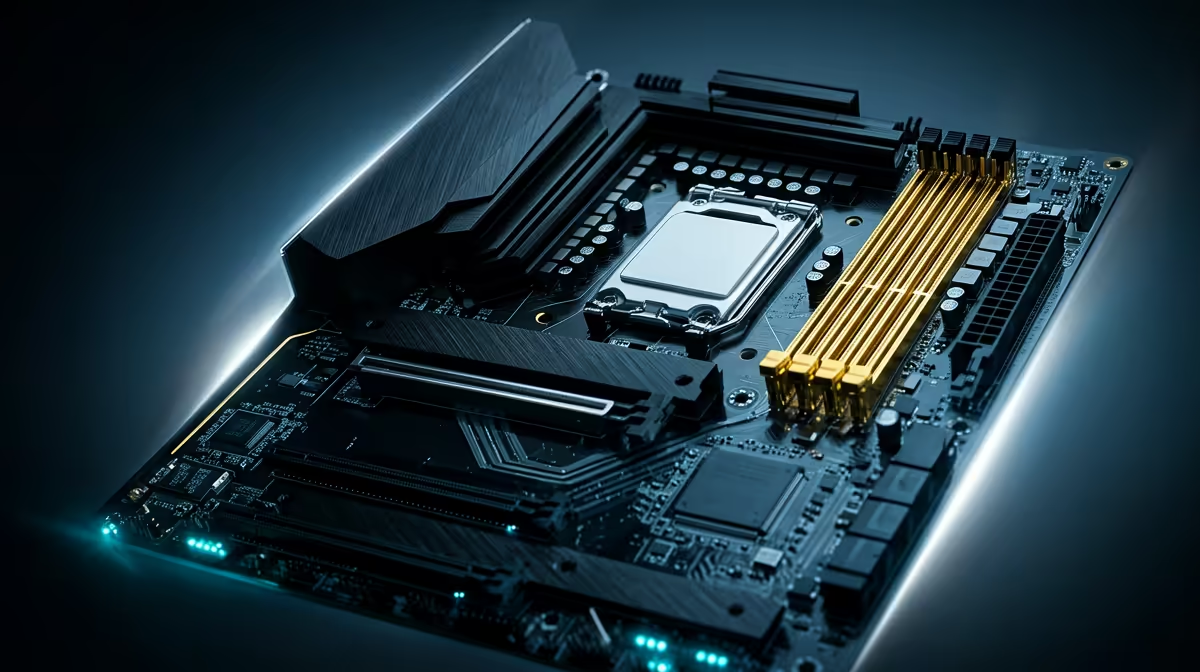
A Core Ultra 9 285K build needs stable power delivery, BIOS support, and enough heatsink area around the VRM for long South African summer sessions. Shortlist boards such as MSI MAG Z890 Tomahawk WiFi, ASUS TUF Gaming Z890-Plus WiFi, or Gigabyte Z890 Aorus Elite WiFi7; use those names as comparison anchors, then confirm the exact stocked model before checkout. For gaming builds, DDR5-6000, two M.2 slots, and clean 240mm or 360mm cooler support matter more than a tier label.
Match The Feature To Daily Use
Ddr5-6000 memory support is worth paying for only if it removes a real limit. A Cape Town creator moving 100GB project folders to a NAS can justify faster ports; a Johannesburg gamer on fibre, Discord, and a 165Hz monitor may get more value from Wi-Fi stability, a better GPU, or a quieter cooler. Check rear USB count, audio outputs, M.2 heatsinks, and PCIe slot spacing before styling.
Budget Signals For SA Buyers
Keep the board, cooler, RAM, and case in one shopping plan. A sensible Intel board often pairs with 32GB DDR5, a quality 750W to 850W PSU, and at least a 1TB NVMe SSD; creator builds should consider 64GB RAM before moving to an expensive flagship board. If the board pushes the PC beyond budget, step down one board tier before cutting the graphics card.
FAQ
Is DDR5-6000 memory support necessary for Core Ultra 9 285K?
No, it is necessary only when your desk or workflow uses it every week. The safer baseline is strong VRM cooling, DDR5 support, enough M.2 slots, and clean warranty handling through local stock.
Should SA buyers choose Z-series or B-series for this CPU?
Choose Z-series for a K chip, heavy rendering, multiple fast drives, or premium rear I/O. Choose B-series when the CPU is non-K, the budget is tighter, and you want more money left for GPU, RAM, and storage.
What should I check before buying the motherboard?
Check case size, cooler clearance, RAM height, M.2 count, BIOS support, and whether the rear ports match your monitor, audio, keyboard, and capture devices. That 10-minute check prevents most expensive mismatch problems.
Buyer Check
Confirm the CPU socket, BIOS support, case form factor, and cooler mounting kit before adding the board to your Evetech cart.