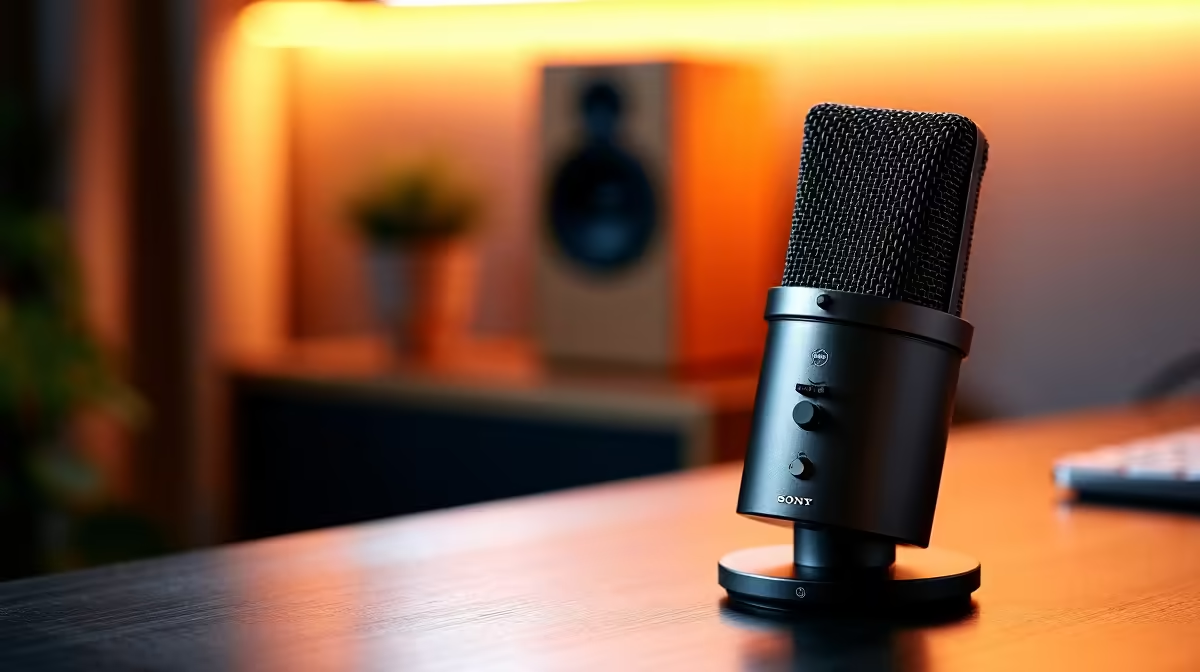
Two microphones on a desk can look nearly identical and sound like they belong in different studios. The difference almost always traces back to a handful of measurable specs that most buyers overlook in favour of aesthetics or brand recognition. For South African creators working to a realistic budget, understanding crucial microphone specs means you stop paying for marketing and start paying for sound.
Quick Answer
The specs that determine clarity on a budget are polar pattern, frequency response range, signal-to-noise ratio and bit depth. A cardioid mic with an SNR above 70dB, a flat response to 20kHz and at least 24-bit depth near R1,500 outperforms a flashier but noisier capsule at twice the price.
🔧 Signal-to-Noise Ratio: The Single Spec That Predicts Clarity
Signal-to-noise ratio (SNR) expresses how much louder your voice signal is than the mic's own internal noise. It is measured in decibels A-weighted, and a higher number means a quieter noise floor. A mic with a 70dB SNR keeps background hiss essentially inaudible during normal speech and in the pauses between sentences. A mic with 60dB SNR lets a low hiss creep into those same pauses.
That difference is audible. On a podcast episode or a gaming commentary track, a hiss that appears every time you stop speaking draws the listener's ear away from what you are saying. Post-processing tools can reduce noise after the fact but cannot restore detail that was masked at the source.
Budget mics vary widely on this spec. Some R1,500 condensers achieve an SNR of 72dB or higher, matching mics at twice the price. Others in the same category land near 60dB because the manufacturer cut costs on the converter and preamp rather than the housing. Comparing SNR figures directly across models takes less than a minute and is the most reliable shortcut available to a buyer on a ZAR budget.
Self-Noise: The Number on the Other Side
SNR is closely related to the self-noise figure, often listed in dBA. A self-noise of 18dBA is acceptable. Below 15dBA is excellent. Above 22dBA is audible in quiet recordings. When a spec sheet lists self-noise rather than SNR, the lower the number, the cleaner the mic.
🎯 Polar Pattern: Built-In Room Treatment You Do Not Have to Buy
Polar pattern describes the three-dimensional shape of the space a mic listens to. Cardioid is the standard for solo voice recording. Cardioid sensitivity is concentrated at the front, with a rear null point where rejection reaches around 20dB. For creators working out of an untreated flat, a student residence room or a SA home with hard floors, that built-in rejection does more work than any acoustic panel you could add at the same cost.
Omnidirectional mics capture sound equally from all directions. They suit controlled studio environments where room acoustics have been treated properly. In a typical SA home recording space, an omni mic faithfully records your voice, every keyboard tap, the kitchen sounds from down the passage and the street noise through the window. Cardioid ignores most of that.
Multi-pattern mics offer cardioid, omni and figure-eight modes on one body. They cost more than single-pattern cardioid mics at any given price point. For a solo creator recording voice, you are paying for two patterns you will rarely or never use. A cardioid-only mic at the same price will have a better capsule, better preamp, or both.
Figure-Eight for Specific Scenarios
The figure-eight pattern captures front and rear while rejecting the sides. It is useful for a two-person interview recorded on a single mic placed between both speakers. Outside of that specific scenario, it offers nothing to a solo creator and adds complexity to gain management.
📺 Frequency Response: The Range and the Shape Both Matter
A microphone's frequency response tells you the range of frequencies it captures and how evenly it captures them. A full-range specification of 20Hz to 20kHz covers the entire audible spectrum and costs nothing extra on a modern budget condenser. Mics that cut off near 16kHz can sound slightly dulled on consonants like "s" and "sh", which fall in the upper register.
The shape of the frequency response matters as much as the range. Some budget mics boost frequencies around 5kHz to 10kHz to create an artificially crisp sound. This "presence peak" makes voice recordings sound detailed in a quick A/B test against a flat mic. Over a long listen or when multiple EQ passes are applied in post, that boosted region sounds harsh or fatiguing.
A mic with a flatter response gives you more honest material to work with in post. You can add a small presence boost yourself if the track needs it. Removing a factory-baked boost without introducing artefacts is considerably harder.
Pro Tip ⚡
Before buying, search for a published frequency response graph for the specific mic you are considering. A roughly flat line with a gentle roll-off above 15kHz is a good sign. A graph that peaks sharply at 8kHz or climbs steeply across the midrange is the manufacturer tuning the mic to impress in a 30-second demo, not optimise for long-session use.
⚡ Bit Depth and Sample Rate: The Floor Below the Floor
Bit depth determines the dynamic range of the digital signal. Every additional bit of depth adds roughly 6dB of dynamic range. A 16-bit recording has a theoretical dynamic range of around 96dB. A 24-bit recording stretches that to around 144dB. In practice, the preamp noise floor will cut that theoretical ceiling well short, but 24-bit still gives you far more headroom for quiet narration, soft spoken-word content and low-gain recording than 16-bit allows.
Most budget condensers in the South African market now ship with 24-bit converters. A handful, particularly models that predate 2021, still use 16-bit hardware. Checking the spec sheet before buying costs nothing and rules out this limitation entirely.
Sample rate of 48kHz is the broadcast and streaming standard. 44.1kHz is the CD audio standard and is equally usable for voice. Either is fine. What to avoid is a mic that caps at 44.1kHz when you need to submit audio at 48kHz, which requires a conversion step that can introduce subtle artefacts if the software resampler is not high quality.
🧠 Capsule Size: The Physical Spec That Shapes Tone
Diaphragm size affects the tonal character of the recording. A large-diaphragm condenser, defined loosely as a capsule 25mm or larger, typically produces a warmer, more body-forward sound than a small-diaphragm capsule. The larger surface area captures low-frequency pressure changes more accurately, giving male voices in particular a richer, more natural quality.
Budget mics sometimes use capsules as small as 6mm, similar to what you would find in a headset or a laptop microphone. These capsules can achieve reasonable results for communication but tend to sound thin and bright when used for vocal recording. A 16mm or larger capsule on a budget condenser is a meaningful physical upgrade.
Many manufacturers list capsule size in marketing material. When they do not, a side-by-side recording comparison is more reliable than assuming from the housing size.
Frequently Asked Questions
Which single spec affects clarity the most on a tight budget?
Signal-to-noise ratio. A mic with an SNR above 70dB keeps the noise floor below audible threshold during normal speech and in quiet passages. A mic with a lower SNR lets hiss creep into those silences, and no amount of post-processing fully removes noise that is baked into the original recording. Comparing SNR figures across candidate mics takes less effort than almost any other buying shortcut.
Does polar pattern belong on a budget buyer's checklist?
Yes, and it matters as much as the capsule quality. A cardioid pattern rejects about 20dB of noise from behind the mic. For the average SA creator recording in an untreated room with hard floors and reflective walls, that rear null removes the ambient bleed that makes audio sound hollow. Buying an omni mic for a cheap room is buying a more expensive problem.
How wide a frequency response do I need for voice recording?
A range of 20Hz to 20kHz covers the full human voice without any gaps. Budget mics that roll off near 16kHz can sound slightly dull on upper-register consonants. More important than the range is the shape of the curve: a flat response is more versatile than one with heavy presence peaks, which sound impressive briefly but fatiguing over time.
Is 24-bit depth worth checking under R2,000?
Yes. Most current budget condensers offer 24-bit, but some older models still ship with 16-bit converters. The difference is meaningful for dynamic range and headroom. A 24-bit mic handles the variation between a whispered sentence and a loud commentary moment without clipping or burying the quiet end in noise.
Can a R1,500 mic outperform a R3,000 option on paper?
Sometimes, yes. A quiet cardioid condenser with a 72dB SNR and a 25mm capsule at R1,500 can score higher on the specs that actually determine clarity than a R3,000 mic that carries a flashier housing but a noisier preamp and a narrower response. Read the spec sheet rather than the price tag.
Ready to choose a desktop microphone that earns its specs?
Browse the condenser microphone range for South African creators and compare the numbers that predict real recording quality, not just the ones on the box.