Quick Answer
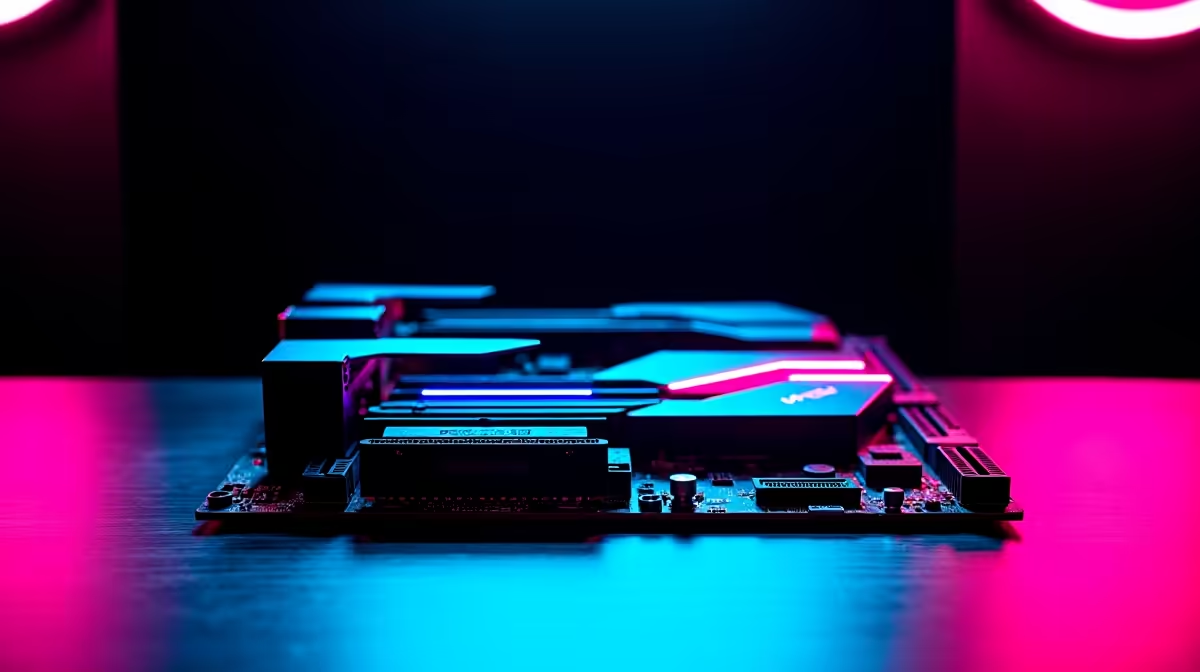
Before ordering a DDR5 gaming PC, confirm the platform matches the RAM: an AMD AM5 board (Ryzen 7000/8000/9000) or an Intel 12th-gen-plus board both use DDR5, but the optimal speed differs. Target DDR5-6000 on AM5 and DDR5-6400 or higher on Intel, and check the board's memory QVL plus a possible BIOS update so a 32GB (2x16GB) kit runs at full rated speed.
Platform and speed compatibility
DDR5 only fits AM5 or Intel 12th-gen-plus boards; it cannot go in an older DDR4 system. The sweet spot differs: AM5 pairs best with DDR5-6000 CL30 because the memory clock aligns with the infinity fabric, while Intel boards tolerate and benefit from faster kits like DDR5-6400. Buy a matched 2x16GB dual-channel kit (around R1,200-R1,800) for full bandwidth, and confirm it appears on the motherboard's memory QVL so the rated speed is supported on your exact board.
EXPO, XMP and BIOS realities
To run rated speed you must enable the memory profile in BIOS: EXPO on AMD, XMP on Intel. Without it, the kit defaults to a slow DDR5-4800. A newly bought board may need a BIOS update to support a current CPU or to hit a 6000-plus speed, so check the board's BIOS version. For a balanced DDR5 gaming PC, pair a Ryzen 5 7600 or 7700 with 32GB DDR5-6000 and an RTX 4060 or 4070 for 1080p-1440p gaming at 60-120fps. Confirm all three, platform, kit and BIOS, before ordering.
FAQ
What DDR5 speed should I buy for AM5 versus Intel?
DDR5-6000 CL30 is the AM5 sweet spot, where the memory clock aligns with the infinity fabric. Intel boards benefit from faster kits like DDR5-6400. Match the kit to your platform for best results.
Do I need to enable EXPO or XMP for DDR5?
Yes. Without enabling EXPO (AMD) or XMP (Intel) in BIOS, DDR5 runs at a slow default of 4800 instead of its rated 6000-plus speed, leaving gaming performance on the table.
Can DDR5 go in an older PC?
No. DDR5 needs an AM5 or Intel 12th-gen-plus board. An older DDR4 system cannot take DDR5, so a DDR5 gaming PC means a modern platform with a matched board and CPU.
match DDR5 speed to your platform (6000 on AM5, 6400-plus on Intel), confirm the kit on the board's QVL, and enable EXPO or XMP so it runs at full rated speed.