Quick Answer
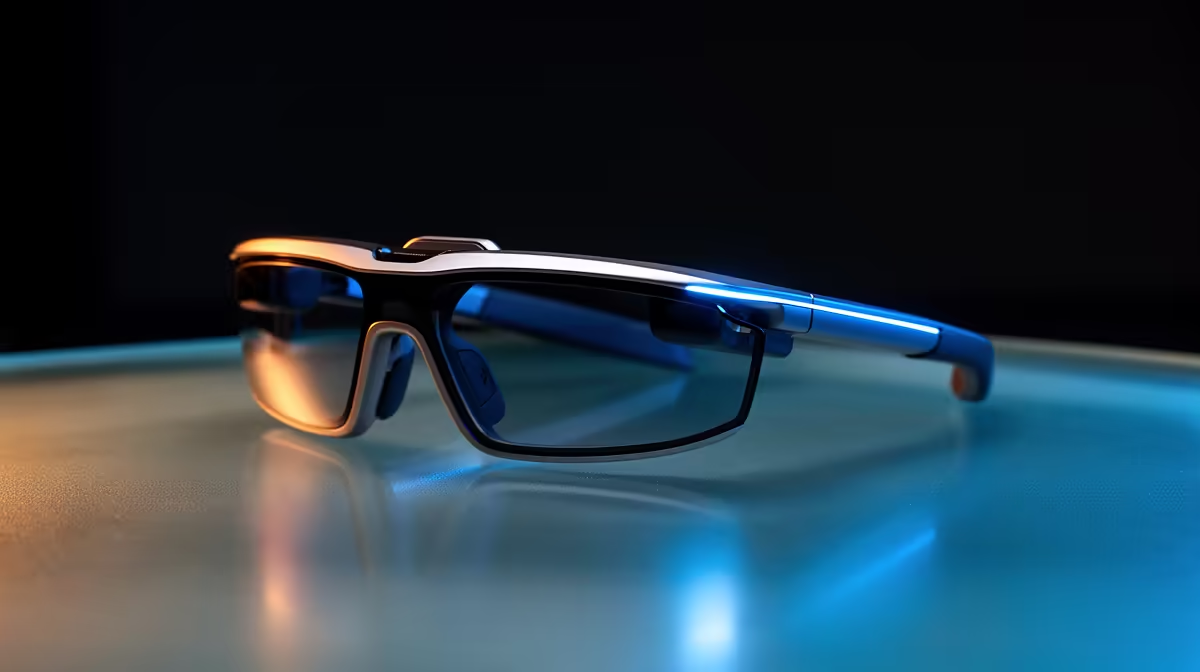
In AR glasses, it depends on your use, but device compatibility usually matters more than display quality: gorgeous micro-OLED panels are useless if the glasses will not connect to your phone, laptop or console. Confirm your devices are supported first, then weigh display quality. A R4,000-R8,000 pair that works with your specific phone and laptop beats a sharper pair that needs an adapter or is incompatible.
Compatibility Is the Gatekeeper
AR glasses connect over USB-C DisplayPort or a dedicated adapter, and not every phone, laptop or console outputs video the way the glasses need. If your device is not supported, the glasses are a paperweight no matter how good the display is. So check compatibility first: does your specific phone support DisplayPort Alt Mode over USB-C, does your laptop or console output to them, and what adapter is required. Get this right before anything else.
When Display Quality Takes the Lead
Once compatibility is confirmed across your devices, display quality decides the experience: micro-OLED panels give sharp, bright, high-contrast images, while cheaper LCD-based glasses look dimmer and lower-resolution. For media watching and a clear virtual screen, better panels are worth it. But this only matters after you know the glasses will connect, display quality is the tiebreaker among compatible options, not the first filter.
Buying for Your Real Devices
List the devices you will actually use, phone, laptop, Steam Deck or console, and confirm each is supported, including any adapter cost. Then, among compatible pairs, choose the best display you can afford (a R4,000-R8,000 micro-OLED pair is a sweet spot). Factor in fit and weight for long wear. The right buy is the sharpest pair that works seamlessly with your devices, not the sharpest pair overall.
FAQ
Display quality or compatibility in AR glasses, which matters more?
Compatibility, usually. The best display is useless if the glasses will not connect to your phone, laptop or console. Confirm device support first, then weigh display quality among compatible pairs.
How do I check AR-glasses compatibility?
Confirm your phone supports DisplayPort Alt Mode over USB-C and that your laptop or console outputs video to the glasses, including any required adapter and its cost, before judging the display.
When is display quality the deciding factor?
After compatibility is confirmed. Among pairs that work with your devices, a micro-OLED panel (R4,000-R8,000) gives a sharper, brighter image than cheaper LCD-based glasses for media and virtual screens.
List your phone, laptop and console, confirm each is supported including any adapter, then pick the best micro-OLED display among the compatible pairs; compatibility gates the choice, display refines it.