Resin printing is two jobs, not one: a print comes off the plate sticky and needs a solvent wash to strip uncured resin, then a timed UV soak to harden it fully. A DIY wash-and-cure setup, an IPA jar and a UV nail lamp, gets you started for almost nothing. An all-in-one station automates both steps with sealed agitation and even, rotating UV. The right pick comes down to how many prints you push through and how much you value a repeatable result over the cheapest possible start.
Quick Answer
A DIY jar-and-lamp setup costs you almost nothing if you already own the parts, but it cures unevenly and leaves IPA evaporating on your bench. An all-in-one station like the Anycubic Wash and Cure 3 or Elegoo Mercury Plus runs roughly R2,000 to R4,500 and pays for itself once you are printing weekly. Print one model a month, stay DIY; print every week, buy the station.
What the two stages actually demand
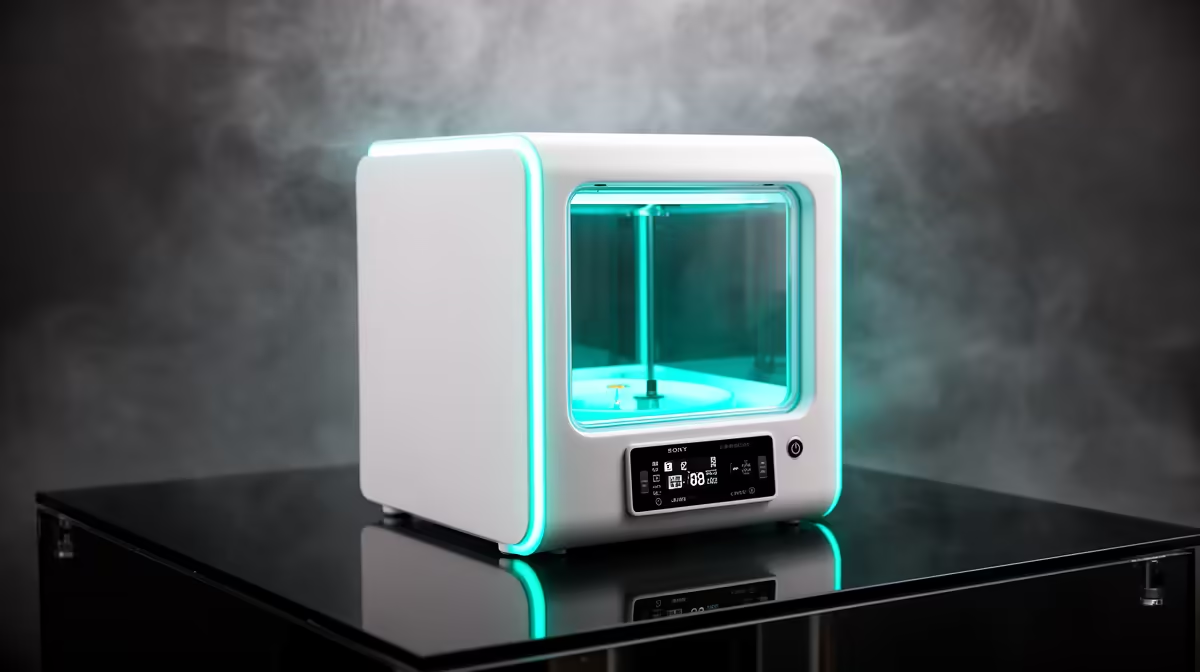
Washing removes the slick layer of liquid resin clinging to a fresh print before it has set. Done in an open jar, isopropyl alcohol evaporates fast, you stir by hand, and detail-heavy areas keep pockets of resin you cannot see. A sealed station spins the print through the solvent on a magnetic stirrer or basket, reaching recesses a manual swirl misses, and it loses far less IPA because the lid stays shut, some measured setups see around 40 percent less alcohol lost over a fortnight.
Curing is where the gap widens. A flat UV nail lamp throws light from one direction, so the side facing the LEDs hardens while the shadow side stays tacky and brittle. You end up rotating the model by hand and guessing the timing. A station surrounds the print with UV LEDs and turns it on a platform, so every surface sees roughly equal exposure. Newer units add a flexible gooseneck UV arm you can swing over tall or fiddly prints for a targeted top-up.
The DIY route, honestly costed
If you own a UV nail lamp and a sealable container, your only real cost is IPA, which you will buy regardless. For an occasional printer making the odd miniature or prototype, that is genuinely enough. The catches are practical rather than fatal: flammable solvent sitting open near a UV source, manual agitation that misses crevices, and cure results that drift batch to batch because you are eyeballing exposure. A nail lamp also tops out at a small bed area, so anything larger than a palm-sized model gets cured in sections.
For the container, basket and gloves side of a DIY rig, the consumables and small tools in the accessories best sellers cover most of what you need without buying a full machine.
When the station earns its keep
The case for an all-in-one is consistency and time, not magic. Once you print weekly, the minutes saved on manual washing and the curing failures avoided add up quickly. A sealed wash cuts your skin contact with resin and solvent, which matters for a hobby that involves both. And because the cure cycle is timed and even, your prints come out at the same hardness every run, which is the difference between a part that holds tolerances and one that warps a week later. If you are weighing which printer to pair it with, the full range on the 3D printers page at Evetech shows what build volumes a station needs to clear.
Sizing it to your printer
Match the station's basket and cure platform to your printer's build plate. A compact 4-litre station comfortably handles plates up to around 7 inches, which covers most desktop resin machines. Large-format printers above 10 inches outgrow nearly every consumer station, and owners often stay on improvised tubs for the wash and a dedicated UV box for the cure.
Running costs compared over time
The economics of DIY shift once you factor in how much IPA an open container loses to evaporation between sessions. A 1-litre bottle disappears noticeably faster in an open jar workflow than in a sealed wash chamber. Real-world measurements from regular users suggest a sealed station uses around 40 percent less IPA over two weeks compared with an open container, simply by keeping the lid on between uses. Over six months of weekly printing that difference can offset a meaningful slice of the station's purchase price.
Beyond IPA, consider the time cost of manual agitation. Hand-swirling a resin print for two minutes sounds trivial but it also means you are holding a container of solvent over a work surface. A sealed wash basket reduces that exposure meaningfully, which matters particularly if you are printing several models a week or have kids or pets around the workspace.
Over-curing: the mistake stations make easier to avoid
Stations with a built-in timer remove the main driver of over-curing, which is forgetting to pull the model out. A flat nail lamp with no timer requires discipline. Over-cured resin parts become brittle and may yellow on clear or natural-coloured resins. A station that runs for two minutes and stops is consistently safer than a lamp you remember to switch off whenever you get back to the bench.
Frequently Asked Questions
Can I really use a UV nail lamp to cure resin?
Yes, the wavelength overlaps enough to harden most standard 405nm resins. The limits are even coverage and bed size: a nail lamp lights one face at a time and suits only small prints, so you will rotate the model and accept some guesswork on timing.
How much IPA does an all-in-one station save?
A sealed wash chamber keeps the solvent from evaporating between uses, and some setups measure around 40 percent less IPA lost over two weeks compared with an open jar. Over months of regular printing that offsets a meaningful slice of the station's cost.
Is one machine that washes and cures better than two separate units?
For most home printers, yes, because the footprint is smaller and the workflow is one move from wash to cure. Separate units only win when your prints are too large for any combined station's chamber.
What is the biggest mistake DIY users make?
Under-curing the shadow side. With single-direction light, the surface facing the lamp sets first and people stop there, leaving the back soft and prone to cracking. Rotating the print or using surrounding LEDs fixes it.
Do I still need gloves and ventilation with a station?
Yes. A sealed wash reduces handling and fumes, but liquid resin and IPA are still skin and respiratory irritants. Nitrile gloves and a ventilated space stay non-negotiable either way.
Ready to stop fighting tacky prints and uneven cures? Browse the resin machines and post-processing gear on the 3D printers page at Evetech and build a finishing setup that matches how often you actually print.