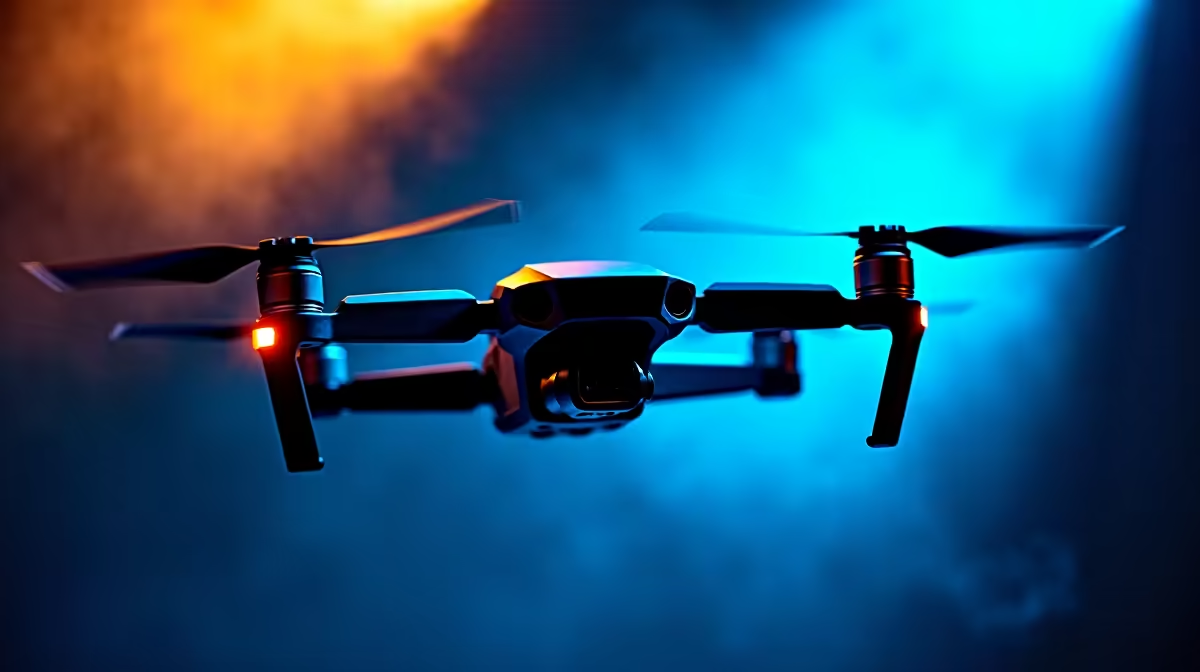
DJI splits its drone range by one number that decides almost everything else: take-off weight. The DJI Mini vs Air vs Mavic question really starts at 250 grams, the line that separates the featherweight Mini 5 Pro at 249.9g from the heavier, more capable Air and Mavic tiers above it. Get the weight class right and the camera, the flight time, and even the South African paperwork fall into place.
Quick Answer
The Mini 5 Pro sits at 249.9g for the lightest, easiest tier; the Air 3S is the dual-camera mid-range above 250g; and the Mavic 4 Pro is the 1,063g flagship with a 50MP main sensor. In SA all three fall under SACAA Part 101 for recreational flying, but the sub-250g Mini is the simplest to live with.
The Mini tier: built around staying under 250g
The Mini 5 Pro weighs 249.9g, just under the threshold that triggers heavier registration rules in many countries, and that featherweight build is the entire point. It folds to pocket size, travels without fuss, and is the obvious starting drone for someone learning to fly without a large upfront commitment.
Despite the weight, the Mini tier no longer compromises hard on camera quality, carrying a capable sensor with strong video and intelligent flight modes. What you give up versus the bigger tiers is some low-light reach, wind resistance, and the second camera that the Air and Mavic offer. For travel, holidays, and general aerial photography, the Mini is plenty of drone.
The Air tier: the mid-range all-rounder
The Air 3S steps over 250g and earns the extra weight with a dual-camera system, typically pairing a main wide camera with a telephoto, which gives you genuine compositional flexibility without swapping lenses. It is the tier for someone whose photography has outgrown the Mini but who does not need the flagship's price.
You also get longer flight times, better wind handling, and more advanced obstacle sensing than the Mini. For a serious hobbyist, a content creator, or anyone wanting two focal lengths in one aircraft, the Air sits in the practical middle of the range where most enthusiasts end up.
The Mavic tier: the professional flagship
The Mavic 4 Pro weighs 1,063g and is built for image quality above all, headlined by a 50MP main sensor and a multi-camera setup aimed at professionals and demanding creators. This is the tier where the drone is a tool earning its keep, not just a hobby.
The weight buys the best stability in wind, the longest flight endurance, the most capable sensors, and the richest professional video options. It is overkill for casual flying and priced accordingly, but for commercial work, cinematography, and the most serious enthusiasts, nothing in the lineup matches it.
Flying any of them legally in South Africa
For recreational use, all three tiers fall under SACAA Part 101, the framework covering private drone flying in SA. The practical rules are consistent: keep the drone within visual line of sight, stay below the legal altitude ceiling, and keep well clear of airports, controlled airspace, and crowds of people. Flying near other people's property and over gatherings is restricted, so respect those limits wherever you fly.
If you ever fly commercially, for paid photography or any business purpose, the requirements step up significantly and you need the proper certification, regardless of which tier you own. The sub-250g Mini does not exempt you from the airspace and safety rules, it simply avoids some of the heavier-aircraft considerations. Drones, gimbals, and related smart gear sit together in the smart home and connected tech range if you want to compare what is stocked locally.
How Each Tier Handles SA Conditions
Wind
Wind is the practical differentiator across weight classes for South African flyers. The Mini 5 Pro, at 249.9g, is the lightest option and can be pushed around in a stiff South-Easter or coastal gust, which shows in unsteady footage and forces more aggressive motor correction that drains the battery faster. The Air 3S at 724g holds position more confidently in a moderate breeze, and the Mavic 4 Pro at 1,063g is the most stable platform in demanding conditions. If you regularly fly along the Cape coast, on mountain ridges, or over the open Highveld where wind is part of the plan, the extra mass of the Air or Mavic earns its keep.
Low Light
South Africa's golden hours, sunrise over the Drakensberg or late evening on a Camps Bay beachfront, are where sensor size shows its value. The Mini 5 Pro's 1-inch sensor handles dusk and dawn far better than earlier Mini generations. The Air 3S's 1-inch main sensor matches it, but the Mavic 4 Pro's larger 4/3-inch Hasselblad sensor produces the cleanest, most gradeable footage in challenging light. If low-light and high-contrast SA landscapes are a core part of your shooting, the Mavic justifies its cost at that moment.
Which tier should you buy
Choose the Mini if you are new to drones, value portability, and want the simplest aircraft to travel and learn with. Choose the Air if you want two cameras and more capability for serious hobby and content work without flagship money. Choose the Mavic only if image quality is your profession or your obsession and the price is justified by the output. The drones and accessories moving fastest with local buyers are gathered in the best-selling accessories list, which gives a quick read on what SA pilots are choosing.
Frequently Asked Questions
Do I have to register a sub-250g DJI Mini in South Africa?
Recreational flying of all these drones falls under SACAA Part 101, and the airspace and safety rules apply regardless of weight. The sub-250g Mini avoids some heavier-aircraft considerations, but you must still fly within line of sight, below the altitude limit, and clear of airports and crowds.
What is the real difference between the Air and the Mavic?
The Air 3S is the mid-range tier with a dual-camera system at a sensible price, while the Mavic 4 Pro is the flagship with a 50MP main sensor, more cameras, longer endurance, and better wind handling. The Mavic targets professionals; the Air suits serious hobbyists.
Is the Mini camera good enough for content?
Yes, for most creators. The Mini 5 Pro carries a capable sensor with strong video and intelligent modes, more than enough for travel, social content, and general aerial photography. You step up only if you need a second focal length or the flagship's image quality.
Why does the 250g weight matter so much?
The 250g line is the threshold that separates the lightest, simplest drone category from heavier aircraft in many regulatory frameworks. The Mini 5 Pro's 249.9g keeps it in that lighter class, which is why DJI engineers the tier so carefully around that number.
Do I need certification to fly for money in SA?
Yes. Any commercial or paid drone work requires proper certification under South African rules, no matter which tier you fly. Recreational, non-paid flying under Part 101 has lighter requirements, but you must still follow all airspace and safety limits.